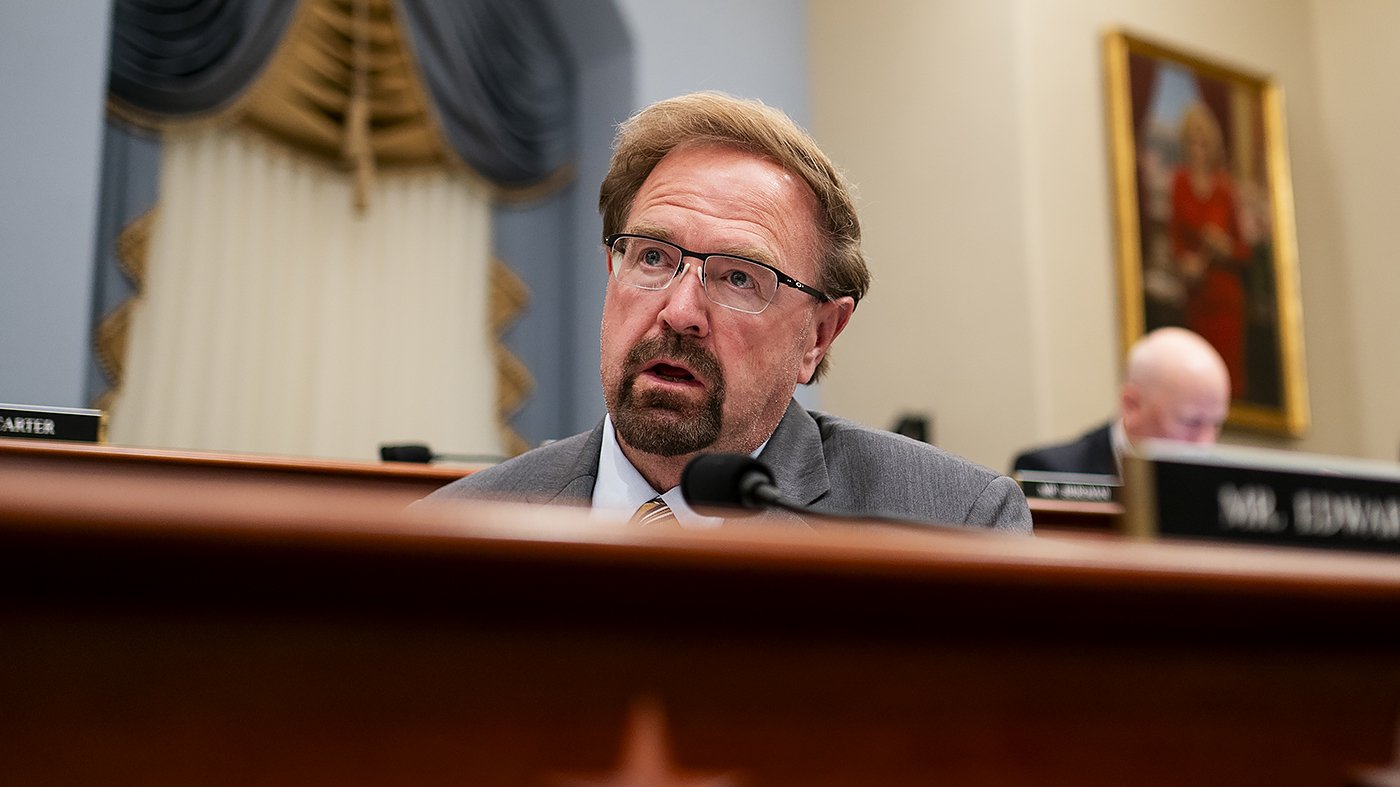
The House Ethics Committee on Monday recommended that Representative Chuck Edwards (R-N.C.) be formally censured by the full chamber after concluding that his interactions with two female staff members breached the “spirit” of House rules prohibiting sexual harassment and unwelcome advances. The panel’s report described Edwards’s behavior as “highly unprofessional” and said it created an environment of discomfort and implied romantic interest.
According to the committee’s findings, Edwards, who is married, engaged in a pattern of conduct that included taking one staffer on a trip to New York City that was extended by a day for his birthday, complete with a helicopter ride and Broadway show. He also wrote poems for another staffer, became emotional during a slideshow at her farewell party, and expressed displeasure when a staffer brought a date to an event. The report detailed late-night texts, personal messages, and the purchase of spa treatments and massages. In one instance, Edwards arranged for a singer to perform Ed Sheeran’s “Hills of Aberfeldy” at a staffer’s birthday party, saying it was “from a special someone.”
The committee noted that the two staffers feared professional retaliation if they rejected Edwards’s advances. “Taken individually, many of Representative Edwards’s actions were at minimum inappropriate; a Member of Congress should not single out a staffer and isolate them from other staff, make frequent comments regarding that person’s appearance and weight, send messages in the middle of the night, text staff deeply personal and seemingly romantic thoughts, intrude on personal occasions without invitation, pay for personal vacations, and spend thousands of dollars on gifts for staffers,” the report stated. “That Representative Edwards did all these things to two young staffers, repeatedly over a sustained period, was beyond inappropriate.”
In his interview with the committee, Edwards reportedly argued that he understood what constitutes sexual harassment and believed that avoiding physical contact and explicit comments, along with telling staffers they could set boundaries, shielded him from liability. The committee rejected this defense, writing: “In his interview with the Committee, the Congressman repeatedly asserted that he knows well what constitutes ‘sexual harassment,’ and seemed to believe that by avoiding inappropriate physical touch, explicitly sexual comments, and occasionally telling the staffers that they were free to put up boundaries with him, he had immunized himself from such a charge. That is not the case.”
The recommended censure resolution does not explicitly accuse Edwards of sexual harassment, but it adopts the report’s findings. It does not call for his removal from committees or any other penalty beyond a formal reprimand. This development comes as the House Ethics Panel Recommends Censure for GOP Rep. Edwards Over Staff Conduct.
The committee’s action adds to a series of ethics-related probes on Capitol Hill, including an investigation into Texas Republican Lance Gooden over undisclosed spending. It also follows a broader debate over ethics enforcement, as seen in the Senate Democrats’ revolt over a crypto bill’s ethics loophole.
The Hill has reached out to Edwards’s office for comment. The full House will now consider the censure resolution, which would mark a formal rebuke of the North Carolina Republican. Censure is one of the harshest penalties short of expulsion and would be a significant political blow for Edwards, who is serving his second term.
Ethics experts say the case underscores the importance of clear boundaries between members and staff, especially for young employees who may feel vulnerable. The committee’s report emphasized that even non-physical conduct can create a hostile work environment and violate congressional rules.
As the House prepares to vote on the resolution, Edwards’s future in Congress remains uncertain. While censure does not remove him from office, it could affect his committee assignments and political standing ahead of the next election cycle.