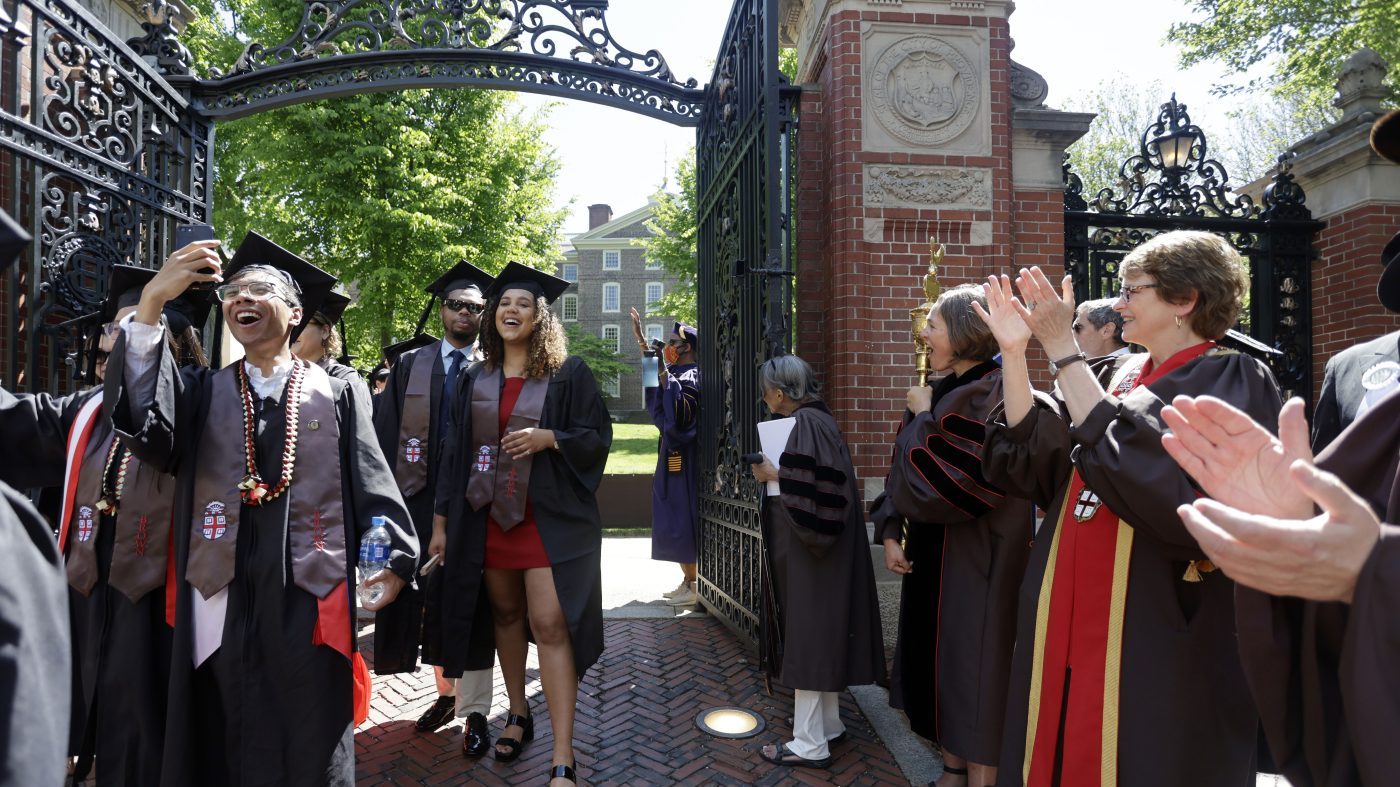
Brown University President Christina Paxson announced Monday that she will step down at the end of the academic year, capping a 15-year tenure that included a high-stakes confrontation with the Trump administration over federal funding and campus policies. Paxson, who took office in 2012, said the decision was the "right decision" for her family and the "best path" forward for the Ivy League institution.
In a letter to the Brown community, Paxson reflected on her long tenure, noting that "fifteen years is a significant tenure for any president" and praising the collaborative efforts of faculty, staff, students, alumni, and supporters in advancing the university's strategic goals. Brown Chancellor Brian Moynihan, also CEO of Bank of America, lauded Paxson as an "amazingly steadfast and stalwart leader" and announced that a national search for her successor will be convened.
Paxson's departure, effective June 2027, will end her status as the longest-serving Ivy League president. Princeton's Christopher Eisgruber, who has led his university since 2013, will assume that distinction.
Her final years in office were marked by friction with the Trump administration. In April 2025, the administration froze more than $500 million in federal research funding to Brown and launched three investigations into the university's compliance with antidiscrimination laws. The probes centered on Brown's handling of campus protests against Israel's military campaign in Gaza, as well as its admissions policies and treatment of transgender students.
Paxson extended her presidency to navigate the funding freeze, ultimately reaching a deal in July that restored the funding and ended the investigations. The agreement required Brown to pay $50 million over a decade to workforce development groups in Rhode Island, separate men's and women's sports facilities based on sex assigned at birth, and ban programs that employ "unlawful efforts to achieve race-based outcomes."
Later in the year, Paxson publicly opposed a proposed administration compact for universities that would tie federal funding advantages to changes in campus policies. In a letter to Education Secretary Linda McMahon, she argued the framework "would restrict academic freedom." McMahon responded Monday by calling on universities to publicly describe their commitments to teaching, research, and national service by year's end.
In her resignation letter, Paxson acknowledged that the "federal landscape remains volatile for all colleges and universities," but emphasized that Brown continues to receive major research grants with potential for innovation. She also reaffirmed the university's commitment to admitting students "with a diversity of ideas, perspectives and experiences."
The announcement comes less than seven months after a fatal shooting on Brown's campus, in which a former graduate student killed two students and wounded nine others. During the manhunt, Trump criticized Brown, blaming the university rather than the FBI for the delayed capture of the shooter.
Political Context
Paxson's exit underscores the broader pressures facing university leaders as they navigate an increasingly politicized funding environment. Her negotiations with the administration reflect a pattern seen at other institutions, where federal dollars have become leverage for policy changes. The academic community has urged Congress to shield agencies from such political interference, but the administration has pressed forward with its demands.
The coming search for a new president will likely be watched closely by higher-education observers, as the next leader will inherit a campus still recovering from tragedy and a federal relationship that remains uncertain. As one analyst noted, the breakdown of institutional trust is a defining challenge for universities today.