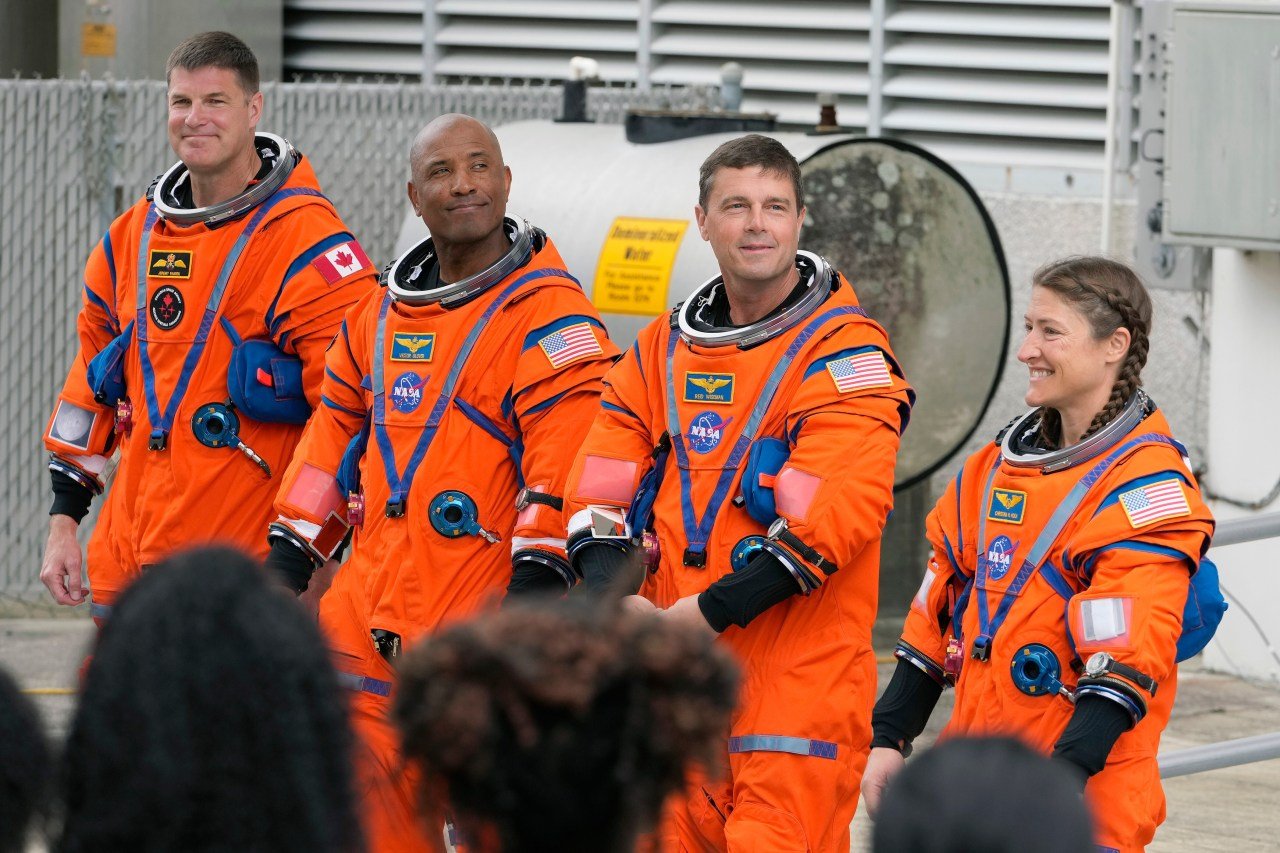
NASA successfully launched its Artemis II mission Wednesday evening, returning human explorers to lunar space for the first time in more than half a century. The Space Launch System rocket lifted off from Kennedy Space Center in Florida, carrying a diverse crew of four astronauts on a critical test flight that paves the way for planned lunar surface operations.
The launch followed tense hours as ground teams loaded over 700,000 gallons of cryogenic fuel into the 32-story rocket. Engineers had been monitoring for dangerous hydrogen leaks that delayed previous tests, but the fueling proceeded smoothly. The mission overcame last-minute technical issues with battery sensors and communication systems before receiving final clearance.

Commander Reid Wiseman, Pilot Victor Glover, Mission Specialist Christina Koch, and Canadian astronaut Jeremy Hansen comprise the most diverse lunar crew ever flown, representing the first woman, first person of color, and first non-U.S. citizen on a moon mission. "NASA is back in the business of sending astronauts to the moon," declared NASA Administrator Jared Isaacman, calling the decades-long hiatus "a brief intermission."
High-Stakes Test Flight
The 10-day mission represents a crucial test of NASA's deep space capabilities. Unlike the Apollo program's orbital missions, Artemis II will execute a lunar flyby without entering orbit, propelling the Orion capsule approximately 4,000 miles beyond the moon before returning to Earth. This trajectory will make the crew the farthest-traveling humans in history, surpassing even Apollo 13's distance record.
During their journey, astronauts will extensively test the Orion capsule's life support systems, manual controls, and other critical hardware that wasn't included on the uncrewed Artemis I test flight three years ago. The mission has already encountered technical challenges, including a malfunctioning toilet system that forced crew members to use contingency equipment.
NASA's broader lunar ambitions depend heavily on Artemis II's success. The agency has accelerated plans for lunar surface operations, with the White House declaring permanent lunar presence a strategic priority. This renewed push comes amid growing international competition in space, particularly from China, which has advanced its own lunar exploration program.
Institutional Challenges and Strategic Shifts
The Artemis program faces significant institutional hurdles as NASA leadership pushes a more commercial operational model. Recent budget reallocations have seen NASA redirect substantial funding toward surface infrastructure, including shelving plans for the orbital Gateway station in favor of direct lunar base development.
Launch director Charlie Blackwell-Thompson emphasized the mission's significance before liftoff, telling the crew: "On this historic mission, you take with you the heart of this Artemis team, the daring spirit of the American people and our partners across the globe, and the hopes and dreams of a new generation."
For NASA's science mission chief Nicky Fox, who was four years old during the final Apollo mission, Artemis represents a fresh beginning. "There are generations who weren't alive when Apollo launched," Fox noted. "This is their Apollo." The agency views sustained lunar presence as essential for developing technologies and operational experience needed for eventual Mars missions.
The successful launch marks a critical milestone in what NASA describes as a "surge" of lunar missions planned over the coming years. With Artemis II now underway, the agency's focus shifts to demonstrating that its systems can safely support human life in deep space—a prerequisite for the more complex Artemis III landing mission currently scheduled for no earlier than 2026.