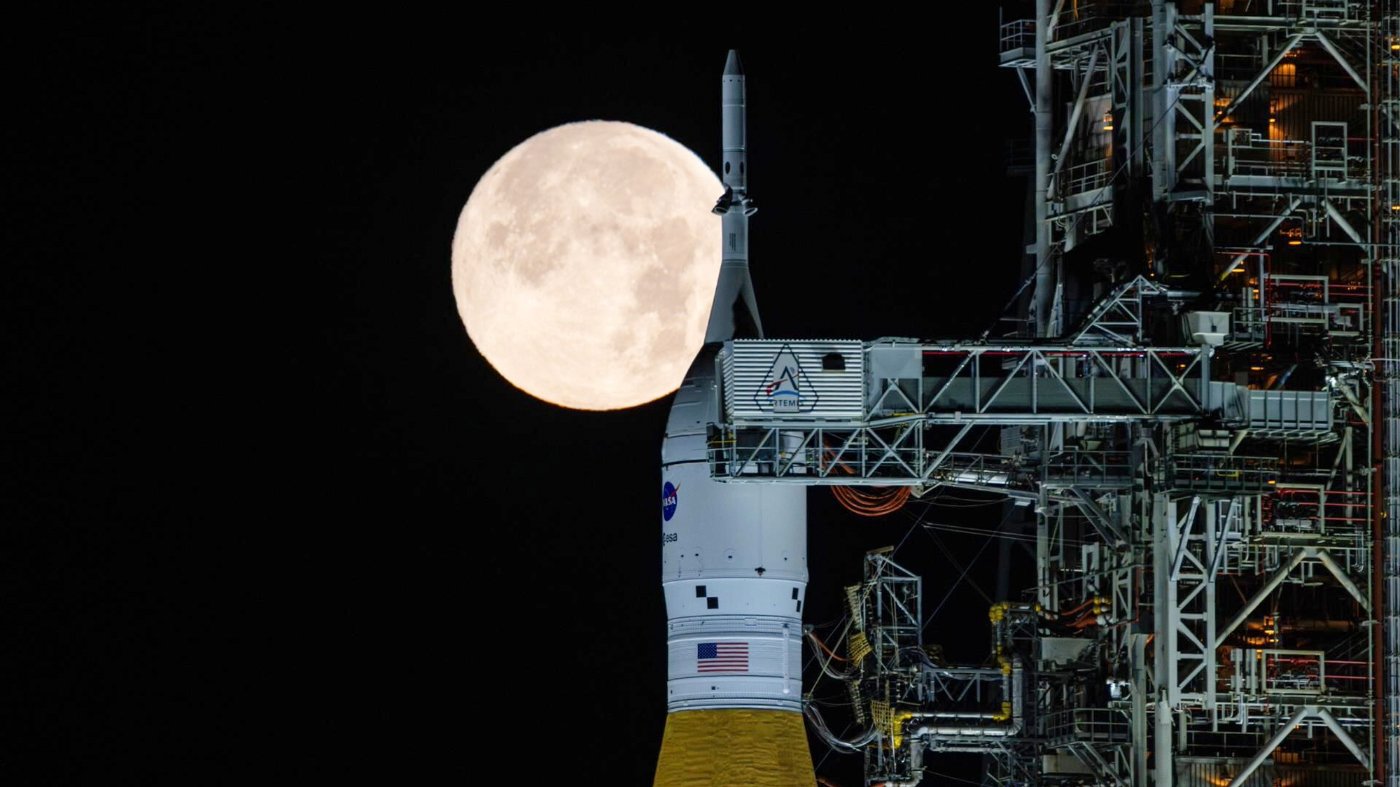
In a major strategic pivot for American space exploration, NASA will commit $20 billion over the next seven years to establish a permanent base on the lunar surface, effectively shelving development of an orbiting space station around the moon. The agency's new administrator, Jared Isaacman, announced the reallocation during a high-profile "Ignition" event on Tuesday, outlining a series of initiatives designed to achieve a crewed lunar landing by the end of 2028.
A Shift from Orbit to Surface
"It should not really surprise anyone that we are pausing gateway in its current form and focusing on infrastructure that supports sustained operations on the lunar surface," Isaacman told attendees, directly addressing the change in priorities. He emphasized that despite existing hardware and scheduling hurdles, the agency plans to repurpose equipment and international partner commitments to serve the new surface-focused objectives.

The Lunar Gateway, first proposed in 2018, was conceived as a cornerstone of the Artemis program. It was intended to serve as a science outpost and a waystation for astronauts traveling to and from the moon. Its indefinite postponement marks a significant course correction, redirecting funds and political capital toward boots-on-the-ground infrastructure.
Artemis Timeline and International Competition
The announcement comes as NASA prepares for the imminent launch of its Artemis II mission, which will send four astronauts on a ten-day journey around the moon aboard the Space Launch System rocket. Isaacman detailed the subsequent plan: "As we move forward, we intend to launch Artemis III in 2027 to test the integrated operations of Orion and one or both lunar landers in Earth orbit. What we learn from that mission will ideally give us the confidence to begin lunar landing attempts, starting with Artemis IV in 2028."
This accelerated and refocused push occurs against a backdrop of intensifying international competition. China declared in October that it is on track to land its astronauts on the moon by 2030, a timeline that directly challenges long-standing U.S. dominance in human space exploration. The strategic shift to a surface base can be seen as a move to establish a more tangible and permanent foothold ahead of rival powers.
Funding and Broader Political Context
The reallocation of such a substantial sum—$20 billion—highlights the significant federal investment required for space dominance. This scale of spending often intersects with broader political debates over budgetary priorities and the role of government in frontier technology. Major appropriations for space exploration can sometimes face scrutiny, especially when juxtaposed against domestic challenges or other federal investigations, such as the ongoing congressional scrutiny of federal law enforcement actions.
Furthermore, the management of complex, multi-billion dollar government contracts and timelines is perpetually under the microscope. Delays or cost overruns in programs of this magnitude can draw comparisons to struggles in other agencies, like the operational delays that have hampered federal transportation safety investigations during periods of political dysfunction.
The success of this ambitious lunar plan will depend not only on engineering prowess but also on sustained political and fiscal support across multiple administrations. It represents a long-term bet on American technological leadership, a theme echoed by other business leaders concerned with future competitiveness, such as those warning about the strategic implications of falling behind in critical technologies like artificial intelligence.
Isaacman's announcement fundamentally recalibrates the Artemis program from a stepping-stone approach, using an orbital station, to a direct and sustained surface presence. Whether this high-stakes gamble will secure a lasting American legacy on the moon—and do so ahead of international competitors—remains the central question for the decade ahead.