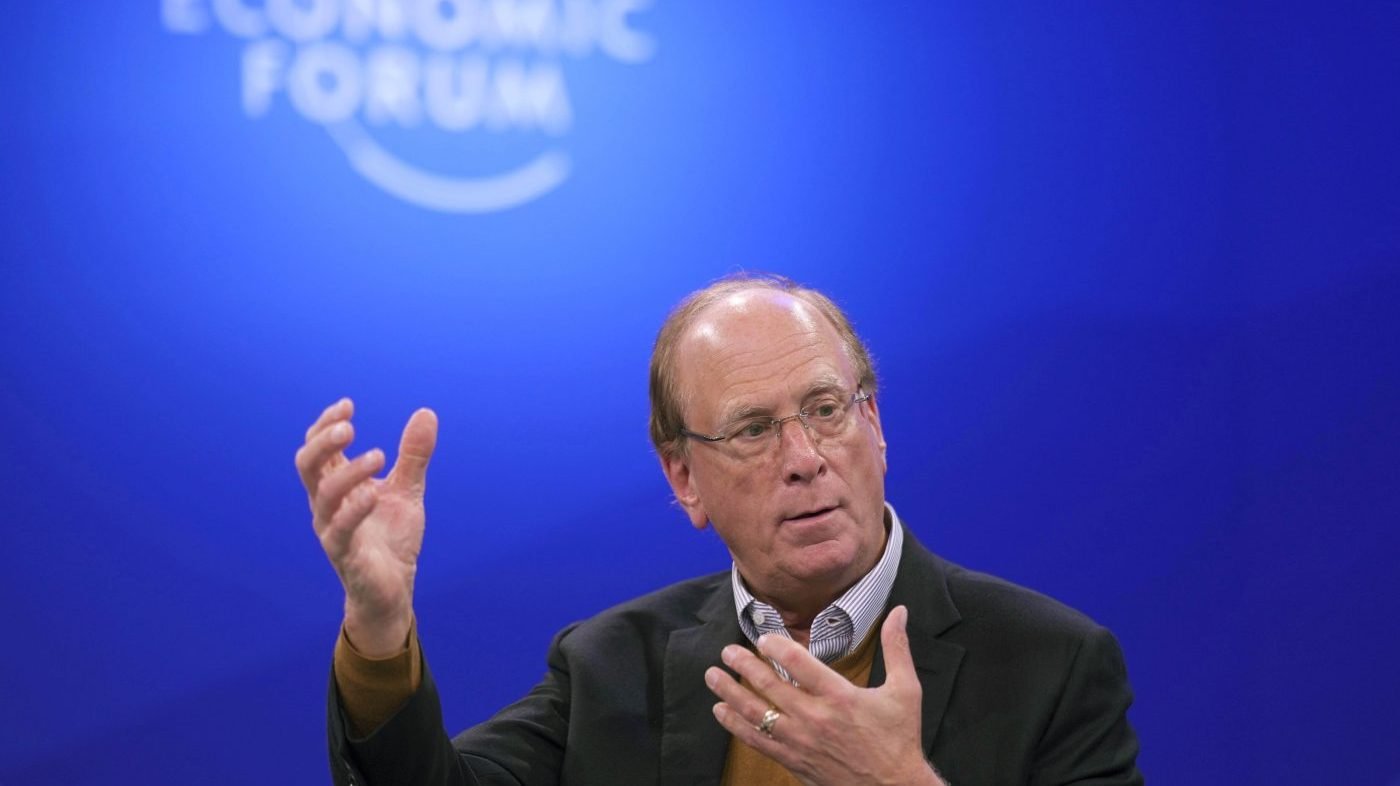
In a stark assessment of modern capitalism, BlackRock Chairman and CEO Larry Fink warned that the accelerating artificial intelligence revolution threatens to dramatically worsen wealth inequality by concentrating economic gains among a narrow set of asset owners and corporations.
In his closely watched annual letter to investors published Monday, Fink argued that the rapid ascent of AI risks repeating and amplifying a decades-long trend where wealth generation has flowed overwhelmingly to those who own capital rather than those who earn wages. "Now AI threatens to repeat that pattern at an even larger scale—concentrating wealth among the companies and investors positioned to capture it," Fink wrote.

He directly linked this dynamic to rising public discontent, stating, "This is where much of today’s economic anxiety comes from: a deeper feeling that capitalism is working—just not for enough people." The commentary from the head of the world's largest asset manager, overseeing more than $10 trillion, places him at the center of a heated political and economic debate about the distribution of technological gains.
The Prescription: Long-Term Capital
Fink positioned long-term investing as the essential corrective to this disruptive trend. He explicitly dismissed short-term financial strategies as inadequate, framing patient capital as a foundational tool for inclusive growth. "And a focus on short-term investing is not a fix for that," he continued. "Rather, it is long-term investing that allows countries to build domestic industries, that lets people build enduring wealth and shows how their country’s growth can benefit them too."
His argument suggests that enabling broader populations to participate as long-term investors in assets—including through retirement vehicles like 401(k)s—can help democratize the financial upside from technological transformations like AI. This vision ties the health of financial markets directly to social stability and public confidence in the economic system.
The letter arrives amid intense global scrutiny of AI's societal impact and follows significant political focus on economic inequality, a theme likely to dominate the upcoming election cycle. Fink's message implicitly challenges policymakers and corporate leaders to structure investment pathways that extend prosperity.
Broader Geopolitical and Economic Context
The call for strategic, long-term investment comes as global volatility demands careful capital allocation. Ongoing international tensions, such as the potential for de-escalation with Iran following Strait of Hormuz crises, underscore the need for resilient economic planning. Furthermore, domestic political debates, including the clear splits on economic priorities highlighted in recent Georgia runoff debates, show how central these issues are to the national conversation.
Fink's annual letters have increasingly addressed macro-societal issues alongside pure investment theory, reflecting the growing intersection of finance, technology, and politics. His latest missive serves as both a warning about the disruptive potential of unchecked technological change and a defense of capital markets as a vehicle for mitigating its unequal effects.
Ultimately, Fink frames the choice not merely as an investment strategy but as a societal imperative. Building durable wealth for a broader segment of the population, he suggests, is critical to maintaining the legitimacy of the capitalist model in an age of rapid, wealth-concentrating innovation.