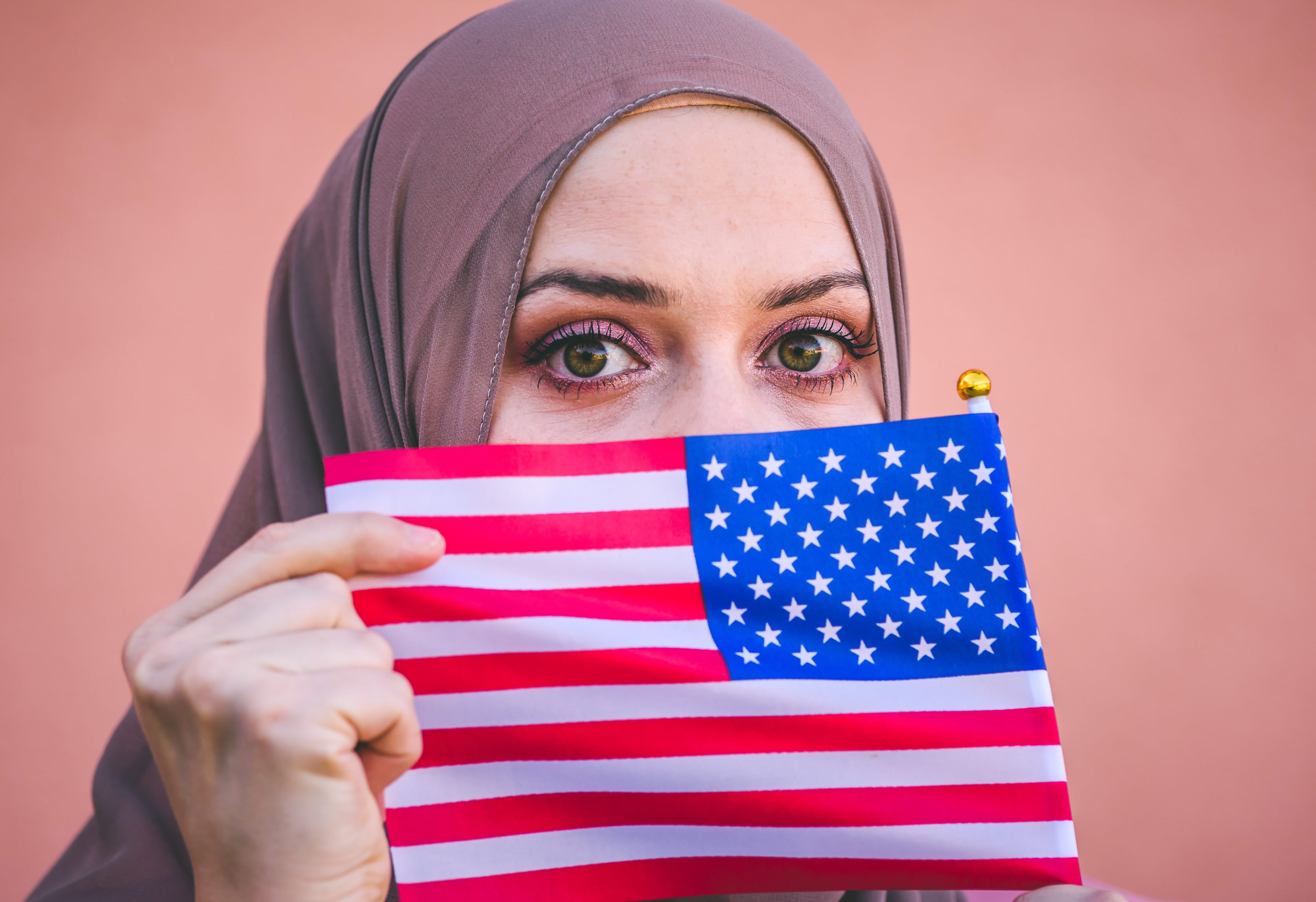
As America marks its 250th birthday, the nation finds itself in a familiar debate about its identity. For Muslim Americans, that debate is particularly charged: Are they a community defined by grievance and foreign conflicts, or an integral part of the American story? A new national survey of Muslim American registered voters, conducted by the Muslim American Leadership Alliance in partnership with the Rainey Center, offers a nuanced and hopeful picture—one that defies the usual political narratives.
The poll reveals a community that is strikingly patriotic. Ninety-five percent of respondents say they are proud to be American, and 85 percent believe in the American dream. Seventy-six percent consider the U.S. one of the greatest countries in the world, while 67 percent say Muslims enjoy more freedom here than anywhere else. These numbers challenge the common portrayal of Muslim Americans as either perpetual victims or a suspect population. Instead, they show a community deeply invested in the American experiment.
But patriotism is only part of the story. The survey also uncovers significant ideological tensions. Nearly half of respondents say they feel more loyal to another country, and more than half believe America should eventually become a Muslim country. Thirty-five percent say they support Hamas over Israel in the ongoing war. These findings cannot be dismissed, and they reflect broader challenges that political commentator Reihan Salam has warned about: ideological temptations that can pull communities away from a shared civic identity.
Yet the data also show Muslim Americans moving in a more independent, pragmatic direction. Forty-one percent say Muslims hold conservative values and should not be automatically grouped with the progressive left. Forty-four percent believe Muslim civic organizations focus too much on Palestine at the expense of other issues. Strong majorities back school choice, parental notification on gender pronouns, stricter border vetting, tougher welfare fraud enforcement, and prioritizing public safety over reducing incarceration. This is not a monolithic bloc; it is a community in argument with itself.
That internal debate is healthy, according to Zainab Khan, president and founder of the Muslim American Leadership Alliance. It signals that Muslim Americans are increasingly unwilling to be managed by political gatekeepers, radical spokesmen, or partisan coalitions that treat them as a captive voting bloc. It also places a responsibility on Muslim leaders to speak honestly about the community's diversity of views.
The American promise has always demanded something in return for its freedoms. It offers opportunity and equal citizenship but asks newcomers and minorities to embrace a shared civic inheritance. For Muslim Americans, that does not mean abandoning faith or heritage. As the nation celebrates its 250th, the challenge is not for Muslims to become less Muslim, but to become more confidently American—and to help defend the country that has made their flourishing possible.
This poll arrives amid broader debates about American identity. A recent Cato survey found that half of Americans are unaware of the meaning of July 4, while another poll showed only 45 percent of Democrats feel pride in American citizenship. Against that backdrop, the Muslim American community's patriotism stands out—even as it wrestles with its own divisions.