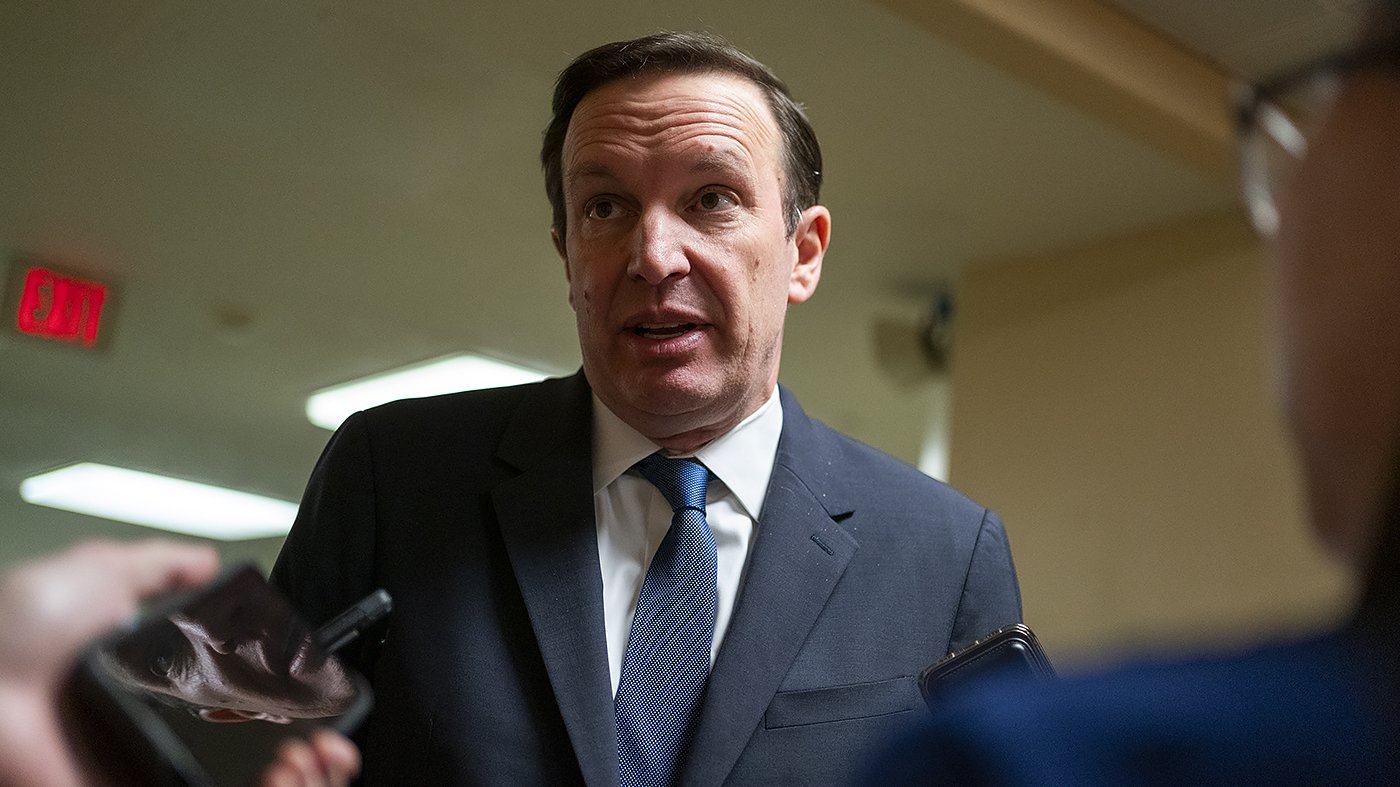
Senator Chris Murphy, a Democrat from Connecticut, raised serious allegations on Monday concerning a massive financial transaction that preceded a key foreign policy announcement from former President Donald Trump. Murphy pointed to market data showing a $1.5 billion purchase of S&P 500 futures and a simultaneous $192 million sale of oil futures just minutes before Trump publicly revealed a five-day suspension of previously threatened strikes on Iranian energy infrastructure.
Timing Raises 'Mind Blowing Corruption' Questions
"$1.5 BILLION. Let me say it again – a $1.5 BILLION BET. Bigger than any futures purchases made at the time. Five minutes before Trump's post," Murphy wrote in a social media statement. He directly questioned the identity of the trader, asking, "Who was it? Trump? A family member? A White House staffer? This is corruption. Mind blowing corruption."

According to Bloomberg data, at least six million barrels of Brent and West Texas Intermediate crude oil were sold between 6:49 a.m. and 6:51 a.m. on Monday. Trump's announcement was posted at 7:05 a.m. The report also noted unusual trading spikes in international markets, including Germany's DAX Index Futures and the Euro Stoxx 50 Index Futures, around the same period.
Market Impact and Broader Legislative Context
The trades preceded a sharp reversal in global energy markets. Oil and gasoline prices, which had been climbing since the initiation of U.S. and Israeli strikes against Iran, fell rapidly following Trump's announcement of the operational pause. This sequence of events has intensified longstanding scrutiny over whether political figures or their associates use non-public information for financial gain.
Murphy's spotlight on this incident taps into a persistent, bipartisan concern in Washington regarding insider trading by elected officials and their families. Earlier this year, House Administration Committee Chair Bryan Steil, a Republican from Wisconsin, proposed legislation to ban members of Congress from purchasing new stocks while permitting them to retain existing holdings. The bill would also mandate a public disclosure at least one week before any sale of a current asset.
This follows legislative efforts from last year, when Representatives Chip Roy, a Texas Republican, and Seth Magaziner, a Rhode Island Democrat, introduced a bill to prohibit lawmakers, their spouses, dependent children, and trustees from owning, buying, or selling individual stocks. Democratic lawmakers have also specifically advocated for measures designed to prevent insider trading by the president and vice president. Notably, Trump himself called on Congress to pass such legislation during a recent State of the Union address.
The controversy also intersects with other critical policy debates. For instance, Trump's recent claims about Iranian actions affecting oil flow through the Strait of Hormuz have further complicated the geopolitical energy landscape. Furthermore, the administration's overall strategy appears to be shifting, as some analysts note a broader move from regime change objectives toward deal-making with Iran.
In a related private-sector development, prediction market platforms Kalshi and Polymarket announced on Monday they would implement new restrictions to proactively "block politicians, athletes, and other relevant people from trading in certain politics and sports markets," aiming to prevent similar conflicts of interest. The allegations underscore the tension between national security decisions and financial markets, a nexus that continues to draw fierce criticism from both sides of the aisle and remains a focal point for potential legislative reform.