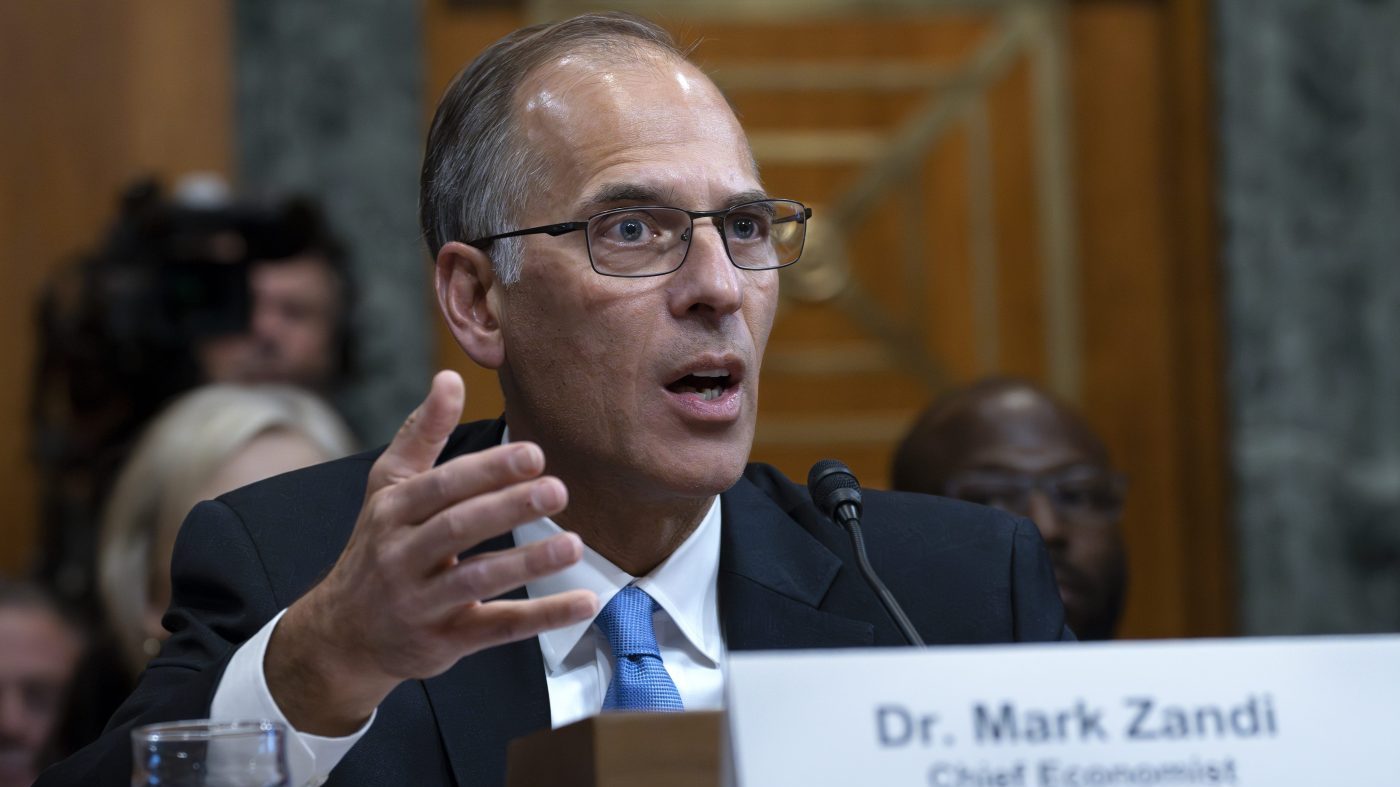
High-income Americans are fueling consumer spending at a pace that underscores a deepening economic divide, according to Moody's Analytics chief economist Mark Zandi. In a Sunday post, Zandi declared the so-called K-shaped economy remains “firmly intact,” with the top 20% of earners—those making over $175,000 annually—accounting for an “astounding” nearly 60% of all personal outlays in the first quarter of 2026.
Personal outlays encompass consumer spending, interest payments on installment debt such as auto loans, and transfers like charitable donations. Zandi’s updated estimates show that this top quintile increased its outlays by 6.5% over the past year, comfortably outpacing inflation. In stark contrast, the bottom 80% of earners saw their outlays rise just 2.6%, a rate that falls short of price increases.
“No wonder most Americans are upset with their financial situations and the broader economy,” Zandi wrote, capturing the frustration that polls have consistently registered even as headline economic data remains strong. The K-shaped metaphor—with one arm rising for the affluent and the other sinking for everyone else—has become a standard way to explain why broad measures like GDP growth don’t match many households’ lived experience.
Corporate America has taken notice. Airlines have doubled down on premium seating and services to capture high-end travelers, while fast-food chains like McDonald’s have acknowledged ongoing pressure from cost-conscious lower-income customers. The divide has also appeared at the gas pump, where lower-income families have cut back amid the Iran conflict’s impact on fuel prices, while wealthier households have barely adjusted their driving habits.
Zandi’s analysis indicates that the spending gap isn’t new but has widened significantly over the past three decades. In the mid-1990s, the top 20% and bottom 80% each accounted for roughly half of consumer spending. Today, the balance has shifted dramatically, concentrating economic momentum in a small slice of the population. This pattern echoes concerns raised in other contexts, such as how AI-driven job displacement could worsen inequality, a risk that Pope Francis and some economists have highlighted.
The reliance on high earners creates a vulnerability, Zandi warned earlier this year. Because wealthy households’ spending is closely tied to stock market performance, a prolonged downturn could trigger a sharp pullback in consumption, amplifying any recession. That dynamic makes the economy more susceptible to financial shocks than if growth were more broadly shared.
Zandi acknowledged that his methodology has drawn some criticism, and he conceded the figures may “overstate the case.” Still, he argued the latest data confirm that the economy is “K-shaped and becoming increasingly so.” This persistent trend helps explain why even Republican voters have grown more skeptical of the economy as inflation bites, with approval dropping 15 points in a recent AP-NORC poll.
The K-shaped dynamic also complicates the political landscape. While the Trump administration has touted strong job growth, as seen in the May jobs report, the disconnect between aggregate data and household sentiment remains a potent issue. For policymakers, the growing reliance on a narrow affluent base raises questions about the sustainability of consumer-led growth and the need for more inclusive economic policies.
As the gap widens, the challenge for both parties will be addressing the structural forces that leave most Americans feeling left behind, even as the stock market and luxury sectors thrive. Zandi’s analysis suggests that without policy intervention, the K-shaped economy may only become more pronounced.