The global race for artificial intelligence supremacy is increasingly being decided not just in labs and chip fabs, but in the less glamorous arenas of power grids and data centers. This shift is creating a new front in the competition between Washington and Beijing, one that extends into the realm of public opinion and domestic policy debates.
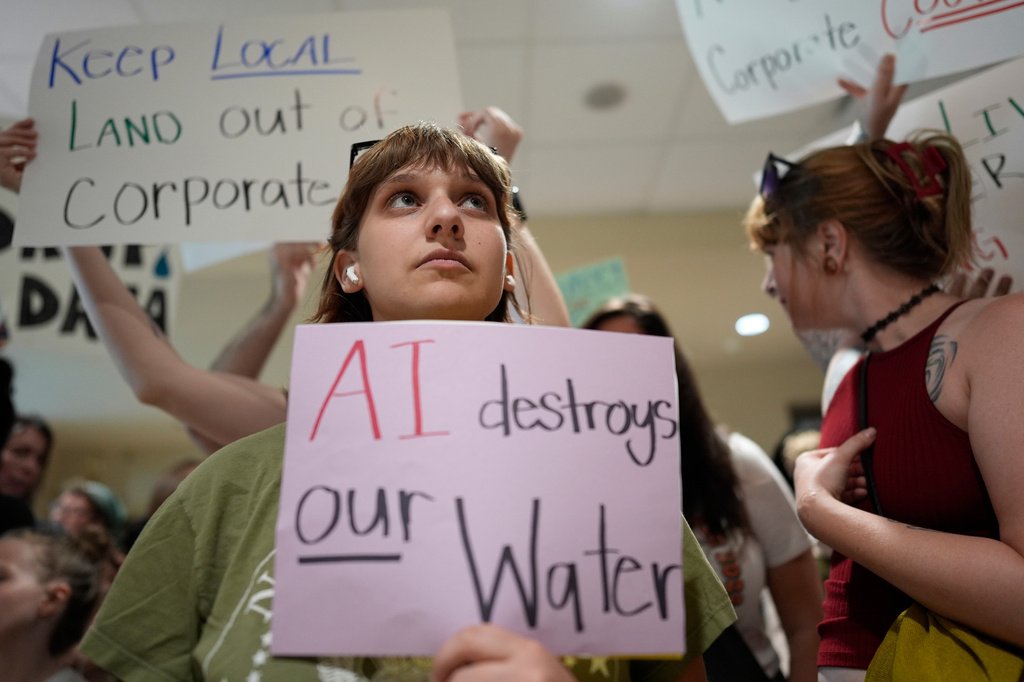
Recent disclosures, including a report from OpenAI, indicate that Chinese-linked operatives are now targeting the contentious issue of AI infrastructure in the United States. The operation, dubbed "Data Center Bandwagon," involved the creation of fake American social media personas that voiced opposition to data center construction, citing concerns over electricity costs and local impacts. While the scale of this particular campaign was modest, its strategic implications are significant.
This marks a notable evolution in Chinese influence tactics. Instead of promoting overtly pro-Beijing narratives, the operatives sought to embed themselves within existing American controversies, amplifying genuine grievances with fabricated voices. This approach, as detailed in the analysis by Nikolas Foster, a nonresident fellow with the Atlantic Council's Global China Hub, is designed to appear authentic while subtly steering the debate toward outcomes favorable to Beijing.
The trend is part of a broader pattern. Microsoft Threat Intelligence has observed Chinese influence operations becoming more sophisticated, experimenting with fake personas across the political spectrum. Graphika, a disinformation research firm, documented similar networks ahead of the 2024 election. The application of these techniques to AI infrastructure is particularly concerning, given the strategic importance of data centers to national security and economic competitiveness.
Data centers are now critical national infrastructure, underpinning everything from cloud computing to military applications. The U.S. and China both view AI leadership as central to their future prosperity and security. Yet, while Chinese state media criticizes American data centers as environmentally harmful, Beijing continues to heavily subsidize its own domestic AI build-out, with electricity demand from Chinese data centers projected to more than double by 2030.
It is crucial to note that this does not imply that all local opposition to data centers is illegitimate. Communities across the U.S. have valid concerns about energy, water, and land use. The distinction lies in the source of amplification. Foreign influence operations do not need to create divisions from scratch; they succeed by identifying and amplifying existing tensions to serve strategic ends.
This playbook is not new. In 2022, Mandiant exposed Operation Dragonbridge, a Chinese state-linked campaign that posed as Texans opposing a rare earth processing facility. More recently, the focus has shifted to AI infrastructure. The targets may change, but the strategy remains consistent: embedding Beijing's preferred outcomes within seemingly authentic American political discourse.
The challenge for the U.S. is not to suppress dissent but to better distinguish between genuine democratic debate and coordinated foreign efforts to exploit it. As the race for AI dominance intensifies, the ability to protect the integrity of domestic discourse may prove as critical as the technology itself. For more on the broader context of China's influence tactics, see China's playbook in Nepal and the ongoing concerns about U.S. global influence.