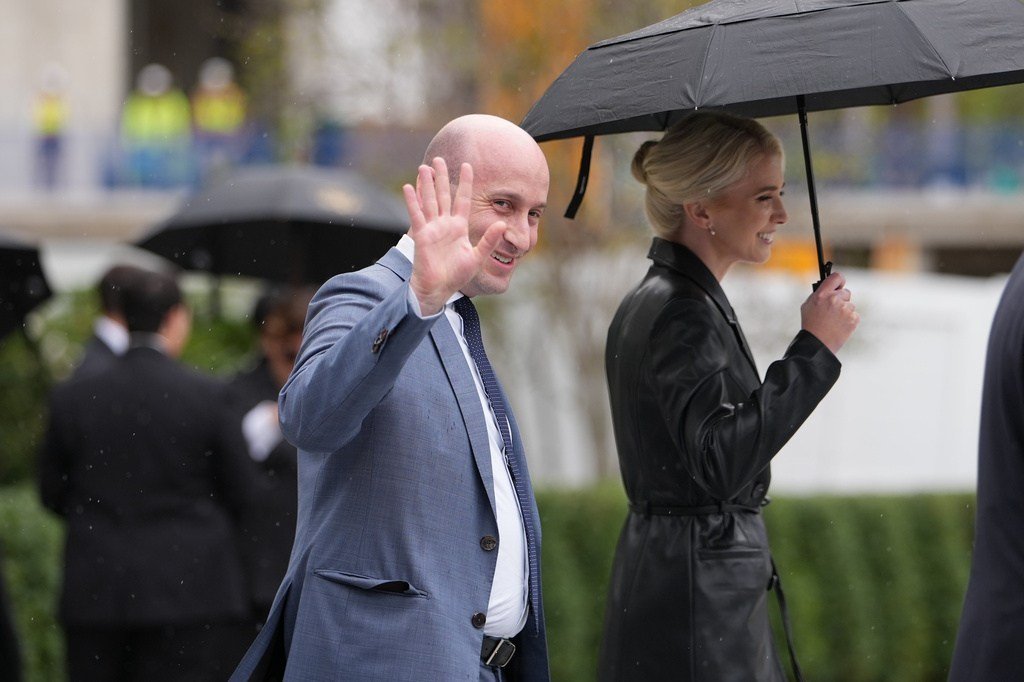
In the wake of the Democratic wave that swept the midterm elections, President Trump had a choice: heed the voters' message and moderate his agenda, or entrench. His decision to elevate Stephen Miller to White House chief of staff leaves no doubt about which path he has chosen.
Critics, including former chiefs of staff from both parties, have called the appointment reckless. Miller, the architect of the administration's mass deportation policies, is seen as a divisive figure whose influence has been widely condemned. The move comes as Trump embraces a hardline stance despite the electoral rebuke.

A Message Ignored
The midterm results were a clear rejection of Trump's immigration agenda. Data from the Migration Policy Institute shows that from January 2025 to July 2026, 643,000 people were deported, including 457,000 with no criminal convictions. Of those deported from the interior, 220,000 had lived in the U.S. for at least two years, and 57,000 for over a decade, all without criminal records.
Polling from Election Day found that 58% of voters believed the deportation crackdown had “gone too far.” The backlash was particularly strong among young voters and Latinos, who shifted their support to Democrats by 33 and 28 percentage points, respectively.
Instead of adjusting course, Trump has doubled down by putting the architect of these policies in charge of his inner circle. As Miller's promotion signals a hardline shift, observers note that Trump appears determined to ignore the voters' message.
Miller's Record
Miller's history is marked by extreme positions. He has described immigration as a “conquest,” advocated for ending birthright citizenship, and supported suspending habeas corpus. Under his direction, ICE was ordered to make 3,000 arrests per day, aiming for a million deportations in a year. He even called a nurse killed by ICE agents a “domestic terrorist.”
His appointment has been met with alarm because the chief of staff role requires someone who can offer honest counsel and manage the administration's agenda. Miller, known for his zealous loyalty, is unlikely to challenge Trump. In his first speech as chief of staff, he pledged “absolute loyalty” to Trump and claimed the president had made the party “stronger and more popular,” despite the loss of at least 45 House seats and seven Senate seats.
As voters handed Trump and the GOP a stunning defeat, the appointment of Miller is a clear signal that the president will not moderate. It raises questions about the future of immigration policy and the administration's willingness to work with the opposition.
For now, the republic watches as Trump, with Miller at his side, appears ready to continue the same divisive path that led to his party's losses.