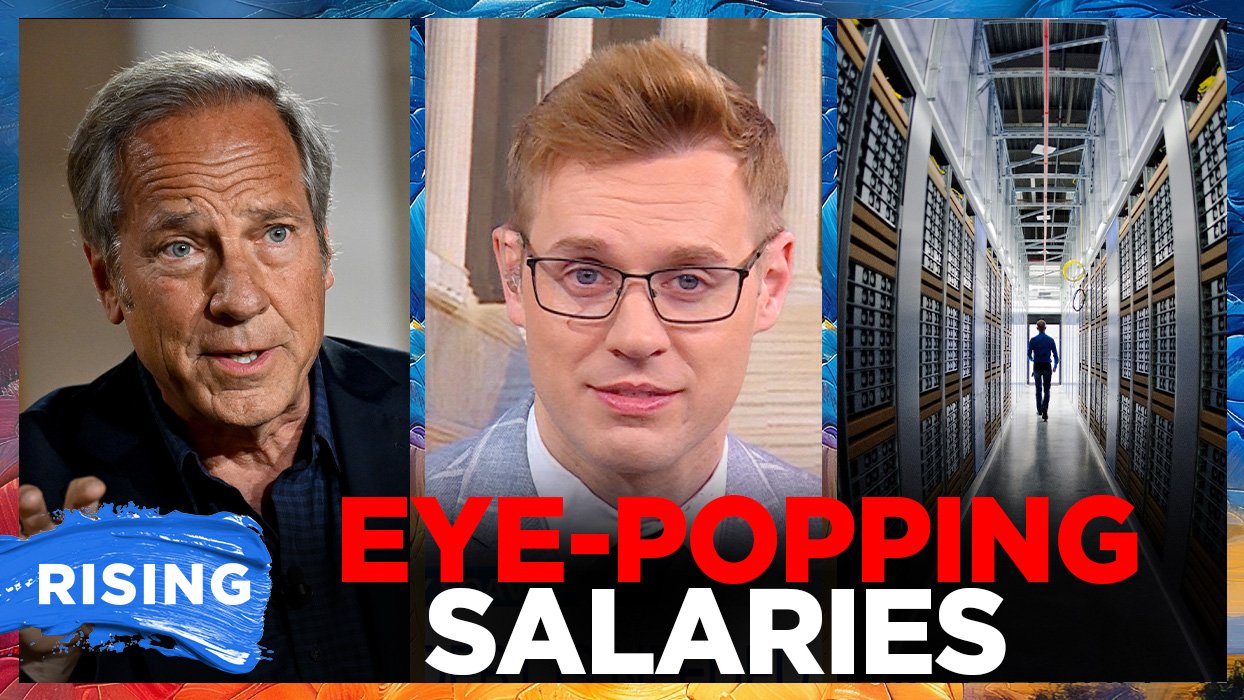
In an economy where many feel squeezed, Mike Rowe is shining a spotlight on a trade that pays like a tech executive. The former host of Dirty Jobs recently told Fox News that electricians specializing in data centers can earn up to $260,000 a year. The figure is startling, but Rowe’s broader point is about a national misstep: pushing everyone toward four-year degrees while stigmatizing blue-collar work.
Rowe’s numbers check out, though with caveats. Entry-level data center electricians start around $50,000, according to industry data. With experience, that climbs to $100,000. Those hitting the $200,000-plus mark typically work overtime or are in high-demand regions like Texas, where the AI and cloud computing boom is fueling massive data center construction.
The College Trap
Rowe didn’t hold back in criticizing what he called a “lie” sold to an entire generation: that any college degree guarantees a good living. “Go to college, take as much time as you need, spend your parents’ money and then take out loans, get a fancy degree in sociology or poli sci, you’ll make that money back when you get a job,” he said, paraphrasing the conventional wisdom. The result, he argued, is a glut of liberal arts graduates working as baristas.
That critique resonates with many voters who see rising tuition and stagnant wages for white-collar roles. A recent survey found college students overestimate starting salaries by an average of $24,000, underscoring the gap between expectation and reality.
AI’s Infrastructure Needs
Rowe’s pitch comes at a pivotal moment. As artificial intelligence reshapes the economy, the physical backbone—data centers—requires massive human labor. “AI isn’t going away. It’s not coming at us slowly. It’s here now, and we need to ramp up,” he said. Skilled trades like electrical work are essential to building that infrastructure, and demand is only growing.
Rowe also took aim at political opponents of data centers, singling out Senator Bernie Sanders, who has called for a moratorium on new construction. “I guess now Bernie is the one waging war on the working class,” Rowe said. “Those are good jobs, and he doesn’t want anybody to have them.” Sanders and other progressives have raised concerns about energy consumption and environmental impact, but Rowe sees a different threat: missing out on high-paying blue-collar opportunities.
A Broader Reckoning
The debate over data centers isn’t just about jobs—it’s about what kind of economy America wants. As Kevin O’Leary defended a Utah data center against out-of-state protests, the tension between progress and local opposition is sharpening. For Rowe, the math is simple: these facilities create stable, high-paying work for people without a four-year degree.
His remarks echo a growing frustration with the “college for all” orthodoxy. In a political climate where Senator Scott predicts a GOP Senate majority while warning the House is a tougher fight, pocketbook issues like job access and debt remain central. Rowe’s message is tailored for a working-class electorate that feels overlooked by coastal elites and credentialism.
Whether or not $260,000 is typical, the broader trend is undeniable: skilled trades are paying off, and data centers are a new frontier. As Rowe put it, “It’s a beautiful thing.”