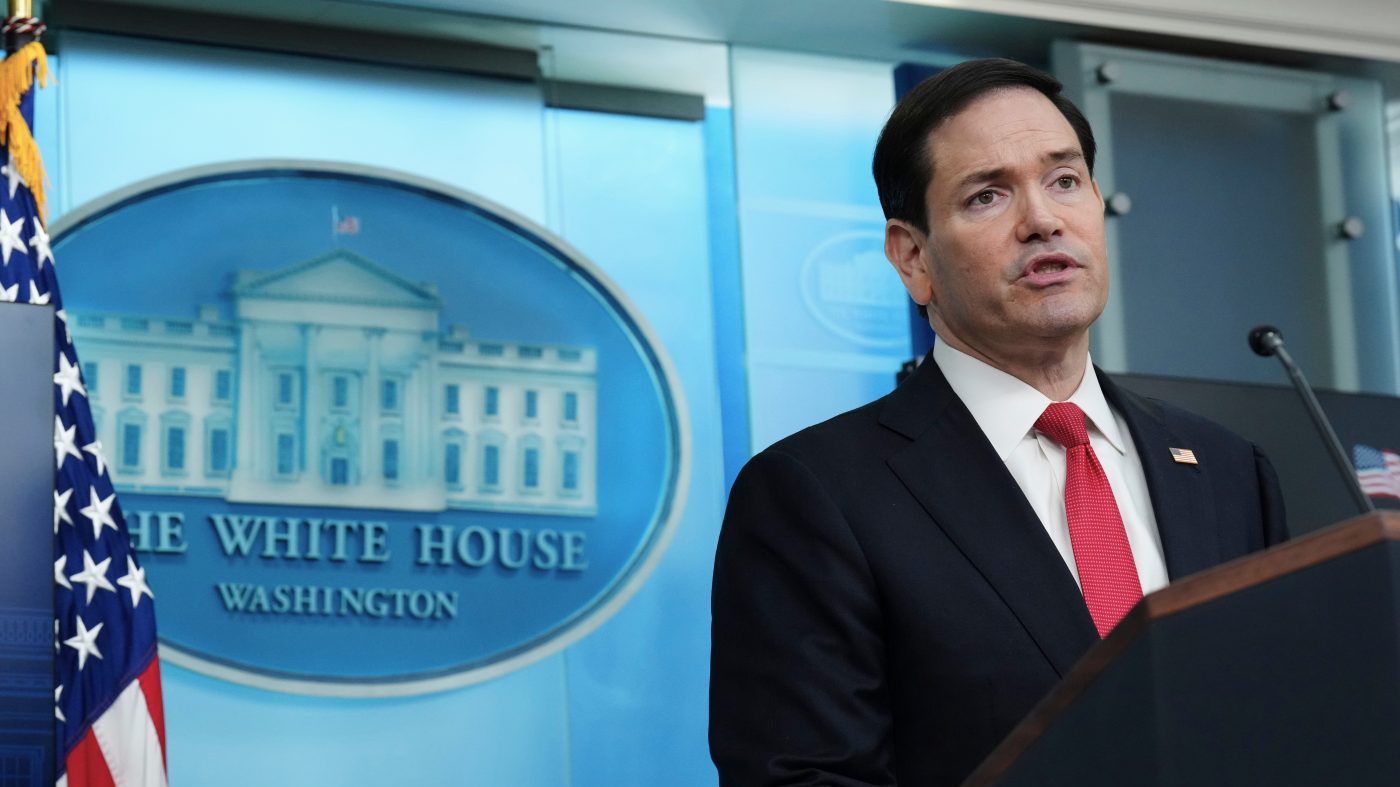
Secretary of State Marco Rubio rolled out a new round of sanctions on Thursday, targeting one individual and two Cuban entities, further tightening the screws on Havana under a recent executive order from President Trump. The measures zero in on the Grupo de Administración Empresarial S.A (GAESA), a sprawling military-run holding company that Rubio branded as the core of Cuba's corrupt communist system.
GAESA controls at least 40 percent of Cuba's economy and may hold up to $20 billion in hidden assets, according to State Department estimates. The sanctions also hit Ania Guillermina Lastres Morera, GAESA's leader, who was designated for her role in funneling profits abroad while ordinary Cubans struggle.

“While the Cuban people suffer from hunger, disease and chronic under-investment in critical infrastructure such as its power grid, much of the proceeds of GAESA’s activities are funneled away to hidden overseas bank accounts,” Rubio said in a statement.
The second entity sanctioned is Moa Nickel SA (MNSA), a metals and mining operator that the State Department accused of exploiting Cuba's natural resources to prop up the regime. MNSA was a joint venture between Canadian firm Sherritt International Corporation and a Cuban state-owned nickel company. However, Sherritt announced on Thursday it would suspend direct participation in Cuban operations and begin repatriating its employees, as reported by the Wall Street Journal.
These restrictions fall under an executive order Trump signed last week, which expands sanctions on “agents, officials, or material supports of the Cuban government,” those bolstering its security apparatus, and anyone “complicit in the government corruption or serious human rights violations.” The White House said the order aims “to counter Cuba’s malign influence.”
Cuba is in the grip of a deepening economic and energy crisis, exacerbated by an oil embargo the Trump administration imposed in January. The island's electrical grid collapsed in March, leaving nearly 11 million people without power for more than a day. The humanitarian situation is worsening, with limited access to food, water, and medication.
The Trump administration has leveraged economic pressure to push for political change, reportedly seeking to oust President Miguel Díaz-Canel. Trump has even floated the idea of a U.S. takeover of the island. Rubio, a Cuban-American, has not ruled out easing the embargo in exchange for a leadership shift. A State Department delegation reportedly traveled to Cuba in April to discuss a deal addressing the humanitarian crisis, though details remain scarce.
Cuban Ambassador to the U.N. Ernesto Soberón Guzmán pushed back on Monday, insisting that diplomatic talks must be “based on reciprocity, based on equal footing, based on respect, sovereignty and independence” and not on “interference in the internal relations.” In an interview on Fox News, he warned: “If someone thinks that words like ‘give up,’ ‘surrender’ or ‘collapse’ are in the Cuban people’s dictionary, that person — those people are sorely mistaken.”
Rubio's latest moves come amid broader foreign policy tensions, including his recent push for a UN resolution to reopen the Strait of Hormuz amid the Iran conflict, signaling a hawkish stance that resonates with his political base.