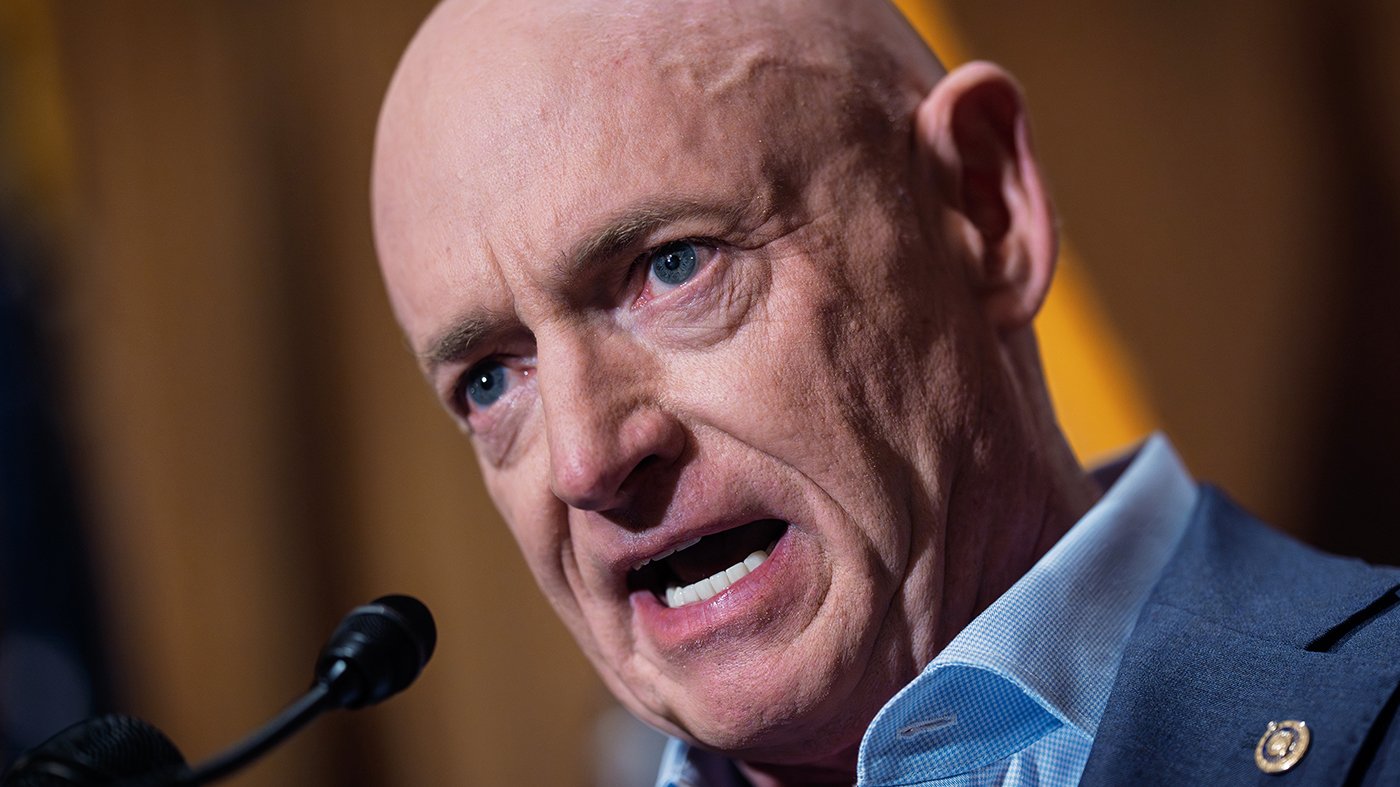
A federal appeals court panel on Thursday cast doubt on the Pentagon's attempt to censure Sen. Mark Kelly (D-Ariz.) and reduce his retirement rank, questioning whether the military can punish a retired officer for political speech.
During oral arguments before the U.S. Court of Appeals for the D.C. Circuit, a three-judge panel pressed Justice Department lawyers on the government's claim that Kelly, a retired Navy captain, remains subject to military discipline for participating in a video that called on service members to “refuse illegal orders.” The panel's skepticism suggests the Pentagon may face an uphill battle in defending its actions against the Arizona Democrat.
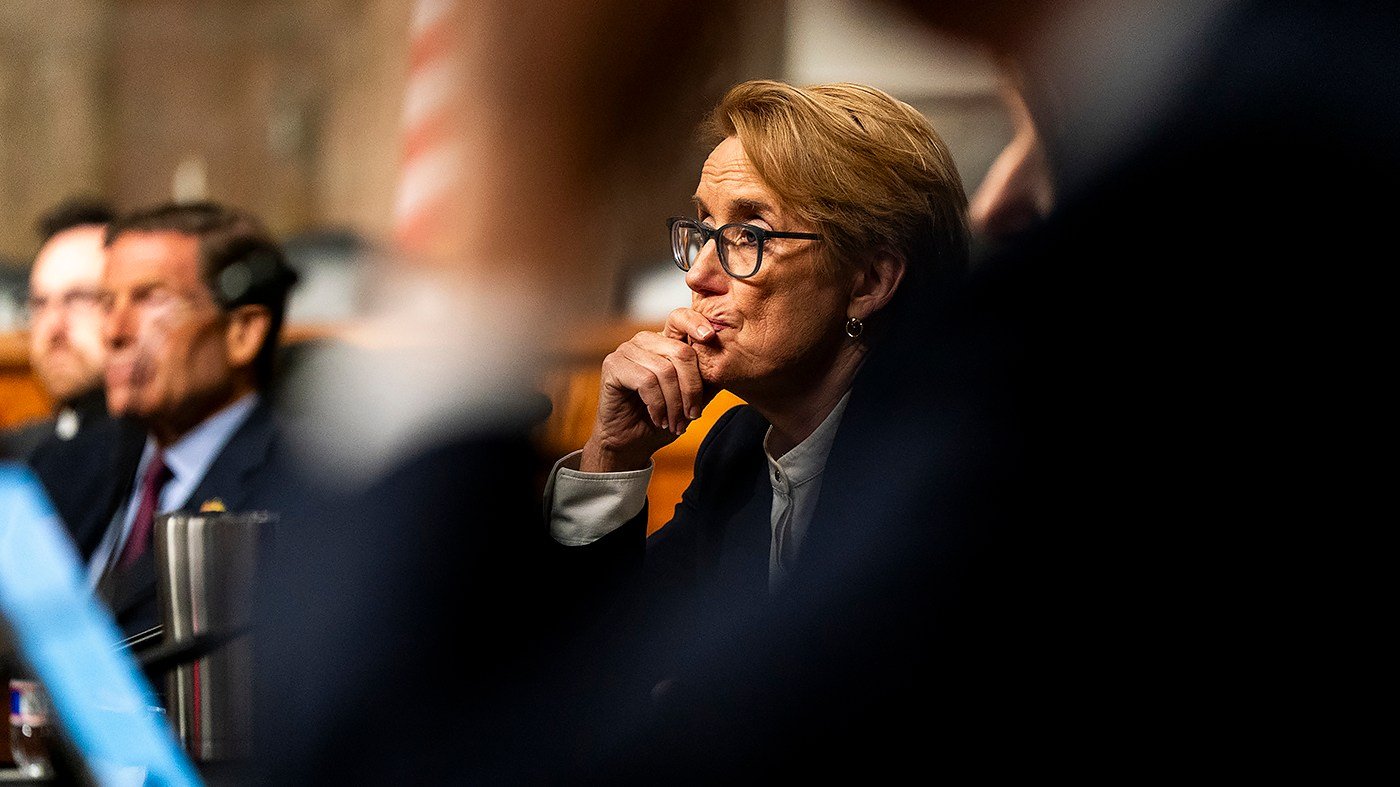
Judge Florence Pan, a Biden appointee, challenged the government's logic directly. “You’re saying that, if he wants to speak freely, he should discharge himself, which means giving up his retirement pay, giving up his rank, giving up all of those things,” Pan said. “That that is the price that our military retirees and veterans should pay if they want to speak freely?”
The case stems from a November video in which Kelly and five other Democrats with military or intelligence backgrounds urged troops to “refuse illegal orders.” Defense Secretary Pete Hegseth announced in January that the Pentagon had initiated retirement grade determination proceedings and issued a formal letter of censure. Kelly sued shortly after, arguing the punishment violated his First Amendment rights.
A federal judge in February blocked the Pentagon's efforts, ruling that while active-duty service members have limited free speech protections to maintain military discipline, no court had extended that doctrine to retirees. The government appealed, but the D.C. Circuit panel appeared unconvinced.
Ben Mizer, Kelly's attorney, told the panel the punishment amounted to “textbook retaliation against disfavored speech.” He emphasized that Kelly did not counsel disobedience of lawful orders. “He simply recited the bedrock proposition of military law that every service member learns when they enter the military, which is that service members can refuse illegal orders,” Mizer said.
Justice Department lawyer John Bailey countered that the video was a veiled call to reject lawful directives. “It was the secretary’s inference that this was a ‘wink, wink and a nod,’” Bailey said, suggesting Hegseth viewed the message as targeting specific ongoing operations. But Judge Cornelia Pillard, an Obama appointee, questioned whether a service member watching the video would infer that Kelly was labeling lawful orders as unlawful. “The details about what Sen. Kelly thinks are unlawful orders come months later,” Pillard noted.
The video also featured Sen. Elissa Slotkin (D-Mich.) and Reps. Chris Deluzio (Pa.), Maggie Goodlander (N.H.), Chrissy Houlahan (Pa.), and Jason Crow (Colo.). At the time, they did not specify which orders they viewed as illegal, but Kelly later pointed to Trump's deployment of National Guard members to cities and lethal strikes against drug-smuggling boats.
Kelly's lawsuit also alleges violations of the separation of powers, due process, and the Speech or Debate clause, which protects lawmakers' legislative activities. The Justice Department has argued that veterans' speech is more restricted than civilians', since retirement from active service does not fully separate them from the military. Pan pressed the government on a hypothetical about a draftee, suggesting that if First Amendment limits applied immediately upon joining, that “can’t possibly be the correct interpretation.”
After the hearing, Kelly told reporters he “will not back down.” “They’re trying to send a message to other retired veterans, and really, to all of us,” he said. “If you say something that the president or this administration does not like, they’re going to come after you. The president is trying to silence us, and I can’t think of anything that’s more un-American.”
The case has drawn attention amid broader debates over military speech and political accountability. The Pentagon's actions come as Hegseth has clashed with reporters over Trump's Iran policy, and as the Supreme Court has been at the center of partisan fights over voting rights and redistricting. The D.C. Circuit's eventual ruling could set a precedent for how far the military can go in policing the speech of retired service members.