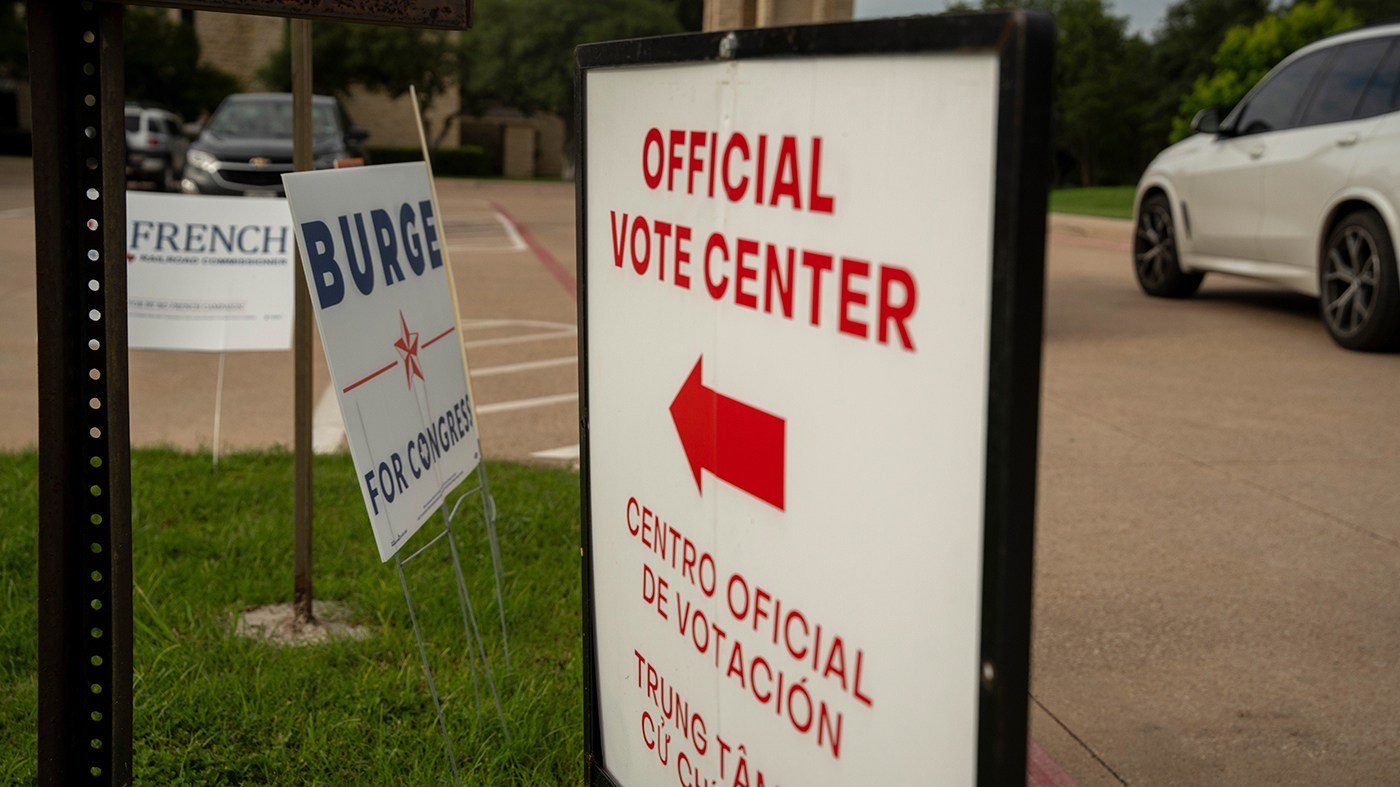
Maine is set to become the epicenter of the political world as the November election approaches. The outcome of its U.S. Senate race will likely decide whether Democrats can flip the chamber from Republican control. Voters will cast ballots with two realities in mind: incumbent Susan Collins has steered millions in federal dollars to the state, but her reelection would keep the GOP in charge of the Senate.
The contest between Collins and Democrat Troy Jackson is more than a clash of candidates—it's a proxy war between two political eras. The old politics, epitomized by former House Speaker Tip O'Neill's famous dictum that "all politics is local," rewarded lawmakers who funneled earmarks to their districts and climbed the seniority ladder to chair powerful committees. Collins, first elected in 1996, is a product of that system. As chair of the Senate Appropriations Committee, she has directed substantial funds to Maine, with one campaign ad touting $190 million for rural hospitals and urging voters to "thank our senator."
Yet the new politics operates on a different axiom: all politics is national. In this polarized climate, states have become more uniform—blue states bluer, red states redder. Maine, which hasn't backed a Republican for president since George H.W. Bush in 1988, saw Kamala Harris win by 7 points in 2024. The Northeast is now a Democratic stronghold, with only Maine and Pennsylvania still represented by Republican senators. Figures like Donald Trump and Bernie Sanders have come to define this era, each channeling the grievances of different coalitions—Trump appealing to older, rural, non-college voters, and Sanders drawing young, urban, college-educated supporters who decry economic inequality.
Jackson is a foot soldier in the Sanders movement. A former Republican who switched parties in 2004, he rose through Maine's state Senate ranks to become its president. His support for Sanders in 2016 and his rapid mobilization after Graham Platner's campaign collapsed this summer secured him the Democratic nomination. In his acceptance speech, Jackson attacked Collins for backing tax breaks for corporations and confirming Supreme Court justices who overturned Roe v. Wade.
Jackson positions himself as a disruptor, not a typical junior senator. He has pledged to oppose Chuck Schumer as Democratic leader, supports abolishing ICE—a salient issue after the killing of Johan Sebastián Durán Guerrero in Biddeford—and advocates for Medicare for All. His platform reflects a broader push by progressive activists to nationalize Senate races and challenge establishment norms.
Maine voters are caught in the crossfire. Frank Bragg, an 85-year-old retired physician who once supported Collins, now backs Jackson. While he appreciates the federal money Collins has brought home, Bragg says his vote is about "standing up for the country." He invokes Margaret Chase Smith, the Maine senator who famously stood up to McCarthyism, and criticizes Collins for missing such moments and instead "going along with Trump."
With millions spent on ads and mailers, the race may hinge on "double haters"—voters who dislike both candidates. Trump has called Jackson a "lunatic" and a socialist, while Jackson paints Collins as a rubber stamp for the ultrawealthy and the president. Collins hopes to attract split-ticket voters, but such voters are increasingly rare in an era of nationalized politics. Maine, like the rest of the country, is feeling the pull of the new politics, and the outcome here could signal which direction the nation is headed.
As the campaign enters its final stretch, the contrast between national redistricting battles and local concerns underscores the shifting dynamics. The influence of online politics and generational divides further complicate traditional assumptions. Even as bipartisan commissions urge public health investment, the partisan chasm remains wide. Maine's Senate race is a microcosm of a larger struggle between the old and new politics, and its result will reverberate far beyond the Pine Tree State.