American politics in 2026 requires a second glance. At first, a Republican congressman receiving leadership support for reelection seems routine. But a closer look reveals that Rep. Max Miller (R-Ohio) has that backing despite accusations of physical abuse from his ex-wife, the daughter of Sen. Bernie Moreno (R-Ohio), and from former Trump White House press secretary Stephanie Grisham, who sought a restraining order against him.
Most alarmingly, Miller's ex-wife alleges he broke their two-year-old daughter's collarbone. Moreno has publicly called Miller a "danger to his daughter" and said he "holds his breath" whenever Miller is near his granddaughter. Yet neither President Trump, House Speaker Mike Johnson (R-La.), nor RNC Chair Joe Gruters has withdrawn support. The allegations have rattled Ohio's GOP, but Miller remains on the ballot.

Then there's Victor Marx, the Republican nominee for governor of Colorado. According to a Los Angeles Times profile, Marx claims he killed a man at age seven, refuses to say if that was his only killing, and says he has rescued 45,000 captives and called in a U.S. military airstrike that killed 70 ISIS fighters. He also says he can exorcise demons over the phone. There is no record of the rescues or any civilian directing American airpower against terrorists. Despite this, Marx is endorsed by the Republican Governors Association.
This is a far cry from 2012, when GOP leaders pushed Missouri Senate candidate Todd Akin out after his "legitimate rape" comment. Today, such statements barely register in Trump's MAGA party. The 2026 midterm battle now centers on "radical" labels, not on candidate fitness.
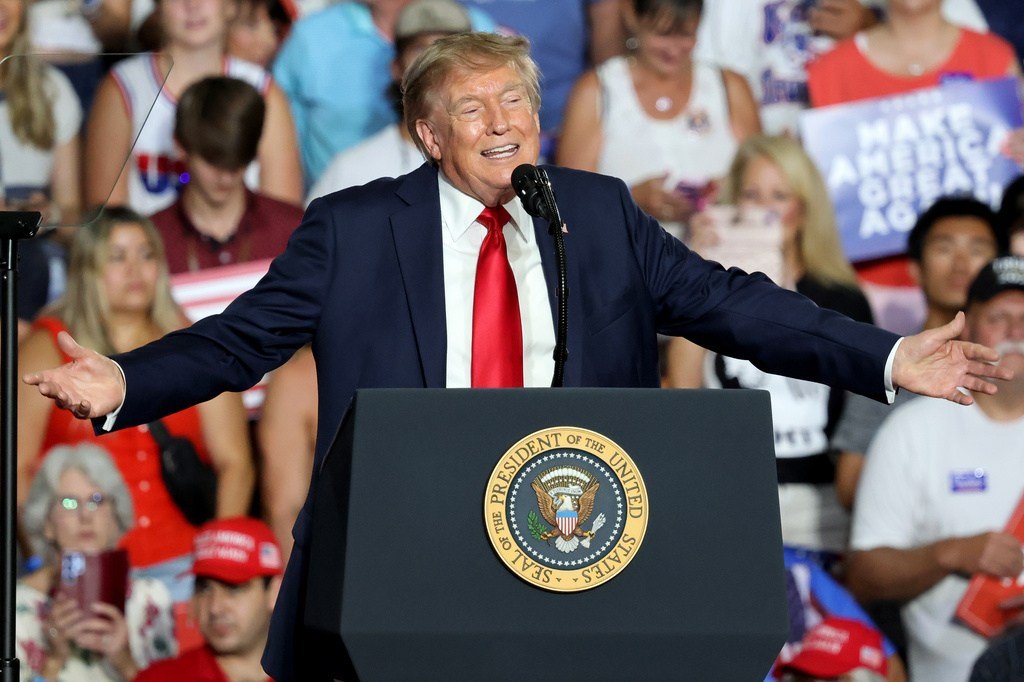
The low bar extends to Trump himself. He retains strong support among Republican voters despite a jury finding him liable for sexual abuse and a separate conviction for hiding hush-money payments. His aides face similar indifference—only two Republican senators voted against confirming Todd Blanche as attorney general, despite his role in the Epstein document release failure.
Trump's approval among Republicans hovers around 80 percent in YouGov polling, while his overall disapproval stands at 57.2 percent, per RealClearPolitics. That loyalty translates into tolerance for questionable behavior. Even conservative commentators have suggested Trump should address the Miller scandal, but so far, silence.
Democrats, by contrast, have pushed candidates off the ballot over mistreatment allegations, including Senate hopeful Graham Platner in Maine and gubernatorial candidate Eric Swalwell in California. The double standard is stark.
Trump's base also accepts policies that hurt their wallets, like tolerating higher gas prices. Sen. Jon Ossoff (D-Ga.) recently called the administration "a government of, by and for the ultra-rich." Indeed, Commerce Secretary Howard Lutnick and Education Secretary Linda McMahon hold wealth exceeding that of millions of poor households. The AP reports 57 Trump appointees are worth at least $100 million.
Trump's family has also profited from his presidency, prompting a Wall Street Journal editorial to say they are "profiting off the presidency in ways that demean the office." Yet there are no political consequences, just as there were none for his New York fraud judgment.
If this is the new normal, it deserves scrutiny. Some Ohio Republicans have urged Miller to exit, but without leadership pressure, the pattern persists. Trump's grip on the base has fundamentally altered what voters accept—and that's a story worth watching.