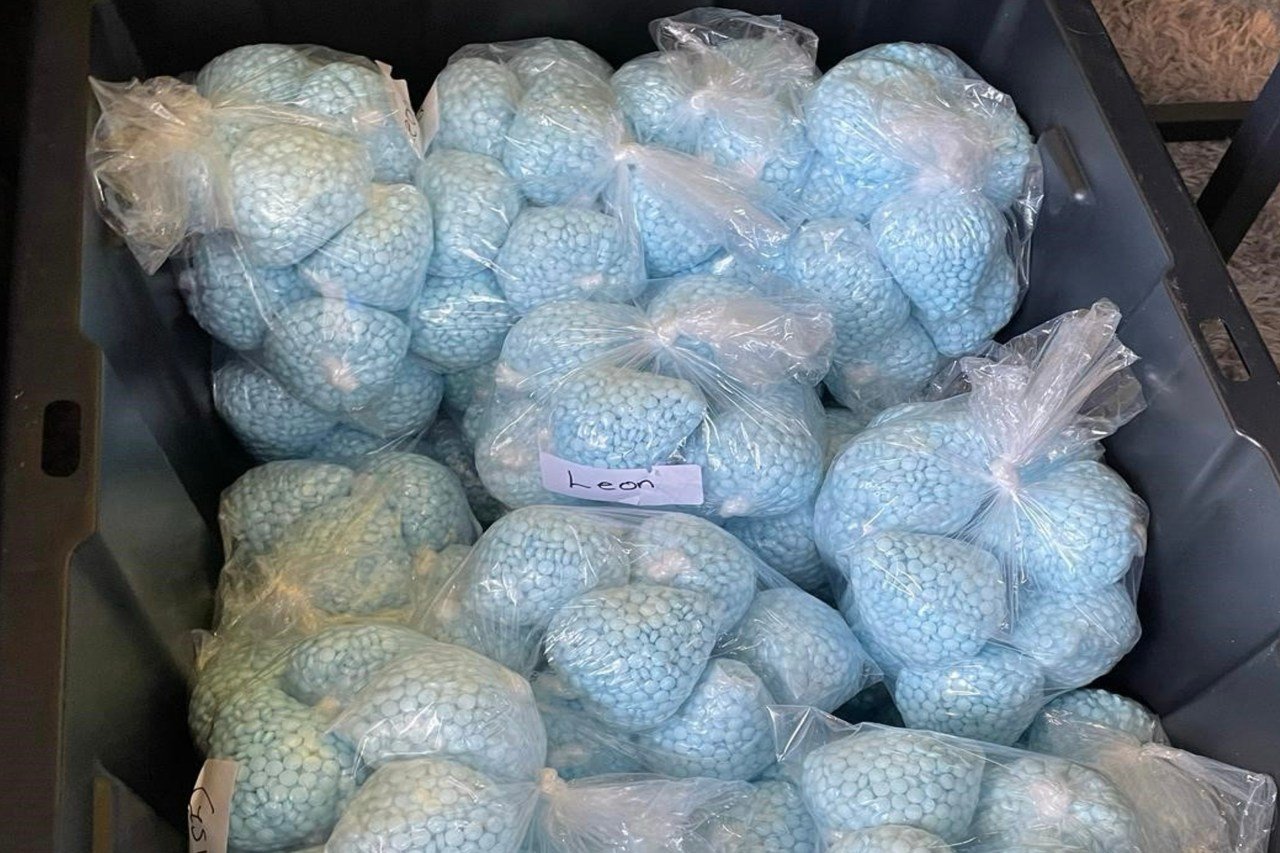
New Mexico Governor Michelle Lujan Grisham on Wednesday escalated her confrontation with federal drug enforcement, calling for a criminal investigation into the Drug Enforcement Administration after an Associated Press investigation revealed that DEA agents permitted hundreds of thousands of fentanyl pills to reach the streets over a two-year span while building cases against higher-level traffickers.
The governor directed the state attorney general to examine whether the agency’s actions violated New Mexico law—an extraordinary move against a federal law enforcement body amid a fentanyl crisis that has made the drug one of the deadliest public health threats in the country. The AP investigation, published earlier this week, detailed how DEA agents between 2023 and 2025 repeatedly allowed major fentanyl shipments to continue moving through New Mexico rather than seizing them immediately, as they sought to build cases against senior cartel figures.
Current and former DEA agents told the AP that the strategy amounted to a gamble with public safety in a state already devastated by the fentanyl epidemic. They said it may have violated U.S. Justice Department guidelines that require agents to protect the public from a drug the White House last year designated as a “weapon of mass destruction.”
“There are no words to describe how reckless and dangerous these decisions were,” Lujan Grisham said in a statement. “Make no mistake: the DEA knew people would die if these pills made it into New Mexico communities, and the agency let it happen anyway.”
The DEA did not immediately respond to a request for comment on the governor’s statement. In earlier remarks to the AP, the agency defended its approach, arguing that it would be impractical to seize every drug shipment and that the investigative decisions were “lawful, reasonable under the circumstances and consistent with Department guidance.” DEA spokesperson Amanda Wozniak wrote in an email that “public descriptions suggesting that DEA knowingly permitted fentanyl to reach communities are false and fundamentally mischaracterize the facts.”
Alex Uballez, who served as U.S. attorney in New Mexico from May 2022 until February 2025, told the AP that drugs went unseized at times due to resource constraints and his belief that prosecuting larger organizations has a greater impact than intercepting every suspected drug transaction. The AP investigation cited three current and former agents and government records, including an internal report of a 2023 delivery of 74,000 pills that the DEA surveilled—but did not seize—at a mobile home park in Albuquerque.
It is not clear whether any fatal overdoses in New Mexico can be directly attributed to the DEA strategy. While overdose deaths nationwide fell 14% last year, government data show New Mexico experienced a 21% spike. “New Mexican lives are not the federal government’s cost of doing business,” the governor wrote in her statement. “I plan to hold the federal government accountable for this disaster and will explore every possible avenue of action against the federal government to right these wrongs.”
DEA whistleblower David Howell, whose complaint first drew attention to the unseized fentanyl, spoke Wednesday with congressional staffers. Empower Oversight, a whistleblower advocacy group representing Howell, has asked the Senate Judiciary Committee and the Justice Department’s Office of Inspector General to investigate the agent’s allegations. Senator Bernie Moreno, an Ohio Republican, called Howell’s revelations “a scandal of the highest order” and said on X that he plans to find out how many American lives were lost due to the DEA’s inaction.
Victims groups also spoke out, noting that the DEA’s approach in New Mexico contradicts its prominent “One Pill Can Kill” campaign, which warns that as little as a few milligrams of fentanyl can cause a fatal overdose. “Knowing the Justice Department had guidelines to seize the opioids whenever practical—and the fact these were ignored—is truly heartbreaking,” said Michael Glownia, who lost his daughter to fentanyl in 2023 and founded a nonprofit to support families suffering similar losses. For context, this controversy unfolds as the GOP lawmaker concedes Iran deal has concessions, calls it 'work in progress', highlighting broader political tensions over federal accountability.