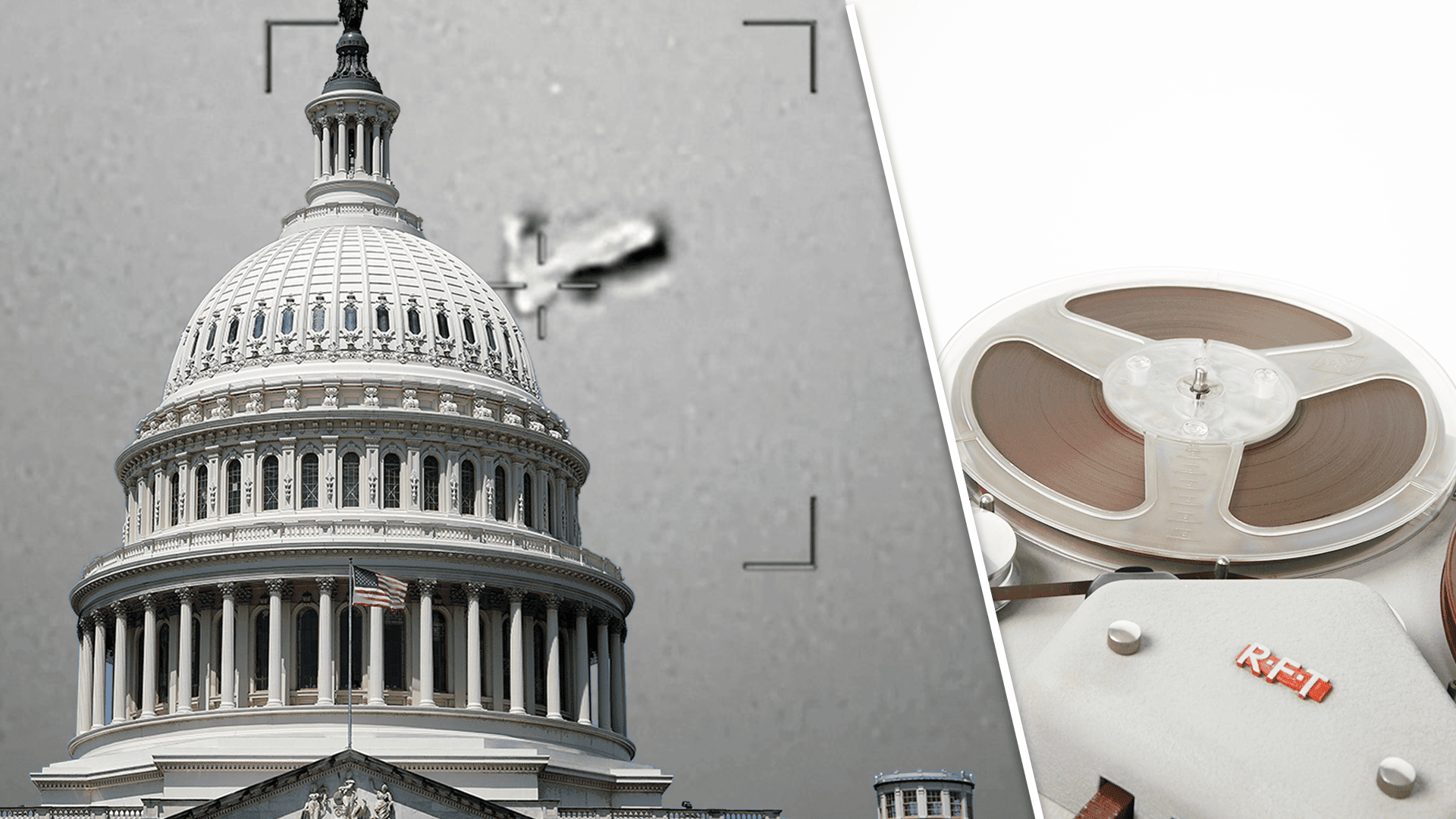
A previously undisclosed audio recording from 1952, documenting a classified briefing between Air Force officials and scientists about a series of UFO sightings over Washington, D.C., could soon see the light of day, according to lawmakers and transparency advocates.
Representative Eric Burlison, a Missouri Republican and member of Congress's UAP Caucus, revealed at a forum on unidentified aerial phenomena transparency this week that the tape exists and that MIT's Lincoln Laboratory—a federally funded research and development center—has agreed to make the material available. The disclosure marks a significant step in efforts to declassify records related to what has become known as the 'Invasion of Washington.'
Jordan Flowers, executive director of the Disclosure Foundation, confirmed to NewsNation that the artifact is believed to be a reel-to-reel audio tape recording of a briefing specifically about the July 1952 incidents, when multiple unidentified objects were tracked on radar and witnessed by pilots over the capital. Flowers credited Burlison with pressuring the institution to release the tape, calling it a crucial piece of evidence for understanding government knowledge of UAPs during the Cold War era.
The push for release comes amid a broader bipartisan effort in Washington to increase transparency around UAPs. Bipartisan lawmakers have held multiple forums pressing federal agencies to declassify records, and the Pentagon's All-domain Anomaly Resolution Office has been under scrutiny for its handling of reports.
Burlison's announcement adds to a growing list of demands for disclosure. Critics argue that the government has long shielded such information, while advocates see the tape as a potential breakthrough in confirming the reality of the 1952 events. The sightings, which occurred over several nights in July, involved objects that performed maneuvers beyond known aircraft capabilities at the time, prompting Air Force investigations.
MIT's Lincoln Laboratory, which conducted radar research during that period, has not publicly commented on the tape's contents or a timeline for release. However, Flowers indicated that the institution is cooperating and that the recording could be made available to researchers and the public in the coming months, pending any classification reviews.
The development has energized UAP disclosure advocates, who view it as a rare instance of institutional cooperation. Recent legal battles over other government audio recordings have highlighted the challenges of extracting historical materials from federal agencies.
For now, the exact contents of the 1952 briefing remain unknown, but the promise of its release has already sparked renewed interest in the 'Invasion of Washington' and the broader history of UAP encounters over the nation's capital.