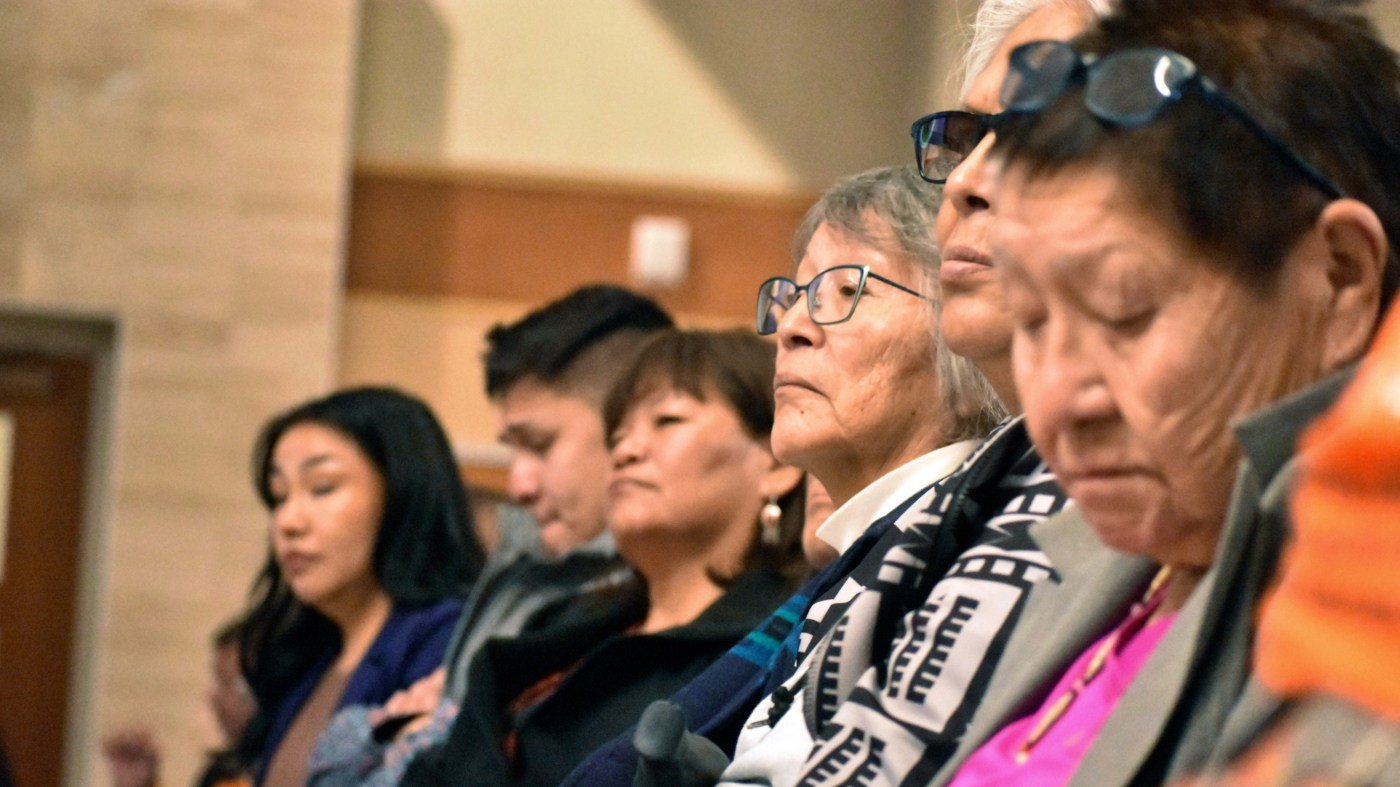
For Indian Country, the federal government's formal reckoning with the boarding school era remains an unfinished chapter. A bipartisan, bicameral bill—the Truth and Healing Commission on Indian Boarding School Policies Act (S. 761)—has lingered in Congress despite broad support. Sponsored in the Senate by Lisa Murkowski (R-Alaska) and Brian Schatz (D-Hawaii), and in the House by Tom Cole (R-Okla.) and Sharice Davids (D-Kan.), the legislation would establish a commission to investigate the full history and ongoing impact of federal Indian boarding schools.
From 1819 through the 1970s, the U.S. government forcibly removed tens of thousands of American Indian, Alaska Native, and Native Hawaiian children from their families, placing them in over 500 boarding schools, often run by Christian churches. At these institutions, children were punished for speaking their languages, subjected to grueling manual labor, and endured physical, emotional, and sexual abuse. The federal government has formally documented more than 973 deaths of children at these schools.
In 2024, former President Joe Biden issued a formal apology, calling the policy “a sin on our soul” and “one of the most horrific chapters in American history.” That acknowledgment was a long-overdue validation of what Native families have known for generations, yet the trauma persists, and meaningful recognition of its effects remains elusive.
The proposed commission would investigate and document the boarding school policies, create a survivors' subcommittee to guide its work, and affirm that the Native American Graves Protection and Repatriation Act applies to items tied to these schools. It would also protect and return records—enrollment files, death records, and correspondence—that families have sought for decades. The commission would ultimately recommend policies to protect unmarked graves, support repatriation, provide healing resources for survivors and descendants, and prevent future forced removals, including in the current foster care system.
The urgency is heightened by the 2026 midterm elections, which saw a record number of Native American candidates win office—over 180 at local, state, and federal levels. This surge reflects a demand for action on issues critical to Indian Country. The push is led by the National Native American Boarding School Healing Coalition, a Native-led nonprofit that has worked for decades to recover records, document abuses, and support healing. The coalition has partnered with the federal government through the Department of the Interior's Federal Indian Boarding School Initiative, collecting and digitizing thousands of records and stories for a permanent archive. But this work needs formal recognition and funding.
Time is of the essence. Many survivors are in their 80s and 90s, and every year, elders pass away, taking with them the memories that families still seek. The bill passed the Senate unanimously in the 118th Congress but never received a House hearing. In the 119th Congress, it includes minor revisions to expand access to historic documents. There is no reason for Congress to shelve this commonsense, bipartisan measure again.
As the lame-duck session unfolds, advocates urge lawmakers to demonstrate that progress is still possible. For Indian Country, this is not a trivial matter—it is a vital step toward truth, healing, and justice. Congress must pass the Truth and Healing Commission on Indian Boarding School Policies Act now.