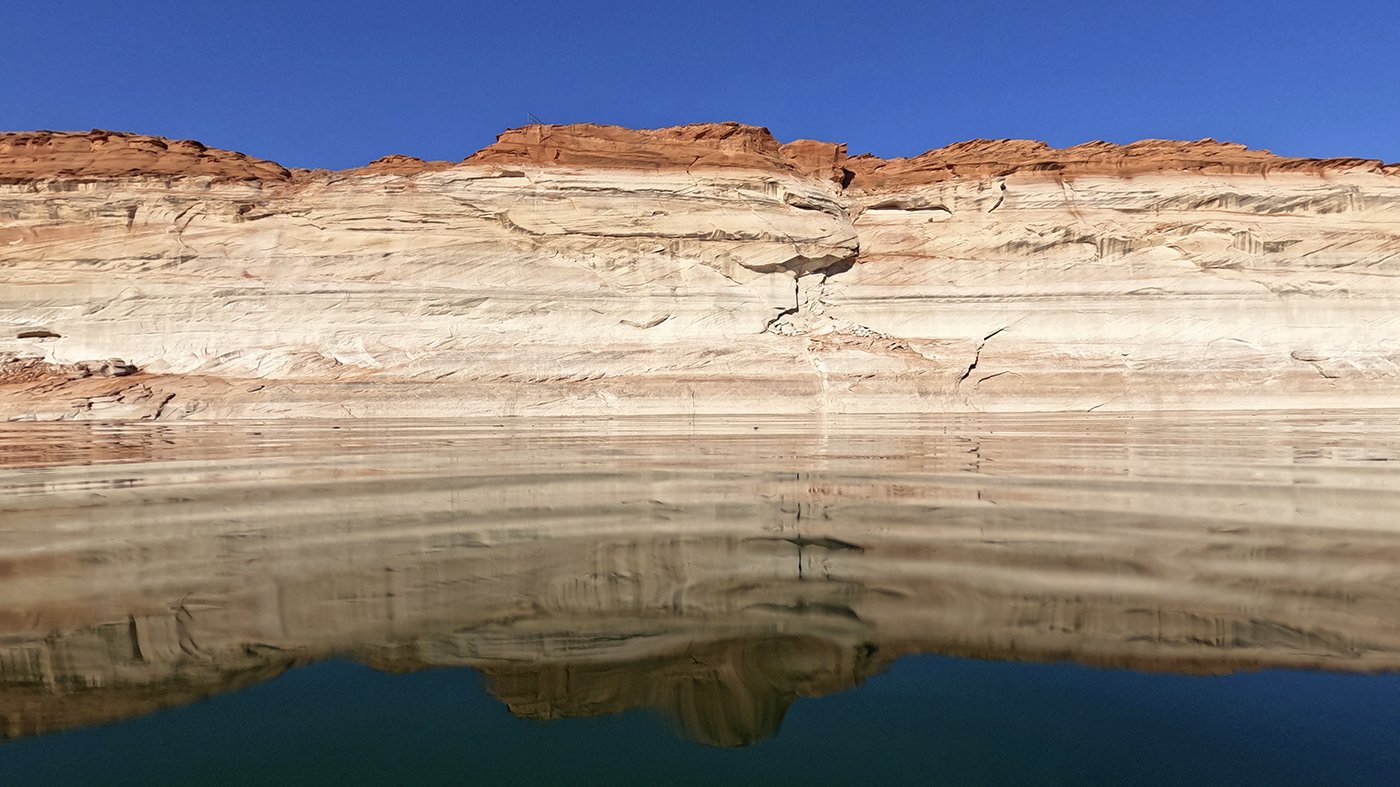
The Colorado River's second-largest reservoir, Lake Powell, has fallen to its lowest level ever recorded, according to federal data, as a decades-long drought and relentless demand strain the region's water supply.
The U.S. Bureau of Reclamation (USBR) measured the lake's surface elevation at 3,519.80 feet on Sunday, edging past the previous record low set in April 2023. The level has dropped about 3.8 feet in the past month alone. The reservoir, which spans the Arizona-Utah border, is a critical storage point for the river's upper basin.
Lake Mead, the nation's largest reservoir and also on the Colorado River, is likewise at its lowest point on record—1,039.83 feet as of Monday, down more than 23 feet since January. The USBR's latest projections show Lake Mead falling below 1,110 feet by July 2028, a level that would be nearly 120 feet below its full-pool elevation. For Lake Powell, the agency expects the water to drop to under 3,492 feet by late March 2027—dangerously close to the 3,490-foot minimum needed to keep the Glen Canyon Dam's hydroelectric turbines spinning.
The implications ripple across seven states—Arizona, California, Colorado, Nevada, New Mexico, Utah, and Wyoming—that rely on the river for municipal water, hydropower, recreation, and wildlife habitat. The USBR estimates that 35 to 40 million people depend on the Colorado River for their daily water needs.
The river has been in drought for more than 25 years, a situation exacerbated by rising temperatures and over-allocation. In response, the Interior Department last month proposed a plan that would require the seven states to cut their water use by up to 3 million acre-feet per year. The proposal has met with sharp criticism from state leaders, including Arizona Governor Katie Hobbs, a Democrat, who called it “unacceptable” and warned it could force Arizona to bear the brunt of the cutbacks.
The political friction underscores the difficulty of reaching a consensus on water rights in the arid West, where every drop is contested. As the reservoirs keep shrinking, the pressure on federal and state officials to find a sustainable path forward grows more acute.
The situation is part of a broader pattern of extreme heat and water scarcity across the region. Recent reports of record-breaking temperatures in the contiguous U.S. and a heat dome threatening the Southeast highlight the climate challenges facing the country. Meanwhile, the hottest July on record for the lower 48 states has added urgency to water management debates.
Federal officials have also pointed to the need for long-term solutions, but the current impasse between the Bureau of Reclamation and the states leaves the river's future uncertain. With each new record low, the Colorado River's capacity to support a growing population and economy becomes more fragile, and the political stakes rise.