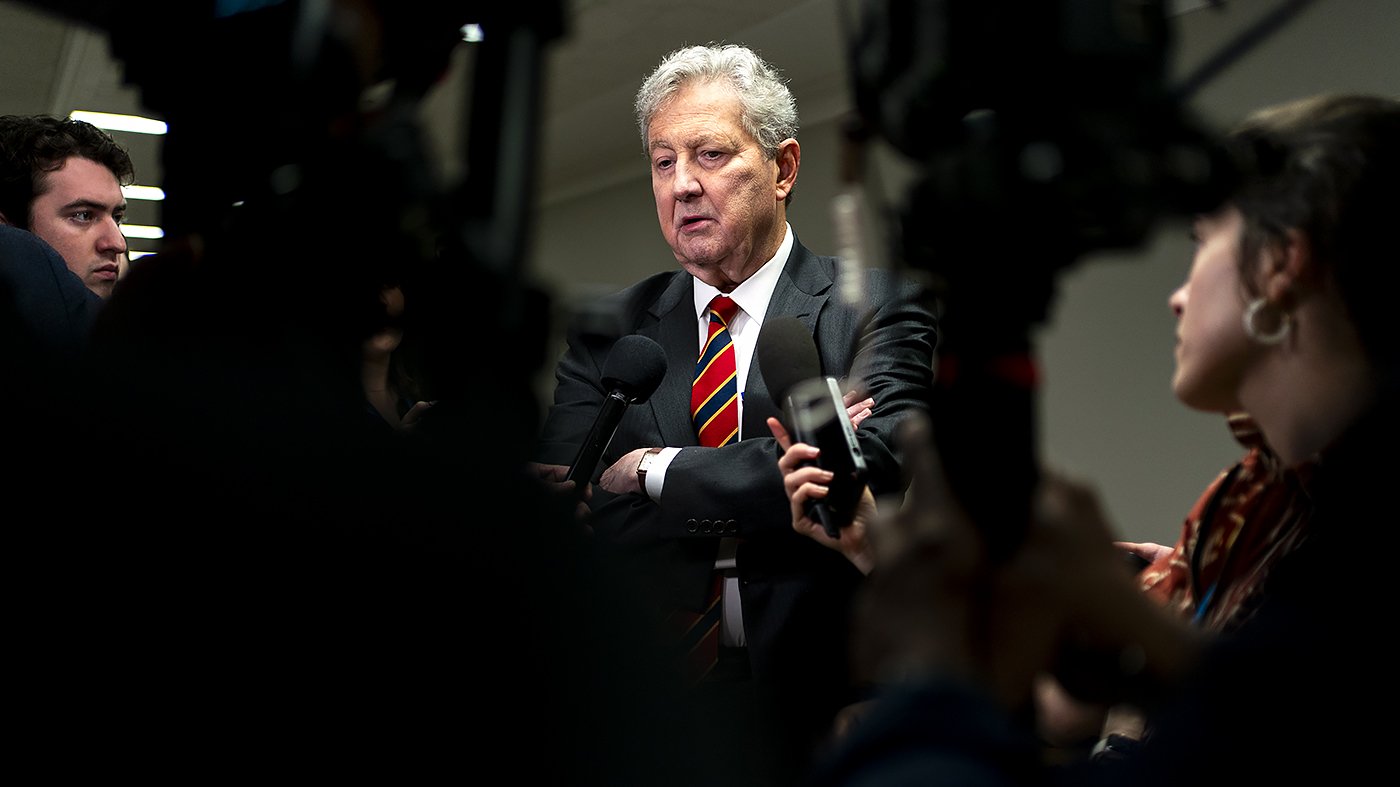
Senator John Kennedy of Louisiana offered a robust defense of President Trump's military intervention in Iran on Wednesday, framing the nearly month-long conflict as a necessary preventive measure rather than an act of aggression. In an interview on Fox Business Network, the Republican senator argued the administration had no alternative but to act.
"We had no choice," Kennedy stated. "The president didn't start a war, he was trying to stop a war. Iran essentially declared its intent to stockpile hundreds of missiles monthly, threatening to destroy the Middle East and strike European capitals if its nuclear program was challenged."

Kennedy outlined the operation's objectives as the systematic degradation of Iranian military capabilities. "The president's aims were to destroy Iran's missile and drone manufacturing plants, eliminate their stockpiles, and dismantle the infrastructure of the Revolutionary Guard, along with their navy and air force," he explained.
As Kennedy spoke, the White House indicated a potential shift in posture. Press Secretary Karoline Leavitt told reporters the U.S. was "very close to meeting the core objectives of Operation Epic Fury," specifically citing the destruction of the Iranian navy and progress toward reopening the Strait of Hormuz. She stated the mission "continues unabated," but her remarks suggested a scaling back of the military campaign.
The conflict's human cost continues to mount. UNICEF Deputy Executive Director Ted Chaiban reported Monday that over 2,100 children have been killed or wounded since hostilities began. This grim tally comes as domestic polling shows declining American support for the prolonged engagement.
The operation's origins remain politically contentious. Lawmakers from both parties were told in a classified briefing that the U.S. decision to launch strikes was largely prompted by an Israeli plan to attack Iran, with administration officials citing the need for preemptive action to protect U.S. troops in the region. However, President Trump later offered a conflicting account, suggesting he "might" have encouraged Israel to strike first. "It was my opinion that they were going to attack first," Trump said earlier this month, referring to Iran.
The administration's move has sparked broader political reactions, including demands from Congress for clarity on troop deployments related to the conflict. Meanwhile, Tehran's rejection of ceasefire talks has complicated the White House's search for an exit strategy.
As the situation evolves, the administration faces simultaneous domestic pressures. The conflict has emerged as a focal point in broader GOP dynamics, evident in discussions at conservative gatherings where Iran strategy intersects with internal party debates. The president has also cited the Iran engagement to justify other policy moves, including his recent support for extending surveillance authorities.