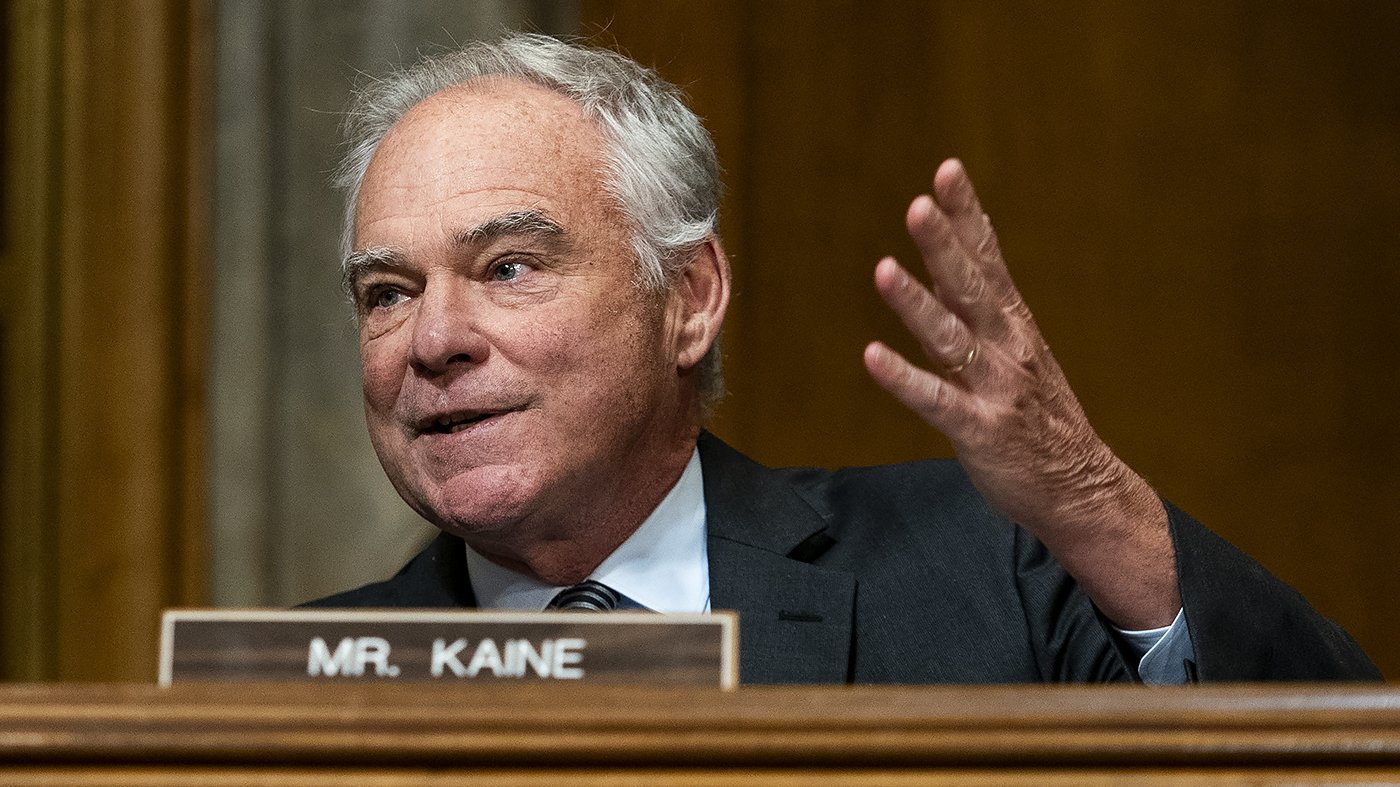
Senator Tim Kaine, a Virginia Democrat, charged Sunday that Defense Secretary Pete Hegseth’s decision to push out General Chris Donahue appears rooted in a long-standing personal animus toward the Army, not a strategic evaluation of military leadership.
“Are you pushing out the truth tellers to surround yourself by yes-men? And in particular, it looks like the secretary is coming down hardest… on the Army,” Kaine said on CBS News’s “Face the Nation.” He noted that Hegseth, who served in the Army, has openly described feeling mistreated by the institution. “That’s a grudge he’s carried,” Kaine added. “So, when you see Army officers forced out, you got to wonder, is this a personal thing, or is it really what’s best for the nation?”

Donahue, who commanded U.S. Army Europe and Africa, submitted retirement paperwork earlier this week after just over a year in the role, according to a Pentagon official. The Army confirmed he will relinquish command on July 2. His departure marks the latest in a series of high-profile military ousters under Hegseth, including former Joint Chiefs Chair General CQ Brown Jr., Navy Chief of Naval Operations Admiral Lisa Franchetti, Coast Guard Commandant Admiral Linda Fagan, Army Chief of Staff General Randy George, and Army Vice Chief of Staff General James Mingus.
The purge has drawn criticism from both parties. Republican Senator Thom Tillis of North Carolina, a frequent critic of the Trump administration, called the move an “unforced error.” In a social media post Thursday, Tillis wrote: “Strong leaders are not threatened by accomplished commanders. Weak ones are. His paranoid micromanagement of senior military leaders and promotion lists is pure insecurity dressed up as reform.”
However, Representative Clay Higgins, a Louisiana Republican on the House Armed Services Committee, urged caution. “I don’t automatically presume some improper decision was made by chain of command when somebody is let go and removed from a chain of command that was unexpected,” Higgins told The Hill.
Kaine, who serves on the Senate Armed Services Committee, said Donahue’s departure “caught us all by surprise” and lamented that the panel has not “yet have good answers from the Pentagon.” The House Armed Services Committee earlier this month adopted a provision in the annual National Defense Authorization Act requiring the Pentagon to explain in writing within five days why senior military leaders are fired or dismissed.
Kaine suggested Congress may need to impose additional “guardrails” on such firings. “When we bring it up on the floor, I think by then, we’ll have some of our questions answered, and if we need to go further to put some guardrails in place, you’ll probably find bipartisan support to do that,” he told Brennan.
The controversy echoes broader tensions over Hegseth’s leadership style. Hegseth’s firing of top Army general sparks GOP rift, with some Republicans defending the shakeup as necessary reform and others warning it undermines military readiness. Meanwhile, Hegseth is set to brief House GOP on a $350 billion Pentagon funding plan amid ongoing Iran talks, adding another layer of scrutiny to his tenure.
Kaine’s remarks underscore a growing partisan divide over civilian control of the military and the criteria for senior leadership changes. With the NDAA vote looming later this year, the Senate may become a battleground over how much oversight Congress should exert over Pentagon personnel decisions.