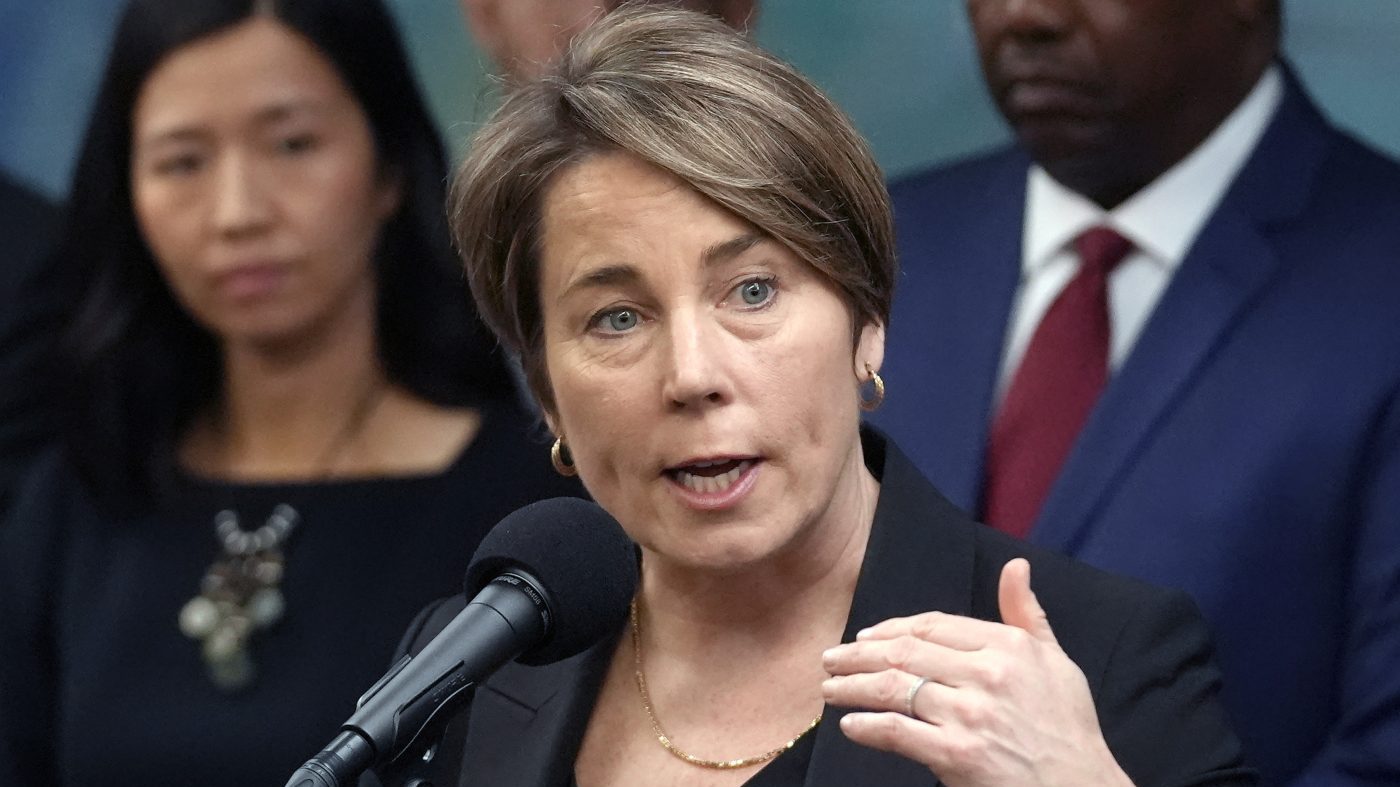
Massachusetts Governor Maura Healey on Monday signed legislation that removes the state's previous restriction on abortions performed at or after 24 weeks of pregnancy, positioning the Bay State's abortion law among the most expansive in the nation.
At a signing ceremony in her Statehouse office surrounded by lawmakers and reproductive rights advocates, Healey framed the measure as a direct response to the personal accounts she and others had collected from individuals who faced devastating diagnoses late in pregnancy. "We've heard so many stories — stories that are filled with a lot of pain and anguish and heartache and a lot of trauma," she said. "We heard stories about the worst moments of a person's life, of a couple's life."

The new law, which takes effect in 90 days, states that abortions may be "performed by a physician based upon the professional judgment of the physician." This effectively eliminates the previous 24-week cutoff and leaves the decision to medical providers rather than statutory timelines.
The measure passed the House last month by a vote of 119-33, with all Republicans and nine Democrats opposed. The Senate followed with a 15-4 vote. The legislative route was swift, reflecting the Democratic supermajorities in both chambers.
Healey did not shy away from the broader political context, explicitly tying the law to the national fight over reproductive rights. "We're committed to making sure that people in Massachusetts can get access to the healthcare they need no matter what Donald Trump or Republicans in Congress or the Supreme Court does," she said. She also referenced Attorney General Todd Blanche's recent statements about making the Dobbs decision the law of the land. "To be clear, abortion is on the ballot this November in Massachusetts and around the country."
State Representative Christine Barber, the bill's sponsor, argued on Instagram that healthcare decisions belong to patients and their doctors, "not to politicians who have never met them." Her comments echoed the testimony of advocates who described residents traveling out of state for late-term procedures due to the previous restriction.
The law has drawn sharp criticism from anti-abortion groups. Massachusetts Citizens for Life president Myrna Maloney accused the measure of "normalizing the deaths of fully developed infants and pressuring vulnerable women to permit their unborn children to die in heinous acts of violence."
Massachusetts now joins a small group of states with no gestational limit on abortion, a status that is likely to become a focal point in upcoming elections. The state's move comes amid broader federal efforts to restrict abortion access, including Attorney General Blanche's pledge to enshrine Dobbs nationwide and target abortion pills by mail. Healey's administration has signaled it will use state resources to push back against any federal curbs.
Political analysts note that the law's passage could energize both sides of the abortion debate in Massachusetts, where Democrats hold all statewide offices. The signing also follows a recent House vote that eased late-term restrictions, indicating a coordinated legislative push.
With the law set to take effect this summer, Massachusetts becomes a destination for those seeking late-term care, potentially straining resources and intensifying the state's role as a sanctuary for reproductive services. The political ramifications are likely to ripple into the 2026 midterms, as both parties seek to leverage the issue.