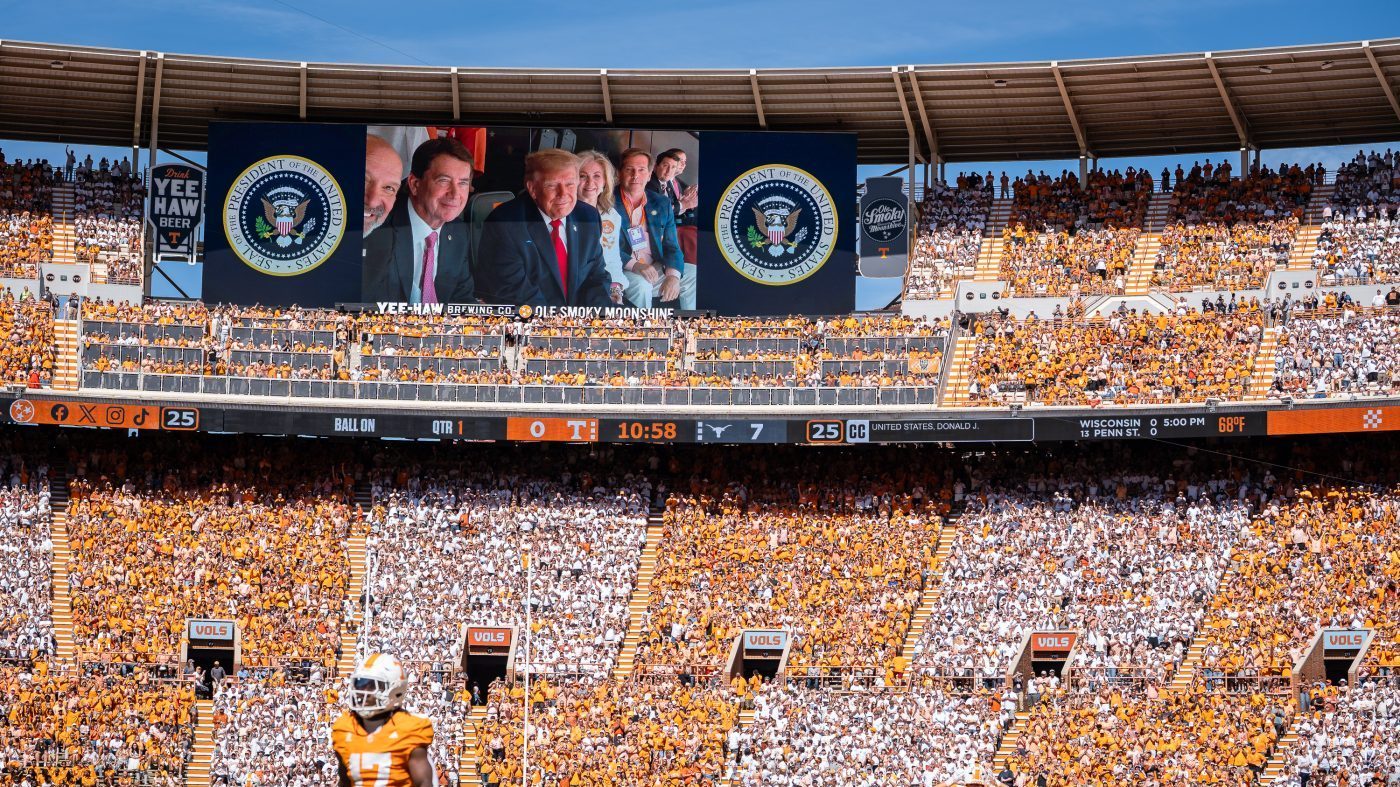
President Trump is spending Saturday in Knoxville, Tennessee, attending the top-ranked Texas Longhorns' clash with the Volunteers—a high-profile appearance that coincides with Senate Republicans' final sprint to pass the Protect College Sports Act before the chamber recesses for the midterm elections.
Trump flew to Knoxville that morning to watch the Longhorns, who hold the No. 1 spot in the AP Top 25, take on Tennessee, ranked 14th. Unlike Senator Ted Cruz (R-TX), who earlier this month appeared on ESPN's College GameDay to promote the legislation, the president is not scheduled to sit for interviews with sports networks covering the game.
The visit comes as the Senate prepares to wrap up its work for the year, with a long recess set to extend past Election Day. While some GOP candidates are trying to create distance from Trump amid his slumping approval ratings, Senate Republicans are eager to pass priority legislation while they still control the chamber.
Before departing for Tennessee, Trump rejected Iran's seven-day proposal to reopen the Strait of Hormuz and enter a ceasefire. The president told reporters Saturday morning, “I'm rejecting their deal,” adding, “They want to make a deal where they open the strait immediately because they're losing so badly.” He claimed, “We're winning tremendously. We have total control of the Hormuz Strait, massive amounts of oil are coming out of the Hormuz Strait.”
Had the deal gone through, Iran would have resumed negotiations over its nuclear program in exchange for reopening the strategic waterway. Trump's rejection leaves the door open for renewed military strikes against Iran, which he is reportedly considering after the November midterms.
The administration's hardline stance on Iran is part of a broader national security posture that has drawn judicial scrutiny. Meanwhile, the Senate's legislative window is closing fast, with the Protect College Sports Act—aimed at regulating name, image, and likeness deals—as a top priority for Republicans.
Trump's appearance at the game is seen as an effort to energize his base in a key battleground state, even as some GOP candidates on the ballot distance themselves from his policies. The president's approval rating has hit a record low, and his unilateral moves on federal spending have sparked criticism from both sides of the aisle.
As the day unfolds, the president's schedule in Knoxville is light on formal remarks, but his presence alone sends a political signal. With the Senate set to recess, the coming weeks will test whether Republicans can deliver on their legislative promises before the midterms reshape the balance of power.