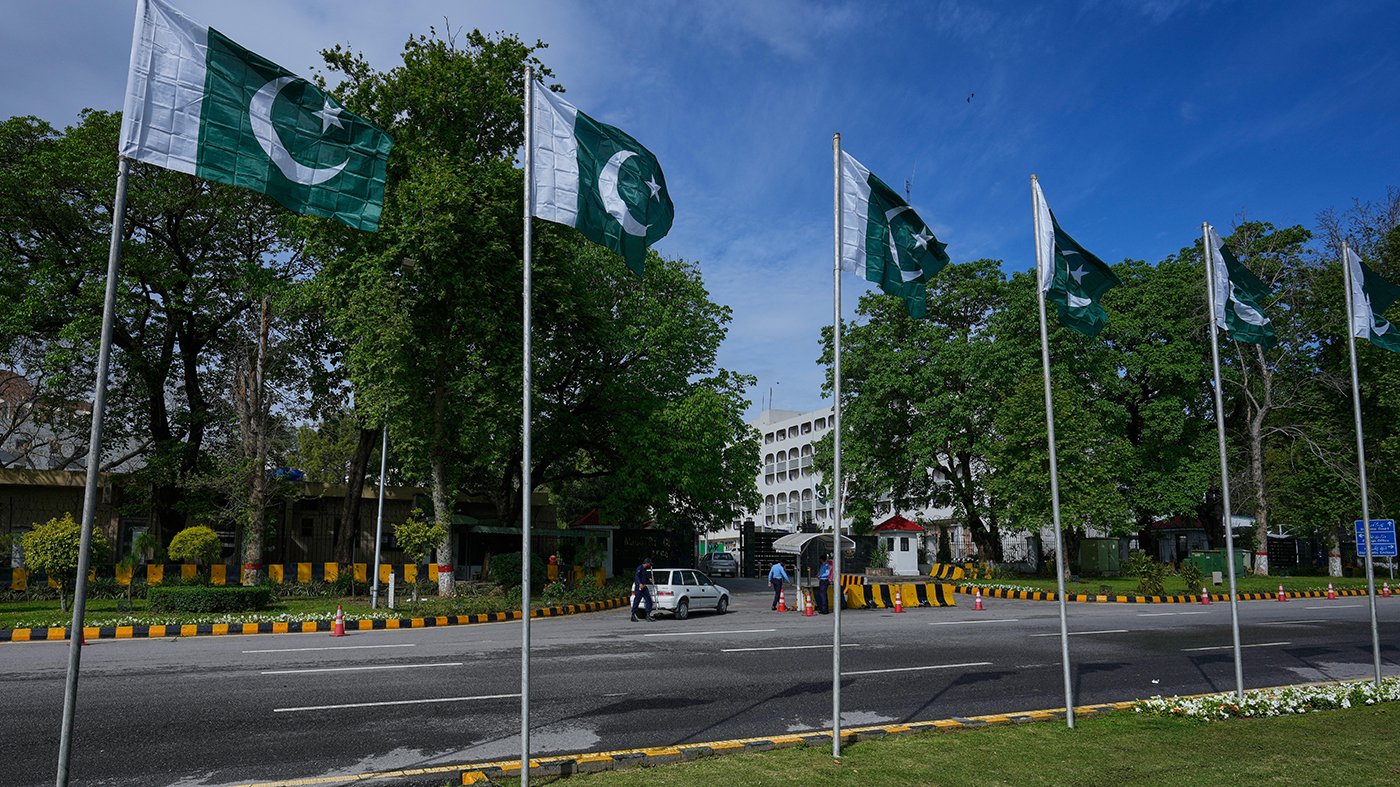
A high-level Iranian delegation touched down in Islamabad on Friday, setting the stage for tense, Pakistan-mediated negotiations with United States officials scheduled for Saturday. The talks aim to transform a precarious two-week truce into a more durable agreement to end hostilities.
Pakistan's Foreign Affairs Ministry documented the arrival on social media, showing Iranian Parliament Speaker Mohammad Bagher Qalibaf and Foreign Minister Abbas Araghchi disembarking and being greeted on the tarmac. They are set to meet with a US team led by Vice President Vance, alongside special envoy Steve Witkoff and Jared Kushner.
Negotiations Under a Shaky Truce
The diplomatic push comes less than a week after Washington agreed to pause military operations, a move contingent on Iran reopening the critical Strait of Hormuz. However, the ceasefire declared by President Trump on Tuesday is immediately under pressure. Israel's continued bombardment of Iranian-backed Hezbollah targets in Lebanon threatens to derail the talks before they formally begin, highlighting the complex regional proxy dynamics at play.
Speaker Qalibaf laid down stark preconditions for the negotiations on Friday, demanding an end to the attacks in Lebanon and the release of frozen Iranian assets. He accused the United States of violating the terms of a previously proposed peace plan. "These two matters must be fulfilled before negotiations begin," he stated publicly, signaling a hardline stance as diplomats prepared to sit down.
Deep-Seated Divisions and Past Failures
The parties face profound obstacles, including the long-standing and unresolved dispute over Iran's nuclear program. US policy has consistently demanded that Iran cease uranium enrichment and forswear nuclear weapons, conditions Tehran has historically rejected. This round of diplomacy follows earlier Omani-mediated talks that collapsed in late February after joint U.S.-Israeli strikes, a history that casts a shadow over the current effort.
In a poignant prelude to the discussions, Qalibaf shared an image from his flight to Pakistan, showing photographs of children taped to airplane seats. He identified them as victims of a Tomahawk missile strike on an elementary school from the conflict's first day, a stark reminder of the human cost fueling Tehran's diplomatic posture.
The US delegation, with Vance at the helm, enters a fraught environment. Analysts like former National Security Advisor John Bolton have warned that Iranian leadership may perceive American urgency as weakness, potentially leading them to demand significant concessions. This assessment contrasts with President Trump's recent boasts of a complete military victory, even as his administration engages in high-stakes diplomacy.
With the short-term truce already fraying, the Islamabad negotiations represent a critical test for regional stability. Success would require bridging gaps on core security issues, while failure risks a rapid return to escalation. The outcome will also serve as a major political test for Vance, whose handling of the deeply divided negotiations could influence his domestic standing. All parties are aware that the alternative to a deal may be a renewed cycle of conflict, a possibility underscored by Trump's own threats of renewed military action if talks stall.