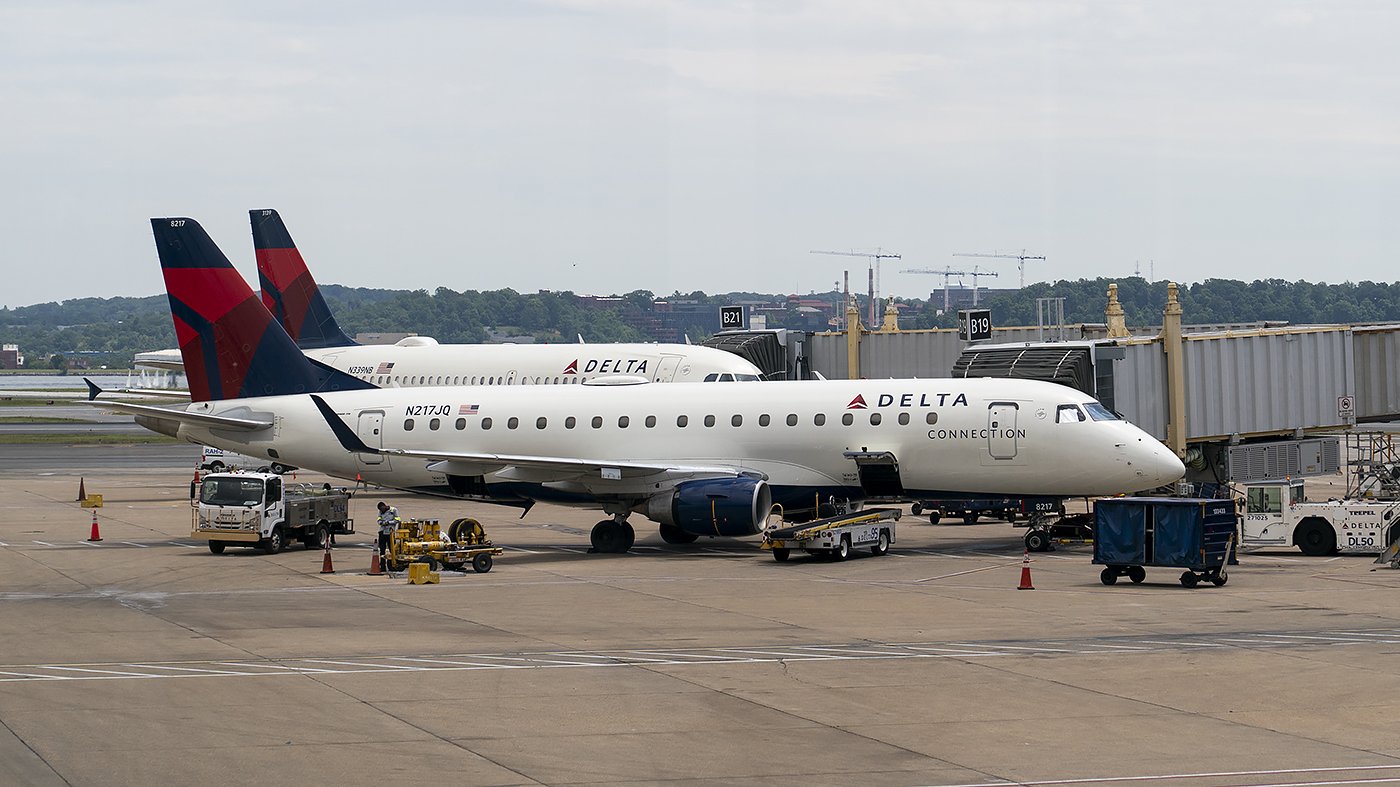
The cost of fueling America's airlines has skyrocketed since the United States and Israel launched military strikes against Iran over 100 days ago, with new data showing a staggering 78 percent year-over-year increase in jet fuel expenses.
The Bureau of Transportation Statistics reported Friday that U.S. carriers paid nearly $6.5 billion for fuel in April alone—a 26 percent jump from March and a 78 percent spike compared to April 2025. The average price per gallon hit $4.11, up 94 cents from the previous month and $1.81 higher than a year earlier.
The conflict, which began in late February, has sent energy costs surging worldwide after Iran retaliated by restricting transit through the Strait of Hormuz. The narrow waterway normally carries about one-fifth of the global oil supply, but traffic has plummeted—just 10 ships passed through in the last 24 hours, compared to the typical 60 daily vessels, according to hormuzstraitmonitor.com.
Peace Talks Stalled by Renewed Strikes
Reopening the strait has been a central goal of negotiations between the Trump administration and Tehran, but those talks suffered a setback over the weekend as Iran and Israel exchanged attacks for the first time in weeks. The renewed hostilities underscore the fragility of efforts to stabilize energy markets.
The soaring fuel costs are hammering airline profitability. The International Air Transport Association (IATA) now projects global airline net profits of just $23 billion in 2026, slashing its earlier forecast by $18 billion. Per-passenger profit is expected to drop from $9.10 last year to $4.50, the group said in a Sunday report.
IATA Director General Willie Walsh warned that the Iran war and rising fuel prices "have shifted the outlook for airlines to the worse." He added, "Some of the additional cost is being recuperated by adjusting prices and improving efficiency, but it will not be sufficient to maintain profitability at the previous year's level. Smaller carriers that started the year with weak balance sheets are certainly struggling."
US Carriers Pass Costs to Travelers
In the United States, passenger airlines have responded by hiking baggage fees and raising fares. Spirit Airlines ceased operations in May after filing for Chapter 11 bankruptcy twice in two years. Last month, Airlines for America warned that domestic carriers are cutting flight frequencies on some routes, deferring aircraft deliveries, and increasing fares "when necessary" ahead of the summer travel season—which includes the FIFA World Cup drawing visitors to the U.S., Canada, and Mexico.
The industry's pain is compounded by broader economic pressures. A recent poll found that only 44% of Americans consider the U.S. a top nation as the 250th anniversary approaches, reflecting a mood of uncertainty that could further dampen travel demand.
The crisis has also reignited debates over energy policy and national security. Critics of the administration's approach argue that the war's impact on fuel costs underscores the need for a strategic shift, much like the "Take Back America" movement that calls for reclaiming American ideals from foreign entanglements. Meanwhile, the defense budget continues to swell—the House panel recently passed a $1.15 trillion defense bill after a 14-hour amendment debate—as the Pentagon funds ongoing operations in the Middle East.
For airlines, the road ahead looks turbulent. With no end in sight to the Iran conflict and the Strait of Hormuz still largely closed, fuel costs are likely to remain elevated, squeezing margins and forcing carriers to make tough choices about routes and fares.