Iran's supreme leader, Ayatollah Mojtaba Khamenei, has yet to make a public appearance at the funeral ceremonies for his father, the late Ayatollah Ali Khamenei, who was killed during the opening phase of the Iran war. The memorial services, which began Friday, are drawing millions of mourners, but the country's top ruler remains out of sight.
The elder Khamenei died on Feb. 28 after joint U.S. and Israeli strikes targeted the Islamic Republic. His burial is scheduled for July 9. Mojtaba Khamenei, who assumed power in March, was reportedly injured in those same strikes and has largely vanished from public view since then. He has issued only a handful of statements during the conflict, fueling speculation about his physical condition and grip on power.
The New York Times reported Saturday that it remains unclear whether the supreme leader plans to attend any of the services honoring his father. This absence has intensified questions about the stability of Iran's leadership at a critical moment.
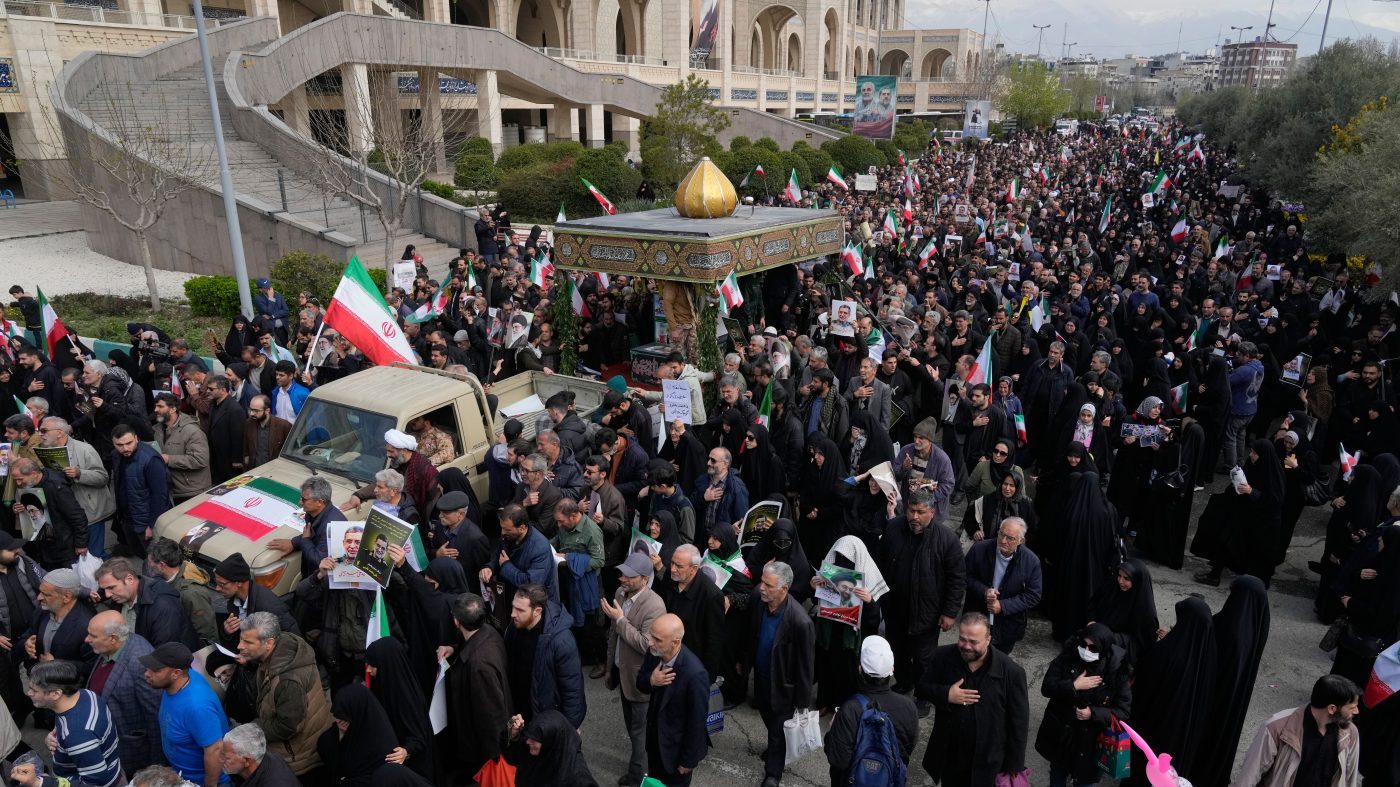
The funeral comes as the U.S. and Iran enter a renewed negotiation phase, following a memorandum of understanding to end the months-long conflict and reopen the Strait of Hormuz, a vital oil shipping lane. Pakistan's Prime Minister Shehbaz Sharif, who has mediated the talks, confirmed on Saturday that he attended a funeral service for the late leader. Millions are expected for the burial on July 9, with state media showing massive crowds at Tehran's Grand Mosalla.
“The late Supreme Leader’s wisdom, leadership and profound influence on Iran and the wider region will be remembered for generations,” Sharif wrote on social media, adding that he was joined by Foreign Minister Ishaq Dar and other senior officials. “As a brotherly neighbor, Pakistan stands with Iran in this time of grief.”
Iranian state media broadcast videos and photos of the services, showing large crowds waving red flags—a symbol that, according to the Islamic Republic of Iran Broadcasting, “indicates a definite promise of revenge.” President Masoud Pezeshkian echoed that sentiment in a Saturday post, writing, “The great nation of Iran, with hearts brimming with sorrow and resolves infused with hope, will prove that the flag for whose enduring raise the martyred leader struggled shall not fall to the ground.” He added, “And we desire to bestow a favor upon those who have been oppressed on earth and make them leaders and make them the inheritors.”
The secrecy surrounding the new supreme leader's health and whereabouts has become a political liability as Iran navigates both domestic mourning and delicate diplomacy. The U.S.-Iran negotiations, brokered by Pakistan, aim to stabilize the region and restore oil flows through the Strait of Hormuz, a critical chokepoint for global energy markets. But with Khamenei's condition unclear, questions persist about who truly holds the reins in Tehran.
As the burial approaches, the regime is walking a tightrope between projecting strength and managing internal uncertainty. The red flags at the funeral signal a leadership intent on rallying the public behind a narrative of vengeance, even as the supreme leader remains an invisible figure at the center of the storm.