House Democrats are gearing up for a swift and aggressive healthcare push if they regain the majority in the midterm elections, with party leaders framing health costs as the cornerstone of their affordability platform. The top Democrats on committees with jurisdiction over federal health programs are already mapping out legislative priorities for the opening days of the next Congress.
“I see that as priority No. 1: Saving the healthcare of the American people,” said Rep. Brendan Boyle (D-Pa.), who is in line to chair the Budget Committee if Democrats take the House. Boyle and his colleagues have watched healthcare dominate voter concerns, especially after Republicans slashed health programs in last year’s One Big Beautiful Bill Act and allowed ObamaCare subsidies to lapse in January. Polls consistently show health costs as a top—if not the top—issue for voters heading into November.
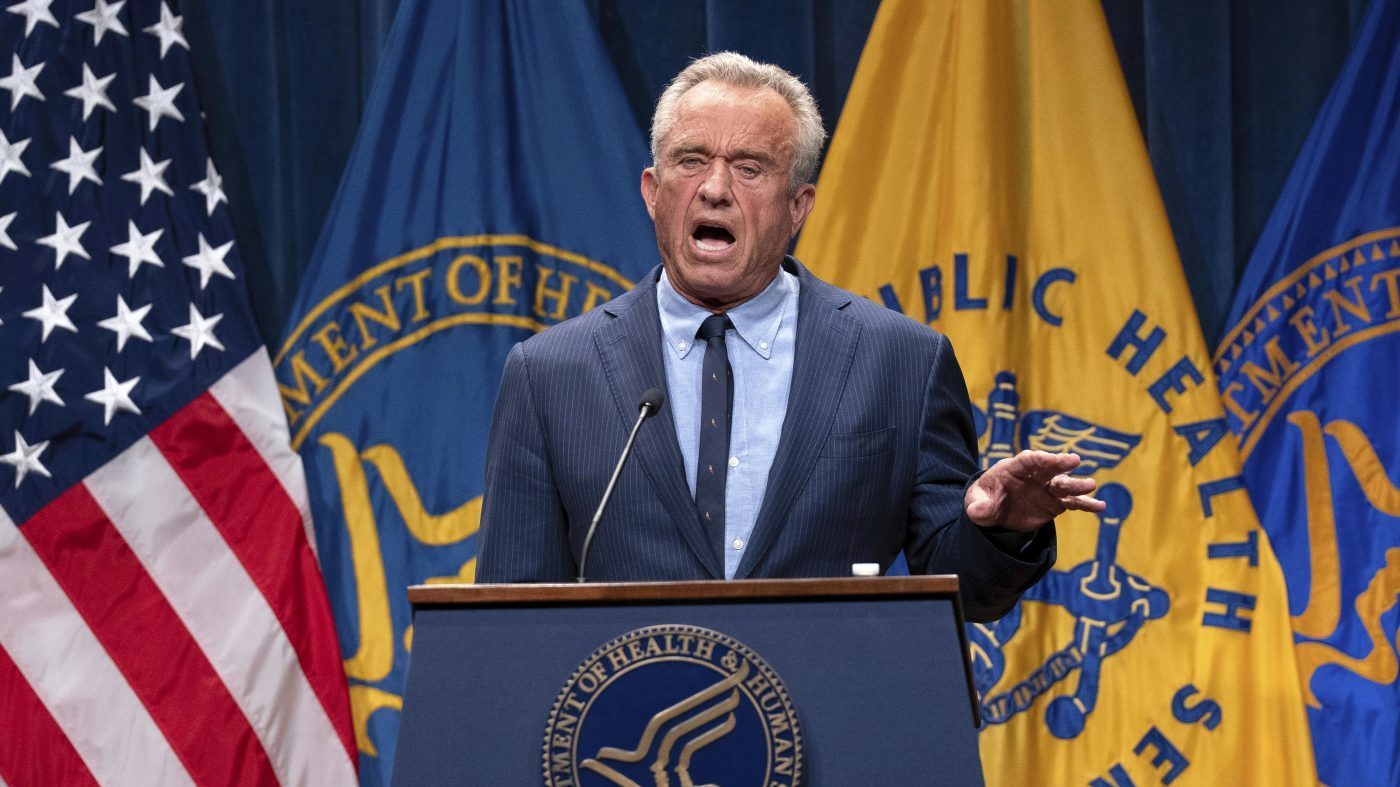
Democrats have leaned into that anxiety, making healthcare a central pillar of their midterm pitch. Now, with election forecasts shifting in their favor, those poised to take gavels are preparing to act. Their agenda includes reversing Republican cuts, reviving Affordable Care Act (ACA) subsidies, and going further with expansions of paid medical leave and long-term care. They also plan to challenge the controversial vaccine policies of Health and Human Services (HHS) Secretary Robert F. Kennedy Jr.
House Minority Leader Hakeem Jeffries (D-N.Y.), typically cautious about previewing majority plans, has been unusually explicit on healthcare. “We have made clear that we’re going to aggressively focus on making life more affordable, and I think we should begin in the areas where we know there is uniform Democratic support,” he said. “We have to reverse the Medicaid cuts, [and] we should extend the Affordable Care Act tax credits.”
The Medicaid issue is particularly urgent: the bulk of the cuts in the One Big Beautiful Bill don’t kick in until December, just weeks before the new Congress convenes. “That means that if we Democrats win the majority in November, and I get the gavel on Jan. 3, the Medicaid cuts will just be starting at the moment that I’m taking over as chair,” Boyle said. “I want to reverse every single healthcare cut that was contained in that bill.”
Rep. Richard Neal (D-Mass.), set to lead the Ways and Means Committee, sees a unique opportunity to link healthcare and tax policy. The panel’s jurisdiction covers Medicare and federal revenue, allowing Neal to highlight how the GOP’s cuts to low-income health benefits helped finance tax breaks for corporations and the wealthy. “It becomes a different paradigm if all of a sudden, you’re being asked to cut healthcare so that you can offer tax cuts to wealthy people,” he said. Neal also wants to expand federal funding for long-term care, citing the growing prevalence of dementia and Alzheimer’s as Americans live longer. “There is likely to have to be a government—a substantial government role in it,” he added.
While these proposals face long odds of becoming law—Trump would remain president for the next two years—Democrats could use them as leverage in spending fights, echoing the 43-day shutdown they forced last year over ObamaCare subsidies. The debate will also shape the 2028 presidential race, with Democratic hopefuls likely to embrace popular health programs as key platform planks. In that sense, the House agenda serves as both a governing blueprint and a campaign promise.
The Energy and Commerce Committee, led by Rep. Frank Pallone Jr. (D-N.J.) if the House flips, will be central to the effort. Pallone has been a sharp critic of the administration’s cuts to Medicare and Medicaid, reductions in medical research, and restrictions on mifepristone. He has also raised alarms over the handling of a measles outbreak in Pennsylvania, a state whose Democratic governor, Josh Shapiro, is a likely 2028 contender. That outbreak could become a flash point in the presidential cycle.
Recent polling suggests healthcare remains a winning issue for Democrats. Family health costs have outpaced inflation for years, and premiums are expected to rise further next year. The party’s push to reverse those trends—while positioning itself for future elections—is a key part of its strategy. As Democrats gain ground in House races, their healthcare agenda is likely to be a central theme in the coming months.
Republicans, meanwhile, have tried to blunt the issue, with Trump’s $90 Medicare checks aimed at softening the political damage. But Democrats see the upcoming vote as a referendum on healthcare, and their plans for January are already taking shape. The coming weeks will reveal whether voters are ready to hand them the gavels—and the mandate to act.