Defense Secretary Pete Hegseth publicly aligned himself with diplomatic efforts toward Iran on Thursday, stating he would welcome a U.S.-led peace deal, while simultaneously vowing that the Pentagon would continue its military campaign, which he described as 'negotiating with bombs.' His comments came days after President Trump suggested his defense chief was 'disappointed' by the prospect of a swift end to hostilities.
Clarifying the Record on Diplomacy
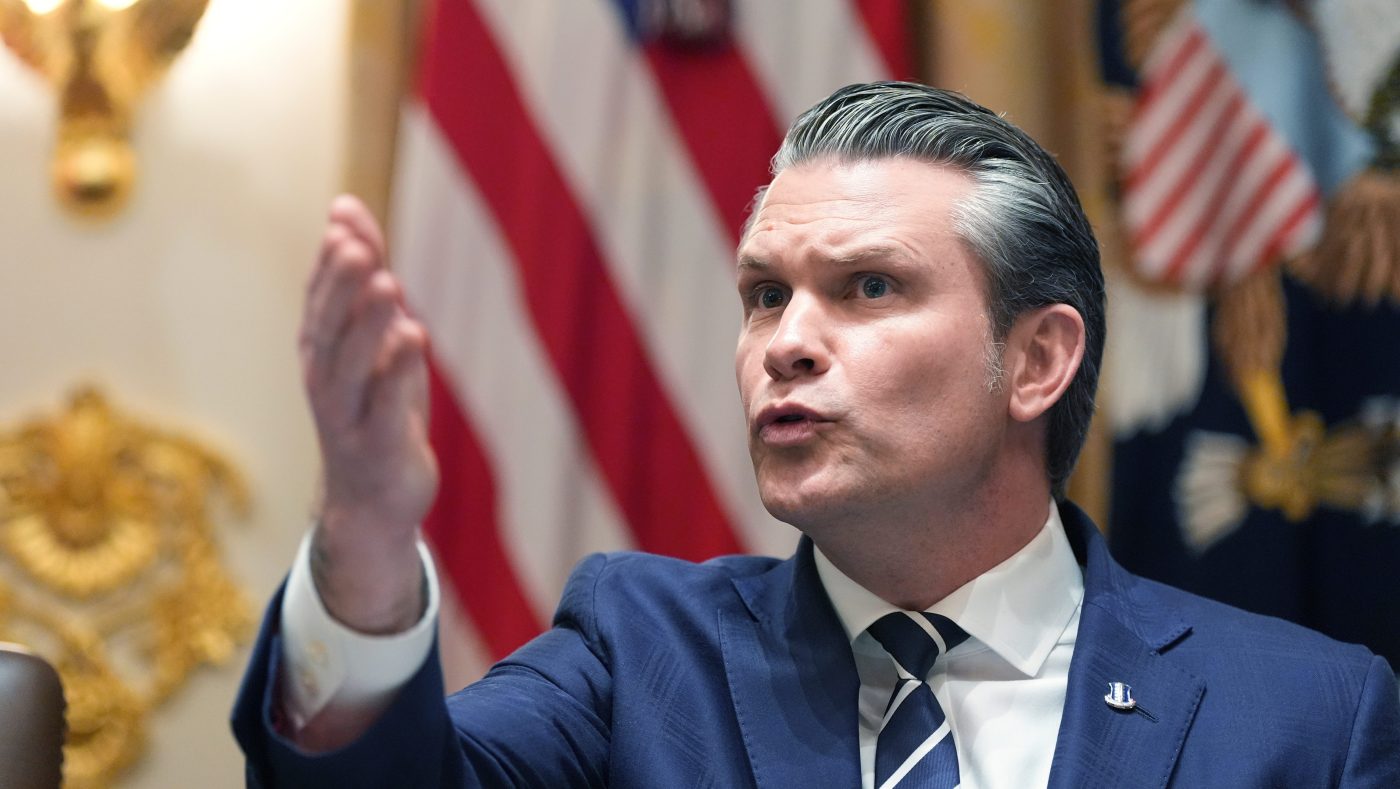
Speaking during a White House Cabinet meeting, Hegseth sought to clarify his position following Trump's remarks earlier in the week. 'I appreciate special envoy Steve Witkoff's efforts to negotiate with Tehran,' Hegseth said. 'We pray for a deal, and we welcome a deal and we have the ultimate dealmaker to make it happen.' This statement marked a public endorsement of the diplomatic track the administration has pursued alongside its military operations.
However, Hegseth immediately coupled that support with a stark warning about ongoing military action. 'But in the meantime, as I said yesterday, the Department of War will continue negotiating with bombs. War is negotiation by other means,' he stated, employing a blunt turn of phrase to describe the sustained air campaign.
Trump's Characterization of 'Disappointment'
The secretary's remarks served as a direct response to comments President Trump made on Tuesday. Following the swearing-in of Homeland Security Secretary Markwayne Mullin, Trump told reporters that Hegseth and Joint Chiefs Chairman Gen. Dan Caine were the 'only two people that were quite disappointed' by the potential for the U.S.-Israeli military campaign against Iran to conclude soon.
'I think this thing's going to be settled very soon, and they go, 'Oh, that's too bad.' Pete didn't want it to be settled,' the president said. 'They were not interested in settlement. They were interested in just winning this thing.' Trump's portrayal suggested a divergence between his diplomatic aims and his military leaders' focus on battlefield victory.
Conflicting Narratives on Negotiations
During the same Cabinet meeting, Trump addressed reports of negotiations, asserting that Iran, not the United States, is 'begging' for an agreement. 'And anyone who saw what's happening over there would understand why they want to make a deal,' he added, referencing the scale of the military campaign. The Iranian government has consistently denied it is engaged in formal talks with the Trump administration, even as the conflict enters its fourth week. However, Pakistani mediators have confirmed that a U.S. proposal was delivered to Iranian officials.
The military situation on the ground underscores the pressure Trump referenced. In an operational update on Wednesday, Adm. Brad Cooper, commander of U.S. Central Command, reported that American forces have struck over 10,000 targets inside Iran and destroyed an estimated two-thirds of the country's naval, missile, and drone production infrastructure.
'Full Speed Ahead' on Military Mission
Hegseth emphasized that the military's mission remains unchanged despite diplomatic overtures. 'We know that President Trump has given us a clear mission,' he said Thursday. 'Our capabilities are only going up, and Iran's are plummeting. We are here to win, and we're full speed ahead.' He also reiterated that Operation Epic Fury is not 'an endless war,' a frequent criticism leveled at prolonged U.S. military engagements in the region.
The administration's approach continues to blend intense force with diplomatic channels, a strategy that has drawn scrutiny. The Pentagon's confirmation of using advanced artificial intelligence systems in the conflict has coincided with a parallel legal battle over its attempt to blacklist the firm that developed the technology, highlighting the complex intersection of modern warfare, technology policy, and corporate relations.
Hegseth's dual message—openness to a deal paired with an unwavering commitment to military pressure—illustrates the administration's current two-track strategy. It aims to force Iranian concessions through overwhelming force while maintaining a diplomatic off-ramp, a delicate balance that keeps the Pentagon 'negotiating with bombs' even as diplomats pursue talks.