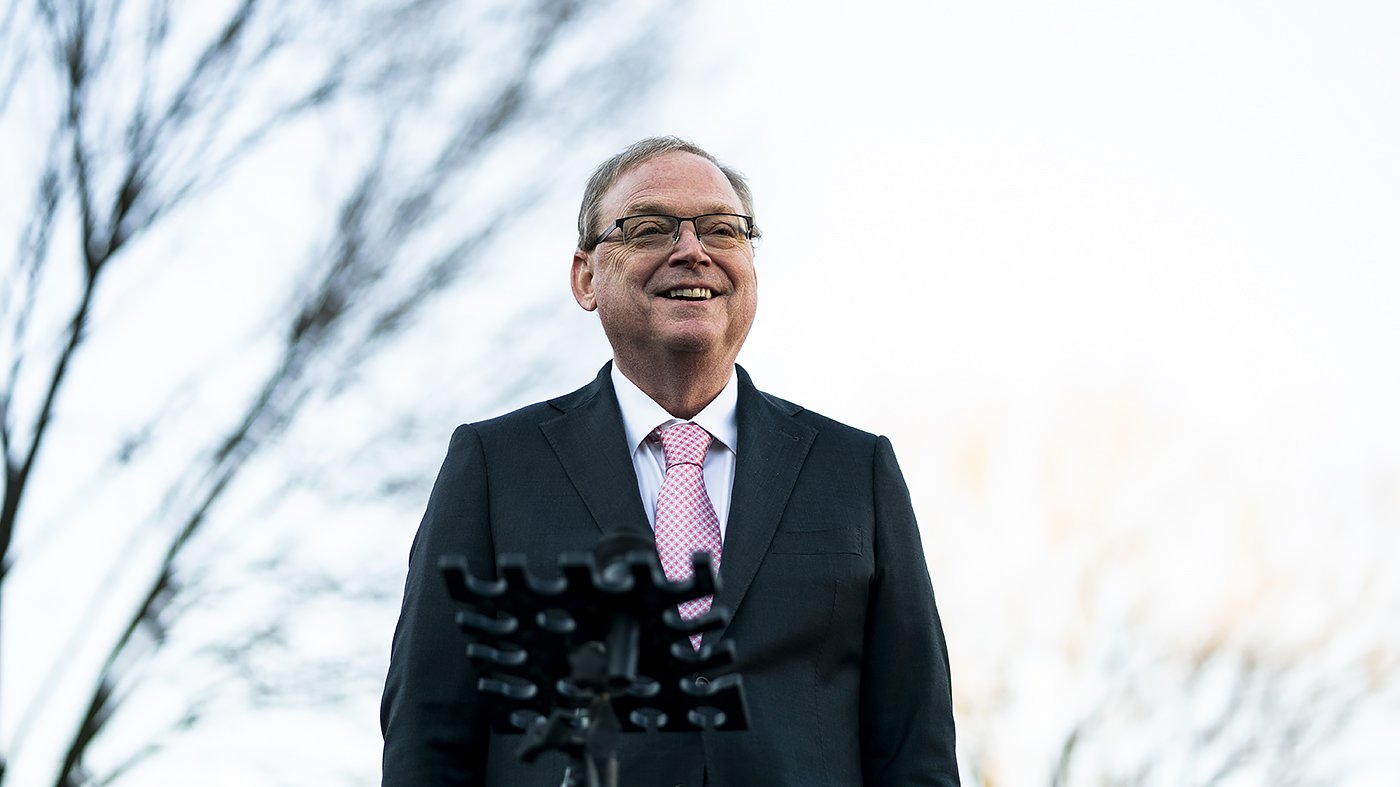
National Economic Council Director Kevin Hassett made clear Monday that Federal Reserve Chair Kevin Warsh is not seeking input from the White House on interest rate decisions, pushing back against any suggestion of political interference in monetary policy.
Appearing on CNBC's “Squawk Box,” Hassett acknowledged his close personal relationship with Warsh, noting they have been friends for 30 years and speak regularly. But he drew a firm line between friendship and policy influence.
“He’s not asking the White House for advice [on] what to do with interest rates,” Hassett told host Joe Kernen.
The comments come after the Federal Open Market Committee voted unanimously last week to hold its baseline interest rate steady at a range of 3.5 percent to 3.75 percent. That meeting marked Warsh’s first as Fed chair, succeeding Jerome Powell, who remains on the board and retains a voting role on the FOMC.
President Trump had publicly pressured the Fed to cut rates in 2025, frequently criticizing Powell for not moving faster. The central bank did lower rates by 0.25 percentage points at each of its final three meetings last year, but the president’s earlier attacks fueled speculation about future White House pressure on Warsh.
In a December interview on NBC’s “Meet the Press,” Trump said of Warsh: “Kevin is fantastic, and I want him to do whatever he wants. I don’t want to have a big influence on him.”
Despite that, the Fed’s decision to hold rates steady came as inflation remains stubbornly above the central bank’s 2 percent target. Annual inflation hit a three-year high of 4.2 percent in May, driven in part by energy price spikes linked to the war in Iran, up from 2.4 percent in February.
The FOMC’s latest Summary of Economic Projections shows a divided committee: nine officials anticipate at least one rate hike this year, eight expect rates to hold through 2026, and only one projects a single cut.
Hassett praised Warsh’s early leadership, saying he has already “made a huge amount of progress” in reshaping the central bank. He pointed to new procedures, a reexamination of old models, and an effort to avoid repeating the 2022 inflation surge that topped 9 percent.
Warsh himself signaled a break from tradition during his post-meeting press conference, indicating the Fed will move away from forecasting its own actions. He was the only FOMC official not to submit a rate projection for the year, arguing that such forecasts can blind the committee to market signals.
“When all the financial markets are doing is reflecting back what we’ve said, then we’re taking the most important source of information and we’re being blind to it,” Warsh told reporters.
The shift aligns with Warsh’s broader effort to abolish forward guidance, a move that has drawn both praise and skepticism from economists and market participants. Meanwhile, the political backdrop remains tense, with Trump’s economic approval ratings hitting new lows, adding pressure on the White House to show results before the next election cycle.