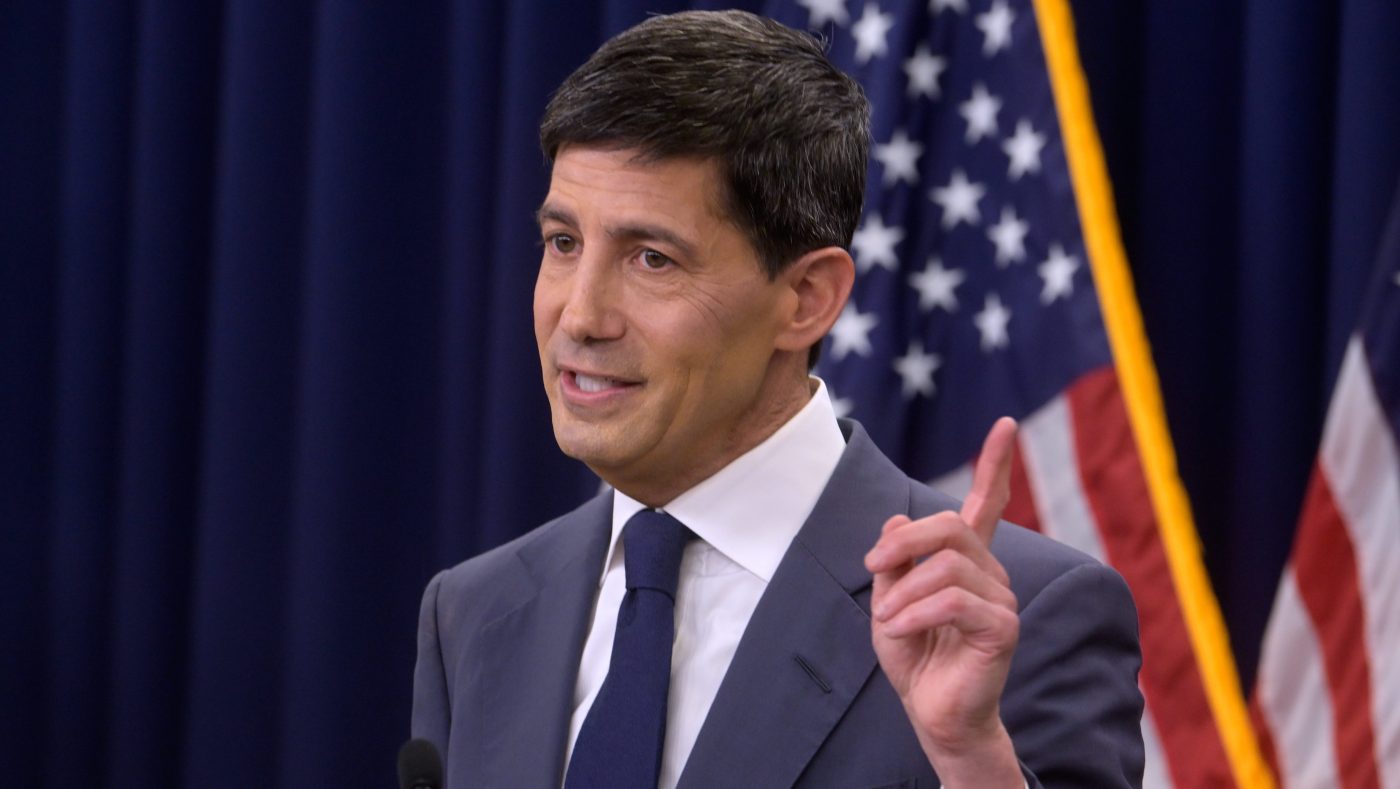
Federal Reserve Chair Kevin Warsh on Wednesday brought an end to the central bank's practice of issuing forward guidance, saying the policy tool had outlived its usefulness and hindered effective decision-making. In his first major policy shift since taking office, Warsh told reporters that the Federal Open Market Committee (FOMC) had unanimously agreed to hold interest rates steady at a range of 3.5 percent to 3.75 percent — the fourth consecutive pause — but deliberately omitted any language about the future path of monetary policy.
“We’ve dropped forward guidance,” Warsh said at a press conference following the two-day meeting. “Some along the committee, I think, dropped it, I suspect from our discussion the last couple of days, because they said at this moment in time it doesn’t feel as though providing forward guidance is right. Others have, I’d say, different views, and think as a general proposition forward guidance isn’t the business we should be in.”
The move marks a sharp break from the Fed’s approach under previous chairs, who used forward guidance to shape market expectations and influence long-term interest rates. The central bank’s website has long described the tool as a way for businesses and individuals to make informed decisions about spending and investment. But Warsh argued that the practice had become counterproductive. “When all the financial markets are doing is reflecting back what we’ve said, then we’re taking the most important source of information and we’re being blind to it,” he said.
In a further sign of his commitment to reducing the Fed’s reliance on forecasts, Warsh was the only FOMC member who did not submit a “dot” — a personal projection of future interest rates — for the committee’s quarterly Summary of Economic Projections. The dot plot, a closely watched chart that aggregates each official’s rate expectations, showed nine members predicting at least one rate hike this year, eight expecting no change, and one forecasting a cut. Warsh said offering his own projection would not be “helpful in the conduct of policy.”
Bill Adams, chief U.S. economist for Fifth Third Commercial Bank, said in a statement that the omission was significant. “This Dot Plot carries less weight than previous ones, since Warsh stated in the post-decision press conference that he did not submit forecasts for it. This is another sign that he wants to steer the Fed away from all types of forward guidance, including the Dot Plot.”
The new chair’s skepticism of forward guidance was well-known before his appointment. During his April nomination hearing before the Senate Banking Committee, Warsh criticized the Fed for issuing projections in 2021 and 2022, which he said “compounded” the central bank’s policy errors as inflation surged. “I think if the Fed were to wait until it gets into a meeting before making a decision, that incremental deliberation can keep the central bank from compounding its errors,” he told lawmakers at the time.
Warsh said Wednesday that he plans to conduct a comprehensive review of the Fed’s communication policies by the end of the year, covering the number of press conferences, economic projections, meeting transcripts, and minutes. He also announced the creation of a task force dedicated to communications — one of five new task forces that will examine issues ranging from the central bank’s balance sheet to productivity in a rapidly changing economy. “I don’t want to prejudge the outcomes there, but I’m pretty open-minded about what they could be,” he said.
The decision to abandon forward guidance comes as the Fed faces competing pressures. Inflation remains above the central bank’s 2 percent target, and the latest consumer price index report showed prices rising faster than expected. At the same time, President Donald Trump has publicly urged the Fed to cut rates, creating a political tightrope for Warsh. The new chair’s stance suggests he is determined to insulate the central bank from both market expectations and political influence, even if it means upending decades of communication convention.
Warsh’s first Fed meeting ended with a rate hold, but the broader challenge of balancing inflation risks with political pressure is just beginning. The central bank’s next policy decision is scheduled for late June, and markets will be watching closely for any hints — though under Warsh, those hints may be few and far between.