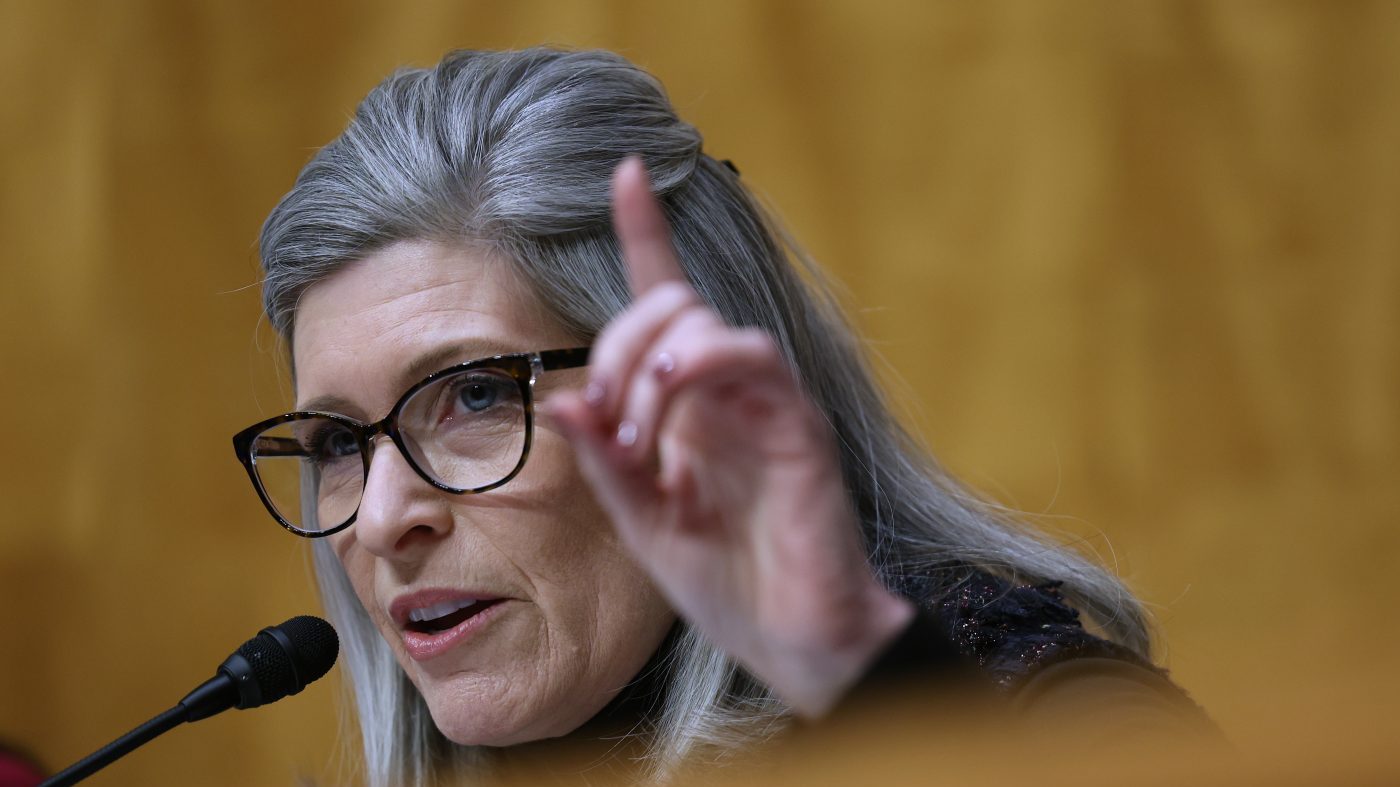
Sen. Joni Ernst (R-Iowa) threw her support behind Senate Minority Leader Mitch McConnell (R-Ky.) on Friday, pushing back against growing calls for the veteran lawmaker to publicly address his health condition. Speaking with journalist Nick Ballasy, Ernst argued that McConnell's physician's letter and updates to colleagues should be sufficient, adding, "If the people of Kentucky want more, they'll ask him for more."
Sen. Roger Marshall (R-Kan.) echoed that sentiment, emphasizing McConnell's resilience and privacy. "I respect his privacy," Marshall said. "He's one of the toughest guys I've ever met. This guy's battled polio his whole life. I didn't even know he had the problem until I met him in person. But he'll be back. He's making progress."
The comments come as scrutiny over McConnell's health has escalated following his hospitalization in June. He has remained in an inpatient rehabilitation facility since, with his office providing periodic updates but no clear recovery timeline. The absence has fueled speculation about his ability to serve, especially as key votes approach before the August recess.
Kentucky Gov. Andy Beshear (D), a potential 2028 presidential contender, has been the most vocal critic, demanding that McConnell either prove his capacity to serve or resign. In a letter shared with The Hill, Beshear wrote, "As Governor of the state you serve, I am calling on you to directly and verbally address the people of Kentucky and provide proof of your capacity to serve, or resign." He also noted that a Senate vacancy occurs only through death, resignation, or expulsion.
Beshear has also argued that the lack of transparency is "ruining" McConnell's legacy, a point he reiterated on his SiriusXM podcast. His demands have intensified as an Aug. 3 deadline approaches, which could affect the timing of any potential special election.
Under a 2024 Kentucky law, Beshear lacks the authority to appoint a replacement if McConnell leaves office; instead, he would be required to call a special election. That process has drawn national attention, as Kentucky has not elected a Democrat to the Senate since 1992. Any contest for the seat would likely become a focal point for Democrats seeking to expand their Senate map next year.
McConnell, who is not running for reelection in November, has not publicly responded to Beshear's ultimatum. His office has maintained that he is receiving treatment and making progress, but has not offered a timeline for his return to the Capitol.
The political dynamics are complicated by Beshear's own ambitions. His aggressive stance on McConnell's health, as highlighted in Beshear's national ambitions, suggests he is positioning himself for a broader stage. Meanwhile, GOP senators are closing ranks, with Ernst and Marshall signaling that internal pressure on McConnell is unlikely to grow.
As the Senate prepares for critical votes, the question of McConnell's availability looms large. His absence has already delayed some proceedings, and with the August recess fast approaching, Republicans may need to adapt to a leader who is, for now, absent.