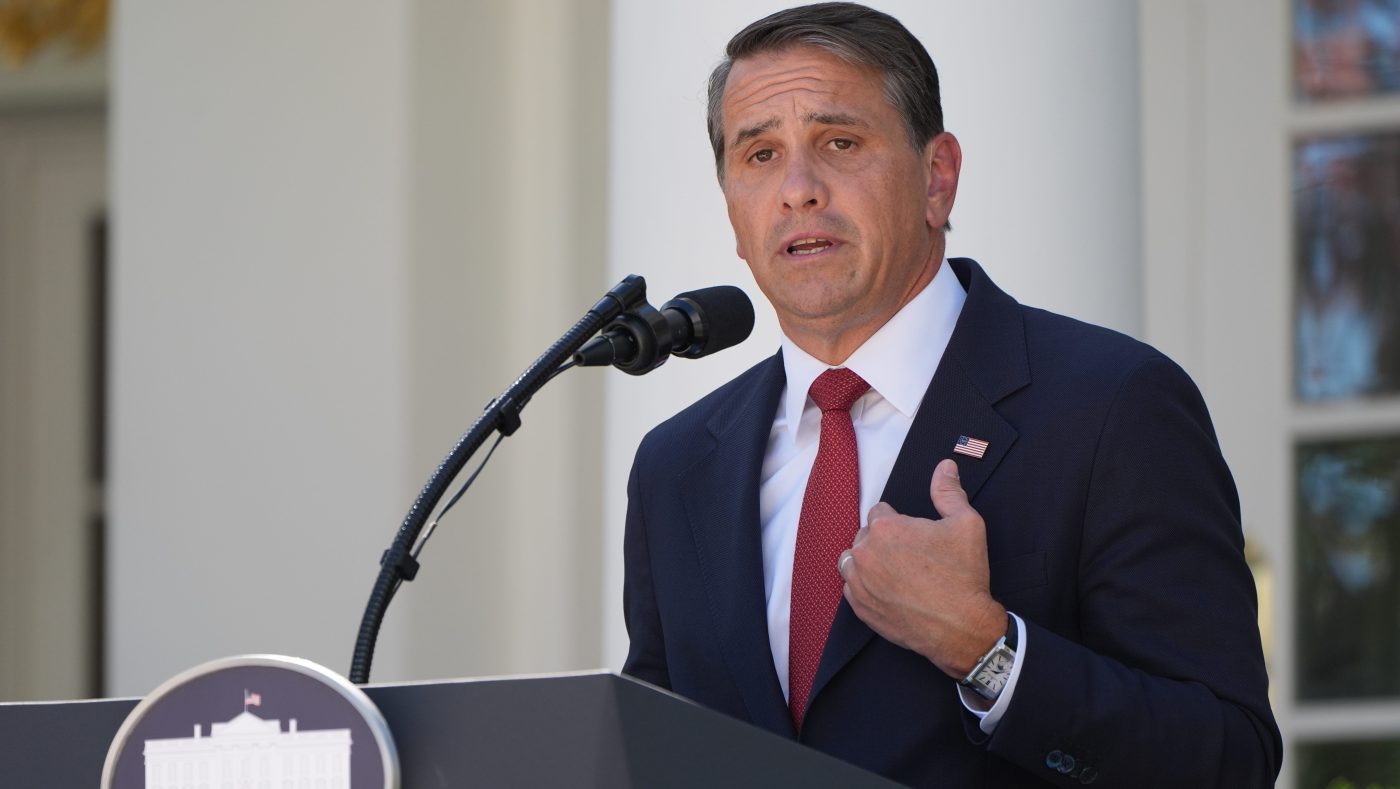
In a move that underscored this administration's appetite for breaking with tradition, Attorney General Todd Blanche stepped into the role of de facto White House press secretary on Tuesday, fielding questions from reporters in the Rose Garden. The session blended legal updates, praise for Defense Secretary Pete Hegseth's handling of the Iran conflict, criticism of the Biden era, and a push for American dominance in artificial intelligence, with a few personal touches, including comments on Donald Trump Jr.'s recent wedding.
Blanche, who once served as Trump's personal attorney, used the platform to needle the press corps, noting their discomfort in the heat with a smirk. "I notice you guys are sweating, which is nice. I love to see that," he said, later adding, "I'm very sorry that you're sweating. I'm not really sorry."
The very presence of a sitting attorney general acting as a political spokesperson marks a significant shift from historical expectations of Justice Department independence. Traditionally, the AG and DOJ have been viewed as insulated from the president's political whims, with past administrations careful to avoid even the appearance of undue influence. That norm has been visibly eroded under this presidency, from the unfurling of a banner with the president's face at DOJ headquarters to public pressure on his predecessor, Pam Bondi, to expedite prosecutions of political foes.
Some of those pressures have backfired. In February, a grand jury declined to indict six Democratic lawmakers who had released a video urging troops to disobey illegal orders—a case Trump had labeled "seditious behavior." The failure highlighted the limits of presidential influence over the judicial process.
Blanche's appearance was not the only norm-bending moment of the day. Earlier, FBI Director Kash Patel faced lawmakers' questions about the bureau's reversal of its ban on hiring trainees with histories of prostitution or bestiality, a topic that drew sharp scrutiny. Meanwhile, Trump took to social media to blast the Supreme Court after it rejected his bid to restrict mail-in voting ahead of the midterms, claiming the justices "have really let our Country down" and accusing them of cowardice.
In the Rose Garden, Blanche dismissed the uproar over Trump's remarks as overblown, insisting the administration would comply with the ruling while continuing to push for "fair elections." He defended Trump's right to criticize the judiciary, saying, "He is very frustrated. He has every right—and indeed he should—communicate his concerns with the Supreme Court whenever he has them." When asked if he'd advise a private client to attack the court similarly, Blanche drew a line: "He's the President of the United States, so the real question is whether the President is allowed to be critical of another branch of government. And the answer is: Absolutely."
At times, Blanche was more evasive. He sidestepped questions about the reported departure of Joe DiGenova, a pro-Trump former U.S. attorney who had been probing alleged conspiracies against Trump, and offered little on the FBI's raid on a Fulton County, Georgia, election hub. But he was blunt in accusing the FBI of once trying to "put [Trump] in prison till he dies."
On the controversy over a Russian oligarch's payment for Trump Jr.'s wedding, Blanche bristled, questioning the premise: "When you say, 'Am I investigating'—am I investigating what? And when you say this person is a friend of Putin, I don't even know if that's true or not." The oligarch, Umar Kremlev, has received a state honor from Putin, according to ProPublica. Lawmakers have pressed the FBI on this connection.
Blanche also lauded Hegseth's performance as "phenomenal" and touched on the administration's AI ambitions, echoing concerns raised by some lawmakers about the need for strategic focus. The briefing, while unconventional, offered a window into how this administration views the role of the nation's top law enforcement officer—not as a neutral arbiter, but as an active political player.