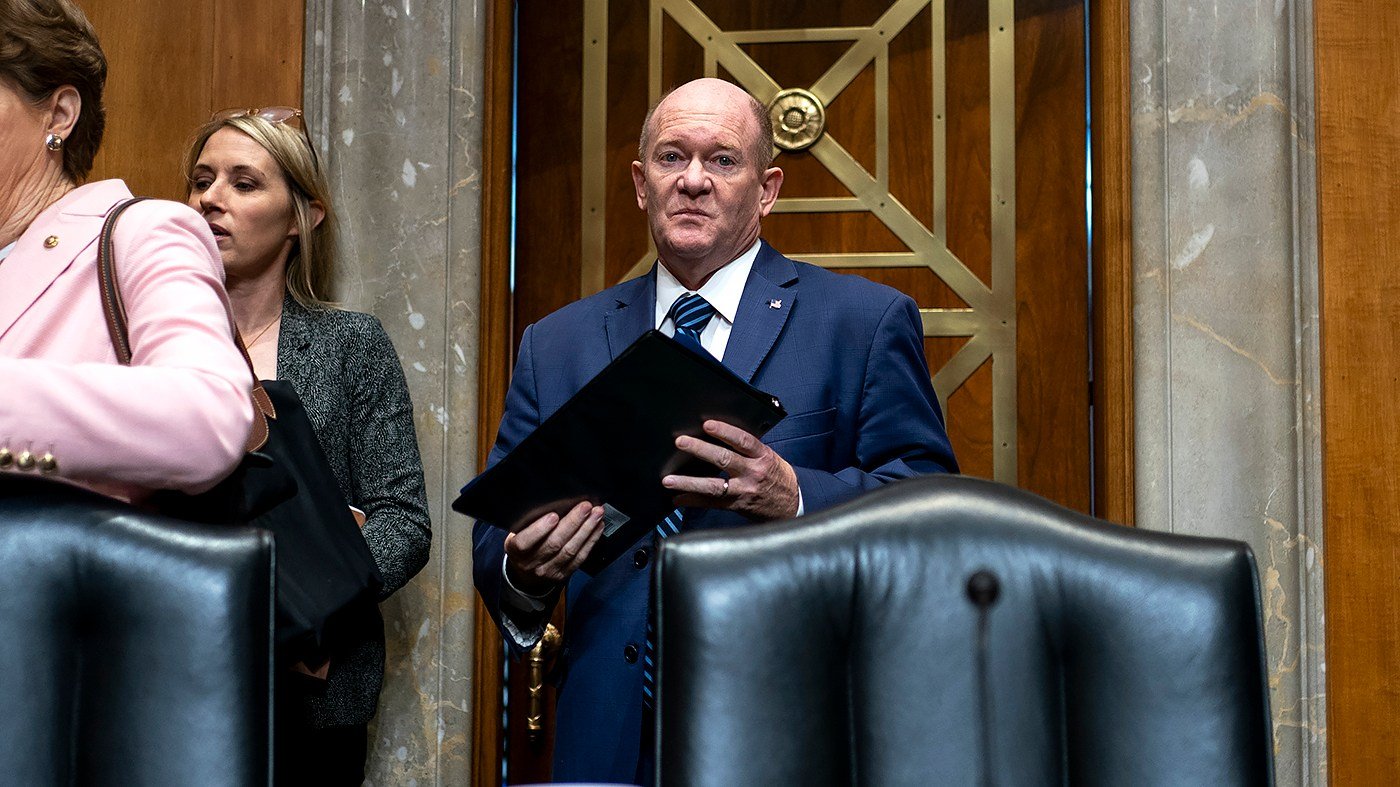
Sen. Chris Coons (D-Del.) cruised to victory in Delaware's Democratic primary on Tuesday, according to Decision Desk HQ projections, positioning him for a likely fourth term in the Senate. Coons defeated a field of challengers with 78% of the vote as 86% of precincts reported.
On the Republican side, former state Sen. Michael Katz secured the GOP nomination with 77% of the vote, defeating U.S. Army Reserves Col. John Shulli, who took 23% with 83% of precincts counted. Katz will face Coons in the November general election.
Delaware is a deeply Democratic state, having backed Vice President Kamala Harris by 15 points in the last presidential election. This political landscape makes Coons a heavy favorite to retain his seat, continuing a trend of Democratic dominance in the First State.
Coons, who first entered the Senate in 2010 after winning a special election, faced several primary challengers, including Eric Hansen, who appeared on the ballot under the name "E. No-Trump Hansen." Despite the crowded field, Coons' incumbency and name recognition proved insurmountable.
The state's Democratic stronghold is evident across its congressional delegation: Democrats hold both Senate seats, the state's lone House seat, and the governor's mansion. This year's primaries mark the final contests of the midterm cycle, setting the stage for a seven-week sprint to the general election.
Coons' campaign has focused on issues like infrastructure, healthcare, and national security, while Katz has emphasized fiscal responsibility and local concerns. However, in a state with such a pronounced Democratic advantage, Katz faces an uphill battle.
Political analysts note that Coons' victory was expected, but the primary results still offer a snapshot of the party's base in Delaware. The general election will test whether Coons can maintain his broad appeal, even as national politics remain polarized.
As the campaign season moves forward, voters in Delaware will also watch closely the state's House race, where the GOP is fielding three challengers against an unopposed Democrat. Meanwhile, national trends, such as donors bypassing party committees, could influence down-ballot dynamics.
Coons' re-election bid is part of a broader Democratic strategy to hold the Senate, and his seat is considered safe. With the primaries concluded, both candidates will now turn their attention to the November ballot, where Delaware's voters will have the final say.