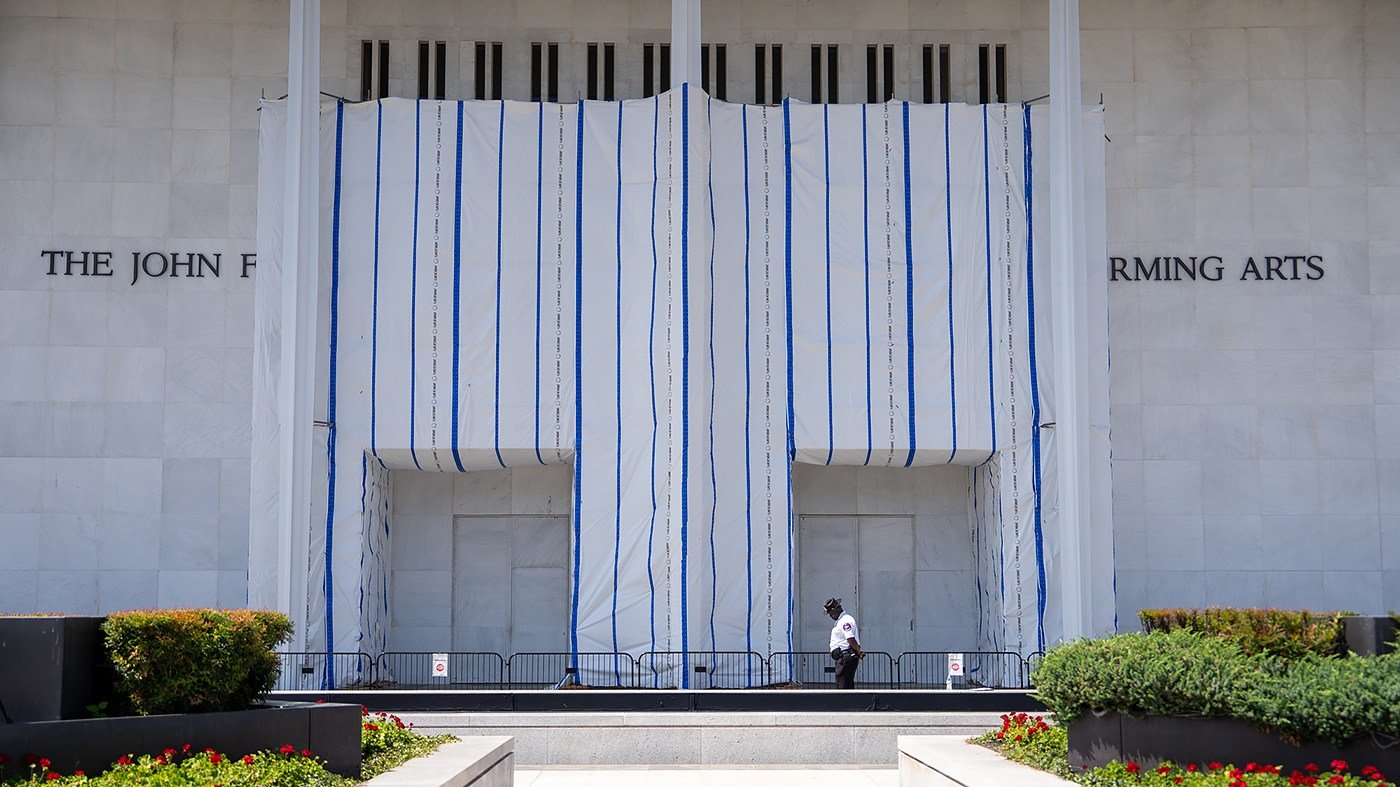
President Trump declared Tuesday that the Kennedy Center will remain closed and unrenovated unless the courts permit the institution's hand-picked board to emblazon his name on the building. The ultimatum came hours after a federal judge blocked the board's naming scheme, dealing a setback to Trump's influence over the performing arts venue.
In a post on Truth Social, Trump said the center's board had "agreed, almost unanimously, to close the Building for Safety reasons, and so that it can begin the process of Reconstruction." He added that the closure would take effect immediately, but the "very large and complex" renovation cannot start until the D.C. Circuit rules on the board's approved name. "If the ruling is a negative one, which it should not be, and is not overturned by the U.S. Supreme Court, the Reconstruction and the Renovation of The Kennedy Center will not take place," Trump wrote.
The president's remarks follow a ruling by U.S. District Judge Christopher Cooper, an Obama appointee, who found that the board's resolution to rename the center after Trump likely violated both a prior court order and a statute passed by Congress. Cooper wrote that the board's action "bucks a federal court order and a statute Congress enacted." The ruling is the latest twist in a legal battle over whether the president can unilaterally rebrand the iconic venue.
According to a source familiar with the situation, the board voted Tuesday to immediately shut the main building for renovations, asserting that only Trump can raise enough money to save the institution from financial ruin. The board's decision came amid warnings that the center faces "certain fiscal collapse within weeks," with a draft resolution describing the organization as close to bankruptcy.
This move adds to a broader pattern of Trump leveraging federal properties and naming rights, a tactic that has drawn criticism from Democrats and some legal scholars. For context, local officials have also used naming disputes as political jabs, illustrating how such symbolic battles resonate beyond Washington.
The Kennedy Center's financial troubles are not new, but Trump's involvement has intensified scrutiny. The board, largely composed of Trump loyalists, has argued that the president's fundraising prowess is the only way to avert disaster. However, Cooper's ruling suggests that legal hurdles may prevent the naming change, which could derail the renovation plans entirely.
In a related development, a judge has again halted the addition of Trump's name to the Kennedy Center, underscoring the ongoing judicial pushback. The D.C. Circuit will now weigh the board's appeal, and Trump has hinted he may take the fight to the Supreme Court if necessary.
Political analysts note that the standoff could become a flashpoint in Trump's broader clashes with the judiciary. Some see the president's threat to withhold renovation as a pressure tactic, but others warn that it could leave the Kennedy Center in limbo, harming its cultural mission. Meanwhile, the board has voted to shut the main building, citing Trump as the only hope, a move that has alarmed arts advocates.
As the legal process unfolds, the future of one of America's most prestigious cultural institutions hangs in the balance. Trump's insistence on linking the renovation to the naming dispute raises questions about whether the center will ever reopen, and if so, under what name.