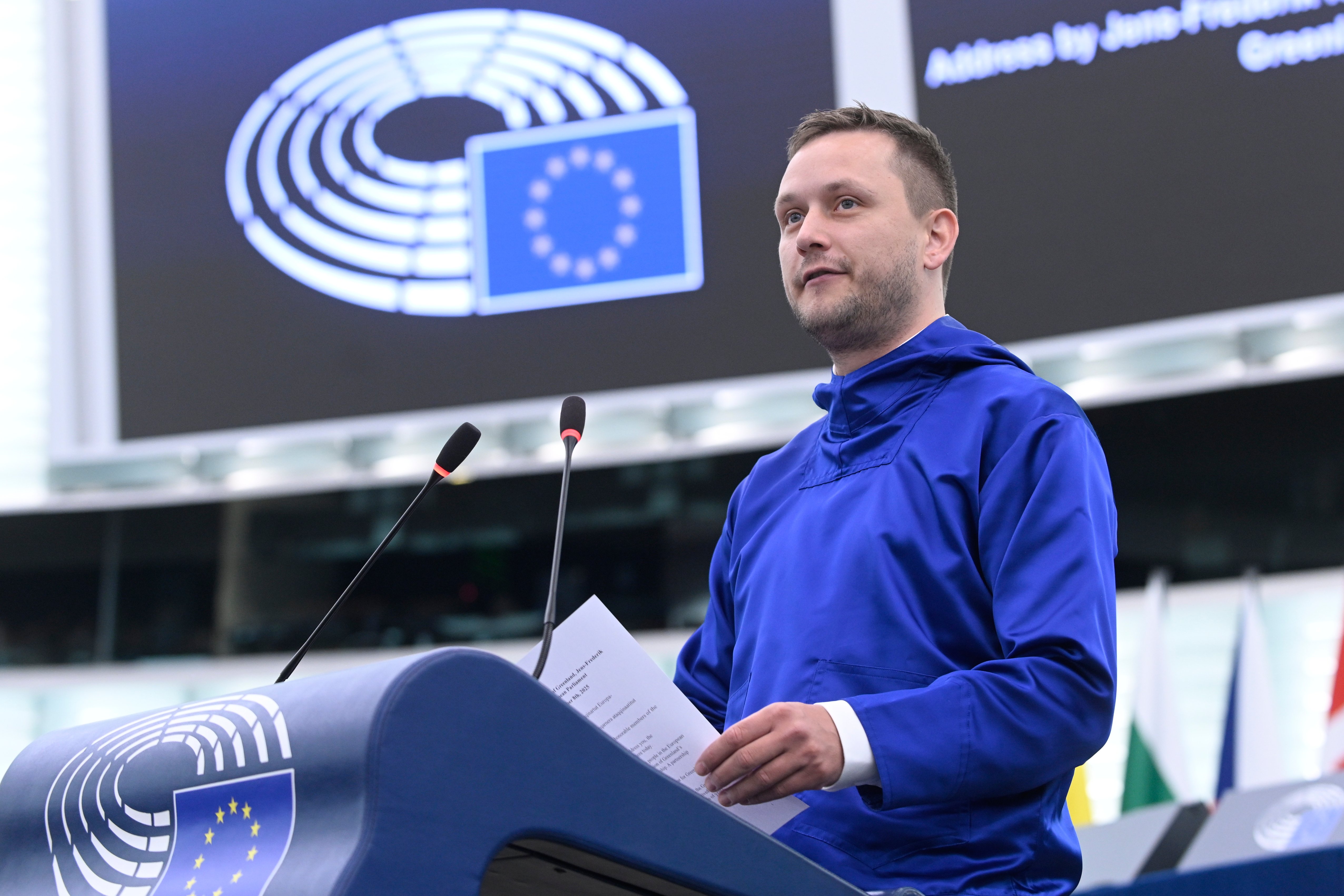
Greenland's political leader issued a sharp rebuke to former President Donald Trump on Thursday, rejecting his characterization of the Arctic territory and calling for NATO allies to defend international norms amid escalating tensions over Iran policy.
Prime Minister Jens-Frederik Nielsen directly addressed Trump's social media post describing Greenland as a "big, poorly run, piece of ice," which followed a White House meeting with NATO Secretary-General Mark Rutte. "We are not some piece of ice," Nielsen told Reuters. "We are a proud population of 57,000 people, working every single day as good global citizens in full respect for all our allies."
NATO Foundations Challenged
The Greenland leader framed his response within broader concerns about the stability of the Western alliance system. Nielsen warned that the postwar geopolitical order, including the NATO defense pact, faces significant threats. "Those things are being challenged now, and I think all allies should stand together to try to maintain them," he stated, expressing hope for collective action.
Trump's remarks came amid his increasingly critical rhetoric toward NATO, including claims the alliance failed to support U.S. military operations and describing it as a "paper tiger" in a recent interview. His frustration stems from European reluctance to back a joint U.S.-Israeli operation in Iran, with Trump asserting NATO wouldn't be there if needed again.
Persistent Territorial Ambition
Trump's fixation on obtaining Greenland, a semiautonomous Danish territory, represents a continuing thread in his foreign policy approach. He has long argued U.S. control is essential for national security and countering Chinese and Russian influence in the Arctic region.
Earlier this year, Trump escalated his pursuit by threatening military force and tariffs against Denmark and other European allies who opposed the acquisition. Although he later announced a "framework of a future deal" with NATO regarding the island, the ultimatum revealed deepening fissures within the alliance.
Nielsen expressed skepticism that Trump's ambitions have subsided. "I cannot see that his desire to either take over or control Greenland has been taken off the table," he told Reuters, suggesting the threat remains active despite temporary diplomatic calm.
Broader Alliance Strains
The Greenland dispute intersects with wider transatlantic tensions exacerbated by the Middle East conflict. European leaders have condemned the war while Trump has signaled willingness to reconsider U.S. NATO membership post-conflict. This environment has intensified concerns about alliance cohesion and mutual defense commitments.
Trump's approach has drawn criticism from multiple quarters, including former officials who question his strategic judgment. Notably, former National Security Advisor John Bolton has warned that Iran perceives Trump as weak and will demand concessions, complicating already delicate negotiations.
The Greenland prime minister's remarks highlight how territorial disputes and alliance politics have become intertwined in an era of great power competition. As Arctic resources gain strategic importance, Greenland's status remains a potential flashpoint that tests both international law and the durability of Western partnerships forged in the previous century.