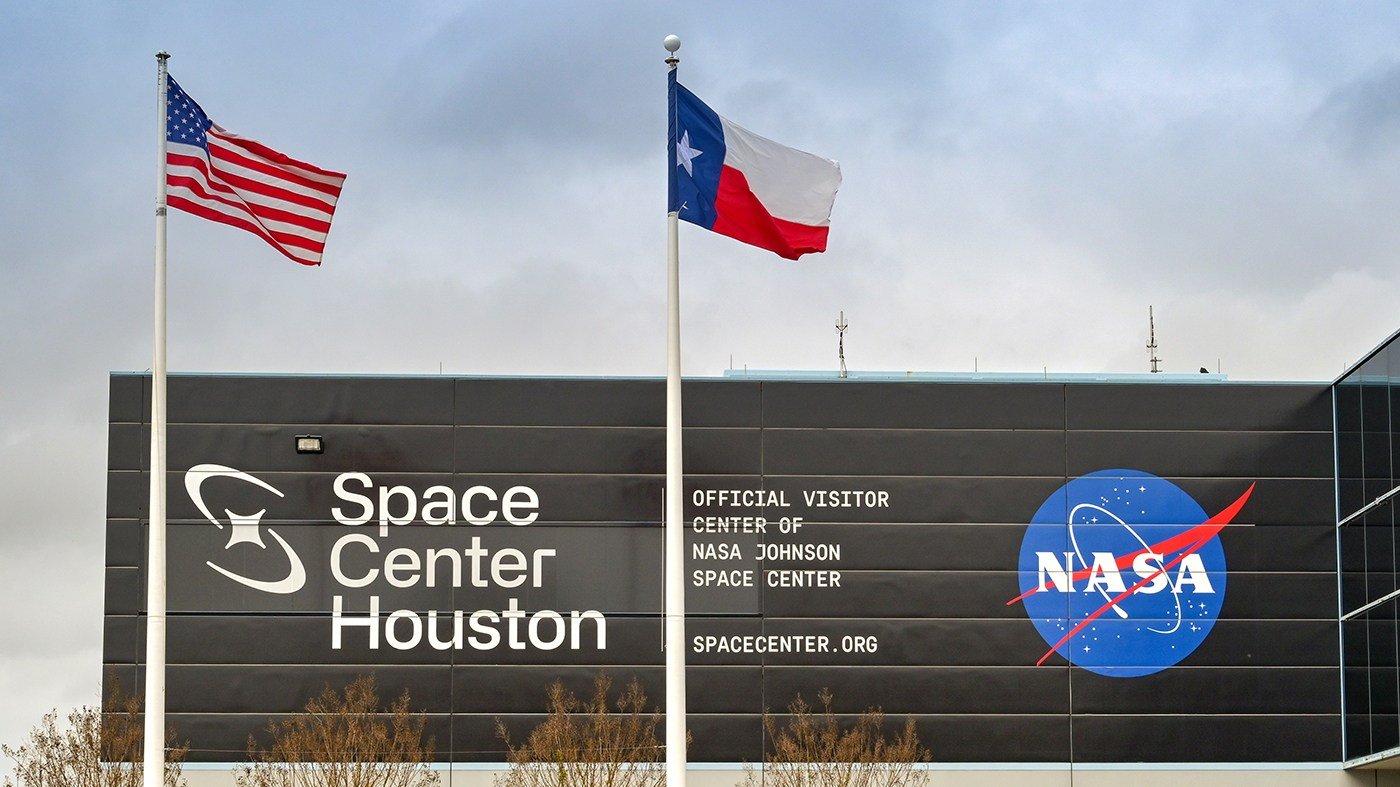
WASHINGTON — A deepening rift between Senate and House Republicans is blocking a NASA reauthorization bill, threatening President Trump's ambitious timeline for a permanent lunar base as he prepares to visit Houston's Johnson Space Center on Friday.
The impasse pits Senate Commerce Committee Chairman Ted Cruz (R-Texas) against House Science, Space, and Technology Committee Chairman Brian Babin (R-Texas). At issue is whether to lock in funding and timelines for a moon base near the lunar south pole and extend International Space Station (ISS) operations through 2032 — provisions in the Senate bill but absent from the House version.

Trump's executive order in December directed NASA to begin building the initial elements of a lunar outpost by 2030 under the Artemis program. During his Houston trip, the president is expected to award the Congressional Space Medal of Honor to the Artemis II crew, who completed a ten-day lunar flyby earlier this year — the first crewed mission beyond low-Earth orbit since 1972. He is also likely to tout his recent memo aiming for 1,000 commercial space launches and re-entries by 2030, up from fewer than 200 in 2025.
But the legislative standoff could derail those goals. Talks that were expected to conclude this spring have broken down over Senate language that lays the groundwork for the moon base and mandates continued ISS operation. A source familiar with the discussions said the House is “slow rolling” the Senate bill, creating friction as the 119th Congress winds down.
A House Science Committee aide countered that the panel is not dragging its feet: “We're waiting on the Senate.” The House passed its own NASA bill in February, but it omitted moon base and ISS extension provisions. House Republicans also note they passed a reauthorization in the last Congress, only to see the Democratic-controlled Senate ignore it.
The stakes are heightened by the upcoming midterms. If Democrats take the House, as many handicappers predict, the entire negotiation could reset. That prospect worries industry stakeholders like Brian Freedman, president of the Bay Area Houston Economic Partnership, who said an authorization bill is “critically important” for NASA and the commercial space sector. “We haven't had one in nine years,” he noted, calling for common ground.
The Senate bill, which passed its committee in March with bipartisan support, was crafted with NASA Administrator Jared Isaacman, who unveiled a $20 billion plan to build a moon base. “This time, the goal is not flags and footprints. This time, the goal is to stay,” Isaacman declared, adding that NASA would partner with at least two commercial launch providers for crewed landings every six months.
House Republicans, however, are wary of committing to an expensive project before its full costs are understood. “Frankly, what are the costs? Love it but it is frankly an expensive undertaking. We want to make sure we're not tying the hands of NASA in future years,” said one source familiar with the House panel's thinking.
The ISS extension is another sticking point. The station, managed from Houston's Christopher Kraft Jr. Mission Control Center, costs several billion dollars annually to operate. Senate Republicans see continuous manned presence as a matter of policy, while House Republicans question whether those funds might be better spent elsewhere.
Congress has not passed a full NASA reauthorization since 2017, relying on a “mini” bill in 2022. With the president's lunar ambitions on the line, the clock is ticking for Cruz and Babin to bridge their differences before the year ends.