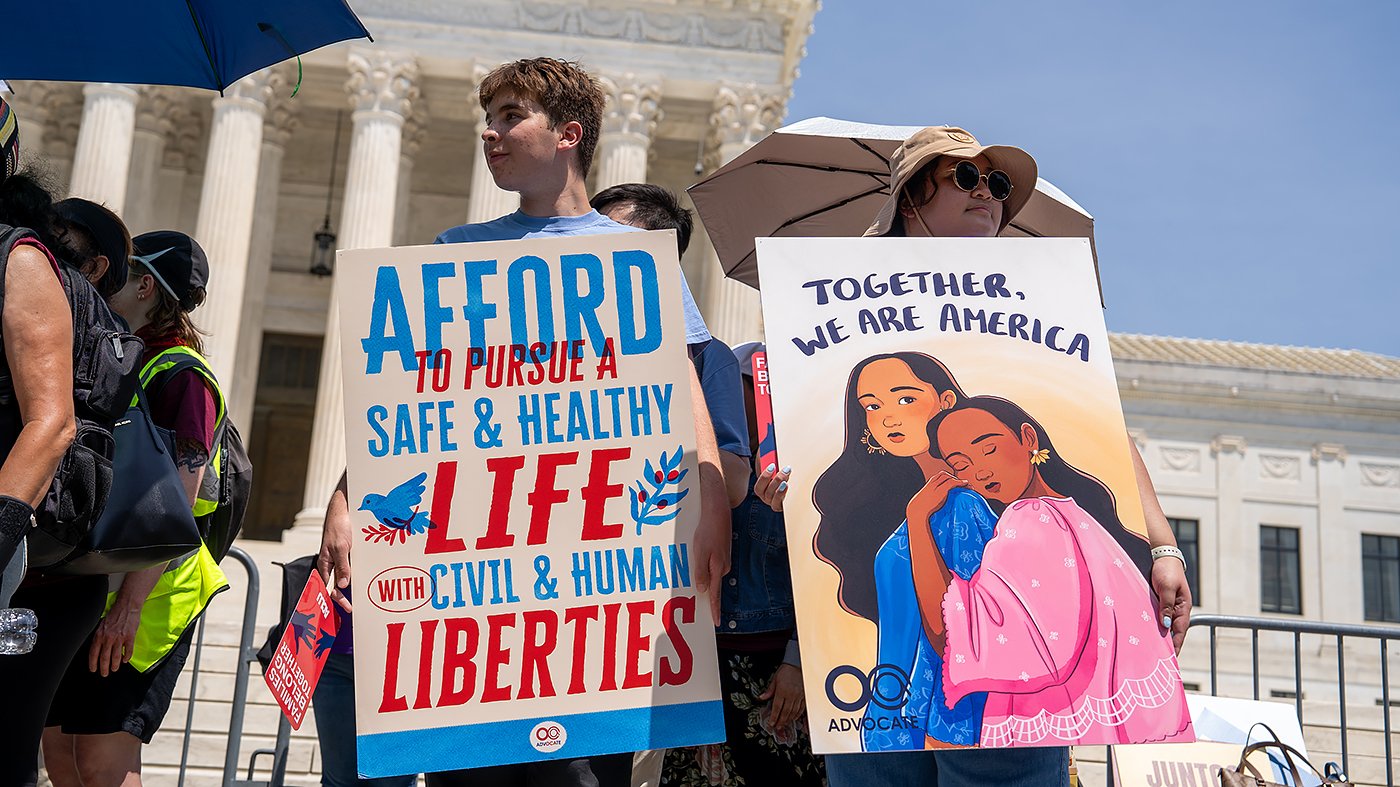
Republican lawmakers are moving swiftly to craft legislative responses to the Supreme Court's decision this week that affirmed birthright citizenship as a constitutional guarantee under the 14th Amendment. The ruling, which struck down President Trump's executive order restricting citizenship for children of undocumented immigrants, has galvanized a new wave of conservative proposals aimed at narrowing or overturning the interpretation through congressional action.
Several GOP members have already introduced or are preparing bills that target specific aspects of birthright citizenship. One major focus is so-called birth tourism, where foreign nationals travel to the U.S. specifically to give birth and secure citizenship for their children. Senator Tim Scott of South Carolina announced a bill this week to end that practice, citing data suggesting over a million Chinese nationals have used this route to obtain American passports. Scott described the phenomenon as a perversion of the system that must be stopped.
Other lawmakers are taking a broader approach. Representative Andy Ogles of Tennessee unveiled the Anchors Away Act, which would limit citizenship at birth only to children of U.S. citizens, lawful permanent residents, or those with legal status serving in the military. The bill would also bar pregnant foreign nationals from entering the U.S. as nonimmigrants unless married to a citizen. In a statement, Ogles said, “I refuse to let these anchor babies colonize our country. Save our sovereignty. Anchors away!”
The Supreme Court's majority opinion, written by Chief Justice John Roberts, held that the 14th Amendment guarantees citizenship for nearly everyone born on U.S. soil, regardless of parental immigration status. That effectively requires a constitutional amendment—requiring two-thirds of both chambers and ratification by three-fourths of states—to change the rule. But conservatives are seizing on a concurrence from Justice Brett Kavanaugh, who suggested Congress could enact legislation to create exceptions for children of foreign citizens unlawfully or temporarily in the country.
Senator Eric Schmitt of Missouri said he was encouraged by Kavanaugh's opinion. He announced plans to file a bill that would amend the federal statute referenced by Kavanaugh, defining citizenship at birth to exclude children unless at least one parent is a citizen or lawful permanent resident. Schmitt wrote on social media, “The majority tried to constitutionalize unlimited birthright citizenship. But Justice Kavanaugh MAY have left Congress a door. I'm filing legislation to walk through it.”
Representative Chip Roy of Texas is pushing a dual strategy: first, have Congress explicitly define what it means to be “subject to the jurisdiction” of the United States, and second, use the power of the purse to enforce that definition. Roy proposed withholding federal funds from the Department of Homeland Security or any state or agency that issues legal documentation to individuals not meeting Congress's definition. He argued that lawmakers have the authority to define such terms without amending the Constitution.
The legislative push marks a shift to a long-term strategy for immigration restrictionists, though any bill faces steep odds in a divided Congress. Even if passed, it would likely trigger immediate legal challenges and could provide a vehicle to test the court's ruling. The Trump team has already seized on Kavanaugh's opinion as a potential pathway for Congress to act without a constitutional amendment.
The ruling has also energized the House Freedom Caucus, which is demanding that border security measures be attached to must-pass legislation. Some members are vowing to block floor proceedings until a voter ID bill is added, reflecting the broader conservative push to codify Trump-era immigration policies. The decision has also unleashed a wave of party spending, as both sides prepare for a protracted political and legal battle.
Critics argue that the GOP proposals would create a two-tier citizenship system and undermine the 14th Amendment's guarantee. The backlash against Justice Amy Coney Barrett, who sided with the majority, has exposed deep divides within the conservative legal movement. For now, the legislative path remains uncertain, but Republicans are signaling they will use every tool available to challenge the ruling.