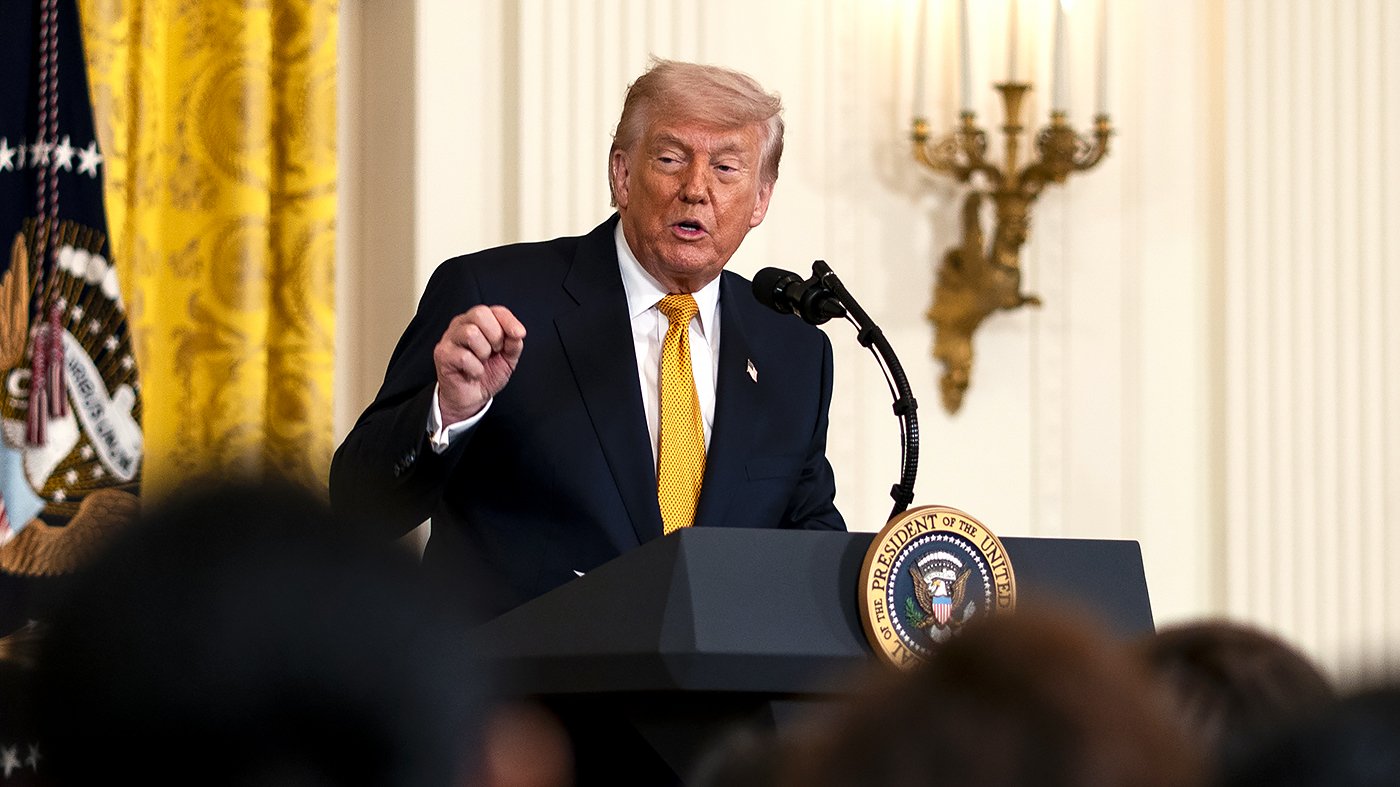
President Donald Trump is spinning a Supreme Court defeat into a political opportunity, pointing to a concurring opinion by Justice Brett Kavanaugh as a potential roadmap for Congress to limit birthright citizenship. The high court's 6-3 ruling blocked Trump's executive order that sought to end automatic citizenship for children born in the U.S. to non-citizen parents, but Kavanaugh's separate opinion suggested lawmakers could step in.
Kavanaugh joined the majority in blocking the order but wrote that Congress could amend the National Act of 1940—which codified the 14th Amendment's guarantee—to carve out exceptions for children of unauthorized immigrants or temporary visitors. “Congress could—consistent with the Fourteenth Amendment—amend §1401(a) or otherwise enact new legislation establishing exceptions,” Kavanaugh noted, adding that “Congress has not yet done so.”

Trump quickly seized on the language. On Truth Social, he declared the ruling “too bad for our Country” but insisted “we can easily make it up in Congress through Legislation.” He argued no constitutional amendment would be needed, contradicting some GOP leaders. Speaker Mike Johnson (R-La.) later told reporters that “you have to amend the Constitution to fix that,” though he didn't rule out legislative action.
Legal experts caution that Kavanaugh's opinion was not part of the majority's constitutional holding. The court split 5-4 on the core issue: that the 14th Amendment guarantees citizenship to nearly everyone born on U.S. soil. Kavanaugh was part of the 6-3 majority on the statutory question but not the 5-4 constitutional majority. “In the immediate sense, I’m not sure there is a route there,” said Amy Swearer, a senior legal fellow at Advancing American Freedom. “It would necessitate a complete about face by one of those five members.”
UCLA law professor Hiroshi Motomura called Trump’s response “grasping at straws.” He noted the court deliberately ruled on constitutional grounds. “It could have made a statutory decision and kicked it to Congress,” Motomura said. “It chose not to do that, and I think that is a very significant thing.”
Some analysts see Kavanaugh’s opinion as a potential opening if the court’s composition shifts. “You would need to somehow have a fifth justice involved,” Swearer said. “There’s a hypothetical future where that might happen.” But for now, the math isn’t there.
Motomura argued Trump’s push is fundamentally political. “It’s his way of saying, ‘Well, I don’t really care what the five justices say,’” he said. “There’s a message to get out, and he’s going to keep the issue alive.” White House spokesperson Abigail Jackson echoed that, vowing to “double down on our efforts to keep the border secure and deport illegal aliens,” while prioritizing investigations of birth tourism.
At a rally in Medora, N.D., Trump promised to “take care” of birthright citizenship, arguing the 14th Amendment “was meant for the babies of slaves,” not “rich people from China.” The issue remains a rallying cry for his base, even as legal hurdles mount. For more on related debates, see our coverage of how Americans view citizenship and the Supreme Court's approach to Trump's trade policies.