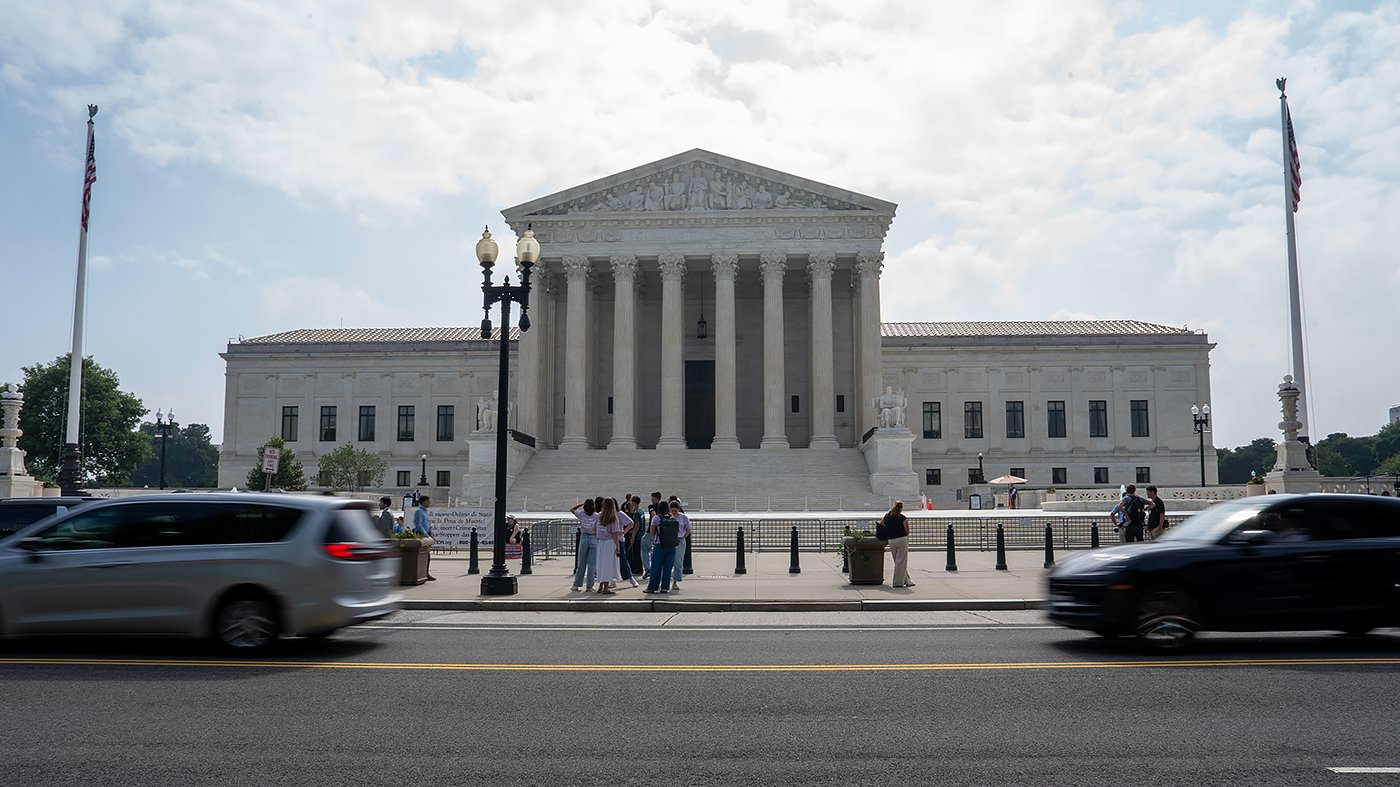
The media's persistent campaign to paint the U.S. Supreme Court as a tool of the Trump administration is facing mounting evidence to the contrary. Recent rulings show a Court that has both sided with and against the president, undermining the narrative of a compliant judiciary.
New York Times columnist Thomas Friedman recently wrote that two more years of Donald Trump 'controlling the House, the Senate and tacitly the Supreme Court' could end America. But the notion of a 'tacit' control is belied by the Court's actual decisions. As legal observers note, the Court has not hesitated to reject administration positions on executive power.
For instance, in cases involving presidential firing authority, the Court ruled against the administration in Trump v. Boyle and Trump v. Wilcox, limiting the president's ability to remove executive branch officials without cause. Similarly, in Mullin v. Doe, the Court held that lower courts cannot reinterpret 'temporary protected status' to mean 'permanent,' a defeat for the administration's immigration stance.
The 'shadow docket'—emergency applications—has seen the administration prevail in some cases, but not overwhelmingly. According to Ballotpedia, of 39 emergency applications related to the administration, only about half directly concerned executive power, and the Court denied several key requests, including attempts to block lower court orders on immigration and education policy.
Conservative justices have joined liberal colleagues in several 5-4 and 6-3 decisions against the administration, while no liberal justice has crossed over to support Trump's victories. This pattern, reminiscent of the Kennedy and O'Connor era, suggests the Court is not a monolithic conservative bloc.
Critics like Erwin Chemerinsky cite 25 of 31 cases favoring Trump, but that statistic ignores the substance. Many of those were procedural or jurisdictional, not endorsements of executive power. The Court has repeatedly reminded lower courts of their limits, not expanded presidential authority.
As the Supreme Court handles emergency pleas on voting rules and other matters, the record shows a Court that is more nuanced than the 'political Supreme Court' trope suggests. The media's disinformation campaign risks undermining public trust in an institution that, while imperfect, is not the rubber stamp its detractors claim.