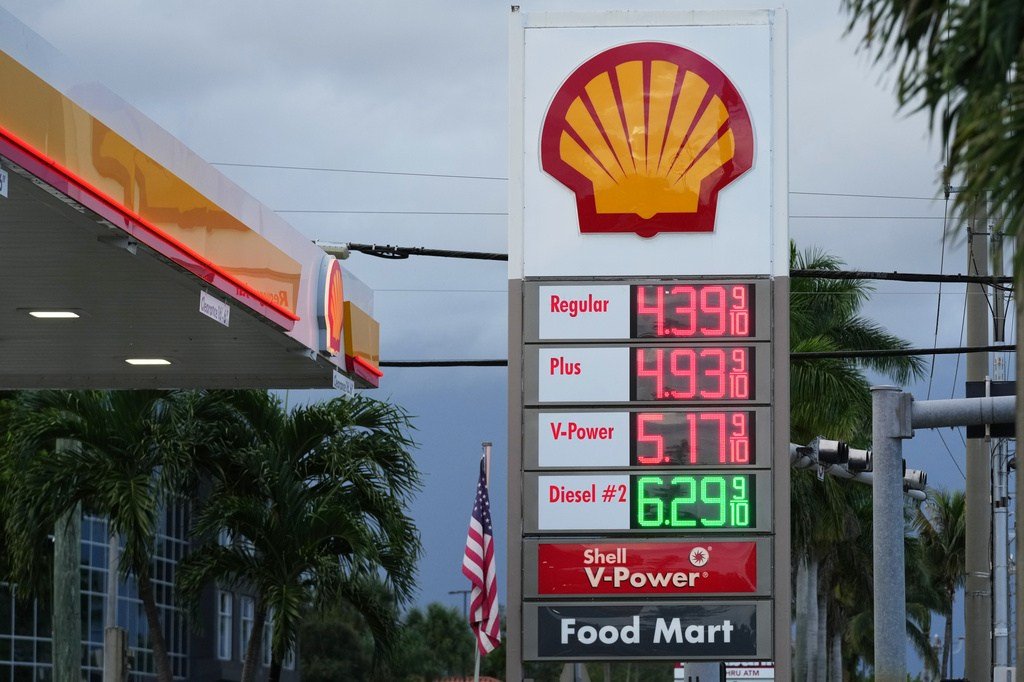
With diesel prices at an all-time high of $6.30 a gallon, a growing number of Republican lawmakers are warming to the idea of restricting U.S. diesel exports. But energy analysts and free-market advocates argue such a move would be counterproductive, ultimately leading to higher prices and reduced supply.
Senate Majority Leader John Thune (R-S.D.) has said he is “open to considering” an export ban, echoing a proposal that has gained traction among some farm-state Republicans facing constituent anger over fuel costs. Sen. John Hoeven (R-N.D.) — who previously argued that lifting export bans would increase supply and lower prices — now suggests a short-term ban could “send a signal to the market.” Rep. Tim Burchett (R-Tenn.) has gone further, blaming “price gouging by greedy oil companies” and urging Congress to “keep American diesel in America.”

The political appeal is clear, but the economics are shaky. Proponents argue that keeping diesel at home would increase domestic supply and lower prices. However, as critics point out, the U.S. does not have surplus diesel sitting idle. Refiners sell into a global market where prices are set by worldwide demand, not just local needs. A gallon refined on the Gulf Coast competes with output from refineries in the Middle East and Asia.
“Cutting off exports won’t push American refineries to produce more gallons; it just restricts where existing barrels can go,” said Derrick Morgan, executive vice president at The Heritage Foundation, in a recent analysis. Morgan and co-author Jason Hayes argue that a ban would create a short-term price dip, but then trigger a cascade of negative consequences: unsold inventory would pile up, refining margins would collapse, and companies would cut production. Less diesel, gasoline, and jet fuel would ultimately be available to U.S. consumers.
The U.S. refining sector is already running near capacity — processing 17.6 million barrels of crude per day at 97.8% of operable capacity in early September. U.S. refineries produced 5.2 million barrels of distillate fuels per day in June. Adding those barrels to global markets helps push world prices down, not up. Banning them would tighten global supply and raise prices worldwide, including in the U.S.
History offers a cautionary tale. For four decades, the U.S. banned most crude oil exports, which artificially discounted American oil and drove capital away. When Congress lifted the ban in 2015, domestic production surged from about 9 million barrels per day to nearly 14 million by 2026, making the U.S. the world’s largest petroleum producer. A diesel export ban would reverse that progress.
Instead of restricting trade, advocates say Congress should focus on policies that increase supply: permitting reform to speed up drilling and refinery construction, repealing the Renewable Fuel Standard’s biomass-based diesel and high ethanol mandates that force more expensive fuels into the mix, and protecting global energy infrastructure threatened by conflicts in Ukraine and the Middle East. These measures would add supply, while an export ban would remove it.
The proposal has also exposed divisions within the GOP, as farm-state pressure splits the party. President Trump has signaled openness to the idea, suggesting he might back a ban to address soaring costs. But economists and industry experts warn that such a move would be a classic case of government overreach leading to scarcity — a lesson Republicans have long preached against.
“High prices are not gouging,” Morgan and Hayes write. “They signal that global markets lack much-needed diesel. A ban sends the opposite signal.” They urge Congress and the White House to resist the temptation and instead pursue policies that expand supply and strengthen energy security.