The Department of Energy on Thursday unveiled a nearly $2 billion investment aimed at extracting more power from the nation's overtaxed electrical grid, a move designed to stave off blackouts as artificial intelligence and data centers drive electricity demand to unprecedented levels.
The funding will underwrite 31 projects across 26 states, collectively expected to generate more than 23 gigawatts of additional capacity — sufficient to power roughly 16 million homes. The initiatives leverage advanced technologies, including sensors that monitor real-time weather conditions to safely boost transmission or reroute power away from congested corridors, according to the department.

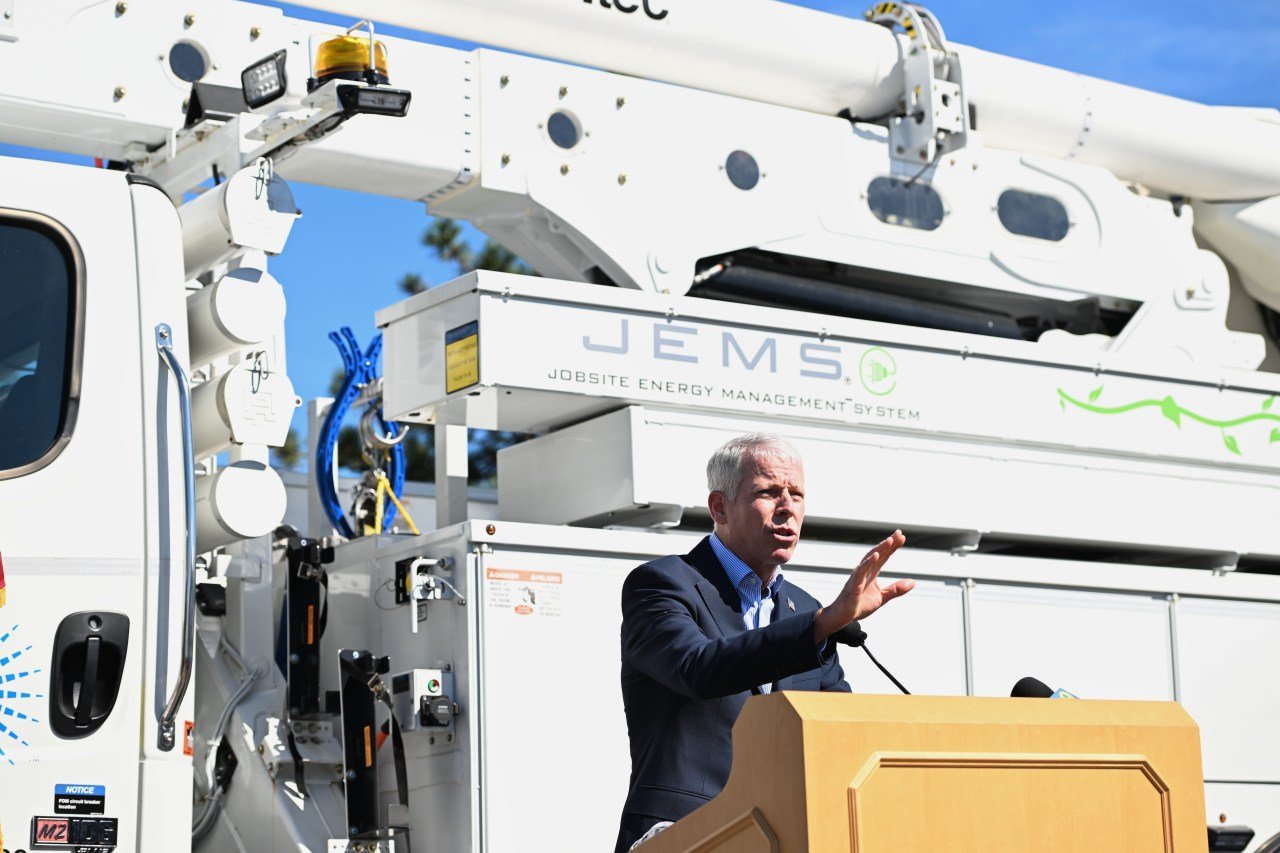
Officials said these upgrades could bolster reliability and reduce electricity costs for about 100 million Americans. Energy Secretary Chris Wright, speaking at a PPL Corp. facility in Allentown, Pennsylvania, framed the grants as a pragmatic approach: “This is a quick way to lower electricity prices and increase reliability: using fibers that are already in the transmission lines to analyze what’s the temperature out, what’s the wind out, how can we use this transmission line to distribute more power, but safely and only in the right conditions.”
PPL, the host utility, is receiving $71.5 million to modernize a high-voltage line spanning roughly 30 miles in northern Pennsylvania. The company reports that two data centers have come online in its territory this year, with six more under construction and enough in advanced planning that peak demand could quintuple by 2032.
The announcement lands amid mounting warnings that AI's insatiable power appetite could overwhelm U.S. supplies as massive new data centers come online faster than generating capacity can be built. At the same time, electricity bills are rising faster than inflation in many regions, a trend often tied to data center demand. This has fueled community opposition across the country, complicating plans for tech giants and reshaping the midterm political landscape.
President Donald Trump continues to defend data centers, even as lawmakers from both parties criticize them and local communities attempt to block them. Meanwhile, Congress and some states are pushing utilities to adopt grid-enhancing technologies to reduce the need for new power plants.
Julia Selker, executive director of the WATT Coalition, a trade group for such technologies, called the scale of investment significant. U.S. utilities lag behind Europe in adopting these tools, despite past federal support for development and testing, she noted. Drew Maloney, CEO of the Edison Electric Institute, countered that American utilities already make substantial annual investments in grid-strengthening technologies.
Wright said work on the projects should commence quickly, with some efficiencies potentially in place before winter to temper price spikes during extreme weather. He acknowledged uncertainty about whether the projects would have proceeded without federal funding, noting many were already under consideration but recipients hadn't “quite pulled the trigger.”
The projects involve component upgrades on more than 1,500 miles of transmission lines and technological enhancements across nearly 21,000 miles. Officials prioritized projects that can be operationalized swiftly. The $1.9 billion in federal grants, sourced from the bipartisan infrastructure law passed under former President Joe Biden, will be matched by $3.35 billion from recipients, which include utilities, cooperatives, and four state agencies in Colorado, Indiana, Ohio, and Oklahoma — the latter collectively receiving $810 million.
Trump has pledged to “unleash” the energy sector in his second term, aiming to boost oil and gas production, ease pollution restrictions on power plants, and keep coal-fired plants running beyond retirement dates. His administration has also committed nearly $4 billion to buy back offshore wind leases, while simultaneously pushing to help tech firms connect data centers to power plants and high-voltage lines, and even convert Cold War-era uranium enrichment facilities into data center and power plant complexes.