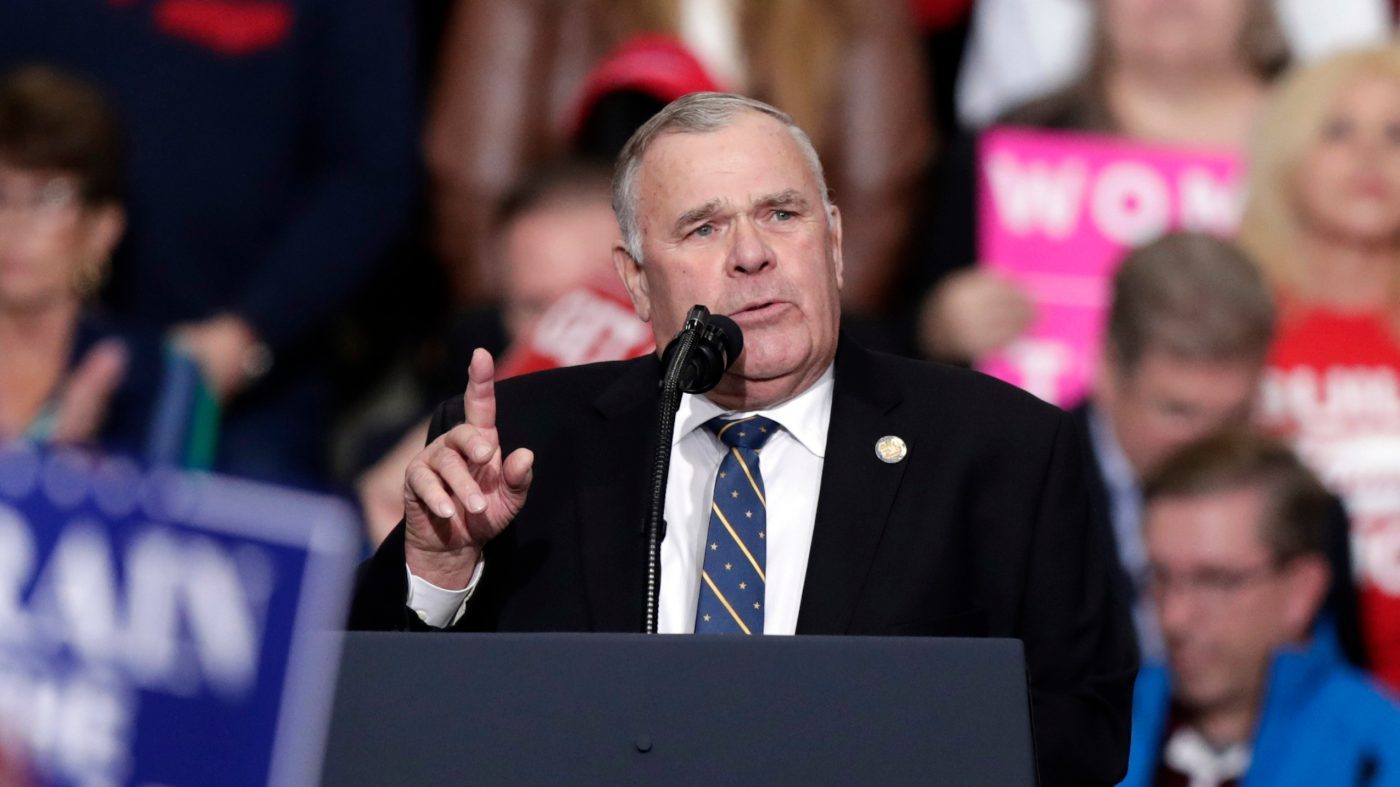
A House Republican is betting that American farm goods and mining know-how can help steer Ethiopia and Eritrea away from conflict and toward a lasting peace—while also pulling them out of Beijing's orbit. Rep. Jim Baird (R-Ind.) is set to introduce two bills on Thursday, obtained exclusively by The Hill, that would condition expanded U.S. trade and investment on concrete steps toward ending the two nations' long-running rivalry.
The Ethiopia SPARK Act and the Eritrea PILLAR Act, as they're called, would open the door to formal trade negotiations with each country, but only after they demonstrate progress on peace. In return, the U.S. would boost exports of corn, soybeans, soybean meal, livestock feed, farm machinery, and agricultural research and technical support. Baird, a member of the House Foreign Affairs subcommittee on Africa, argues that such economic incentives could be a powerful lever for stability.

"African nations are primed for partnership," Baird said in a statement. "The continent is rich in natural resources and home to a young, growing population eager for greater economic opportunity. In Indiana and across America's heartland, we have the agricultural expertise and technological know-how to help unlock that potential and build lasting economic partnerships."
The legislation also targets the region's mineral wealth—gold, silver, copper, zinc, iron ore, potash, cement, limestone, natural gas, and oil—along with port infrastructure. The U.S. could offer reduced tariffs and better trade terms as an incentive. Baird frames the effort as a direct counter to China's deep economic and political ties in both countries.
"East Africa has tremendous potential, with the benefit of limited influence from America's adversaries, like China," Baird said. "East Africa could seriously benefit from this economic opportunity, which can be a powerful foundation for lasting peace and prosperity."
The push comes at a precarious moment. Ethiopia and Eritrea appear to be on the brink of all-out war, with troop buildups along their shared border bringing forces within striking distance, according to Reuters. The tensions follow a September outbreak of fighting between Ethiopia's federal government and rebels in the Tigray region, which borders Eritrea. The peace talk dynamics in the region remain fragile, as past agreements have failed to hold.
The Trump administration has already stepped up diplomatic efforts. Secretary of State Marco Rubio spoke with Ethiopian Prime Minister Abiy Ahmed Ali on Oct. 14, urging a return to the 2018 peace framework and stressing that "all countries in the Horn of Africa must respect the sovereignty and territorial integrity of their neighbors and avoid cross-border incursions." Rubio emphasized that "the region cannot tolerate more conflict."
Democrats focused on Africa have also sounded alarms. In a Nov. 10 letter to Rubio, they urged "sustained and coordinated diplomatic engagement" to de-escalate the situation, warning that "the situation could lead to a multi-front conflict that would risk destabilizing Ethiopia, the broader Horn of Africa, the Red Sea, our partners in the Gulf, and vital shipping lanes." They called for new diplomatic energy and policy tools before the conflict escalates further.
Baird's legislation is a bet that economic engagement can succeed where pure diplomacy has struggled. He argues that offering tangible benefits—farm exports, mining cooperation, and port access—could give both countries a reason to choose peace over confrontation. "Our engagement also sends a broader message across the continent: African nations willing to pursue peaceful cooperation and economic growth will find a willing partner across the Atlantic," he said.
The bills come as the Biden administration has also tried to address the crisis, though with limited public progress. Baird's approach, however, is distinctly transactional, tying trade perks to security and diplomatic benchmarks. Whether that model can work in a region where mistrust runs deep remains an open question, but for now, the Indiana Republican is betting that American agriculture and minerals can do more than sanctions ever could.