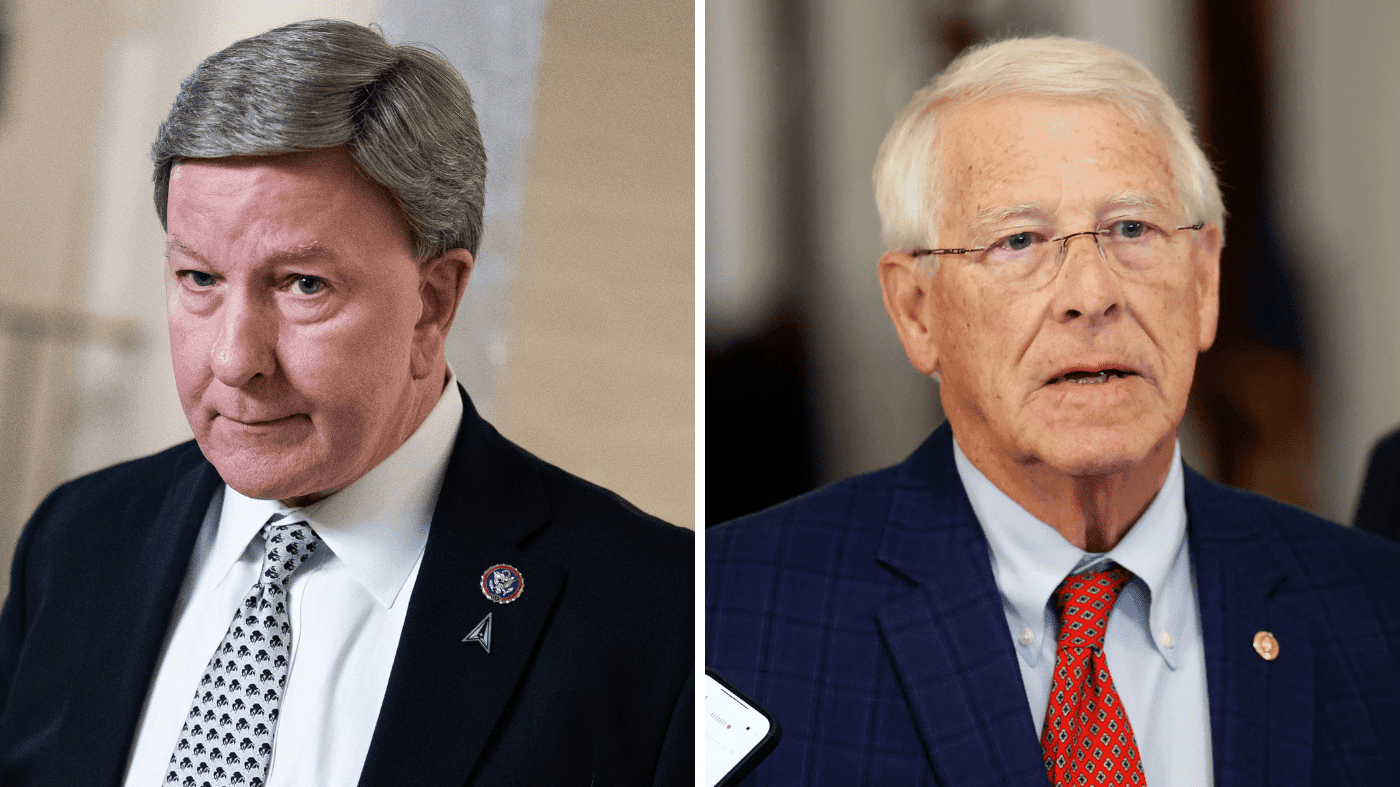
The Republican chairmen of the House and Senate Armed Services committees broke sharply with President Trump on Saturday, issuing a joint statement expressing deep concern over his order to withdraw 5,000 U.S. troops from Germany. The move, announced Wednesday amid an escalating personal feud between Trump and German Chancellor Friedrich Merz, has sparked rare bipartisan pushback on Capitol Hill.
Sen. Roger Wicker (R-Miss.) and Rep. Mike Rogers (R-Ala.) said in their statement that the withdrawal of a full brigade “prematurely reduces” the American military footprint in Europe at a critical moment. They argued that such a step “sends the wrong signal” to Russian President Vladimir Putin and risks undermining the credibility of NATO deterrence.
“Germany has stepped up in response to President Trump’s call for greater burden sharing, significantly increasing defense spending and providing seamless access, basing, and overflight for U.S. forces in support of Operation Epic Fury,” the chairmen noted, countering Trump’s narrative that Berlin is shirking its commitments.
Wicker and Rogers insisted that any major shift in the U.S. force posture in Europe requires “a deliberate review process” and full consultation with Congress. Rather than pulling troops out of Europe entirely, they suggested redeploying them to Eastern Europe to bolster the alliance’s front line. The statement concluded with a demand that the Pentagon engage with oversight committees “in the days and weeks ahead” to explain the decision and its implications for transatlantic security.
Chief Pentagon spokesperson Sean Parnell confirmed Friday that the withdrawal will take place over the next six to 12 months, following a Defense Department review of U.S. posture in Europe. The move echoes earlier concerns from Wicker and Rogers about a similar drawdown from Romania last fall, which they warned could lead to “further drawdowns of U.S. forces from Eastern Europe.”
The troop reduction comes as Trump has escalated his criticism of Merz, accusing the German leader of miscalculating the threat from Iran and urging him to focus on Russia’s war in Ukraine “and fixing his broken Country.” Trump has also blasted Merz and other NATO allies for failing to fully back “Operation Epic Fury” in Iran.
Merz fired back Monday, telling German students that the U.S. “clearly” lacks a “strategic plan” in Iran, and accused Tehran of “very skillfully not negotiating” while humiliating American diplomacy.
The standoff highlights deepening fissures within the Republican Party over Trump’s unilateral approach to foreign policy. While the White House frames the withdrawal as a response to allied free-riding, senior GOP defense voices warn it could fracture the alliance that has contained Moscow for decades.