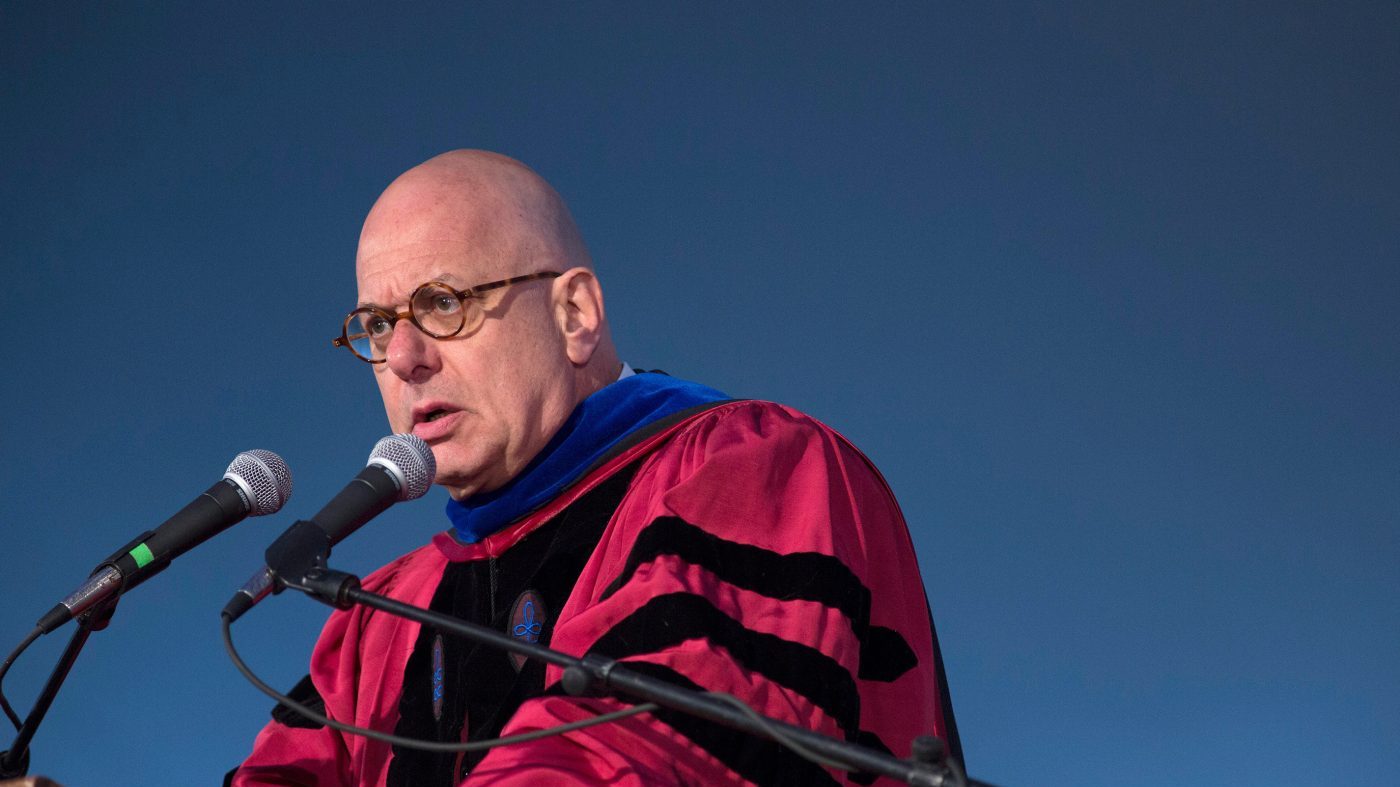
Leon Botstein, the longtime president of Bard College, has announced he will step down at the end of June, following an independent investigation into his connections with convicted sex offender Jeffrey Epstein. The decision comes amid mounting pressure on academic institutions to account for their associations with the disgraced financier.
Resignation Amid Scrutiny
In an email obtained by The Associated Press, Botstein confirmed his retirement, ending a tenure that spanned decades at the New York liberal arts college. The message did not explicitly address the Epstein controversy but noted that he had delayed his public announcement until the completion of an external review by the law firm WilmerHale.
WilmerHale's findings, detailed in a memo to Bard's Board of Trustees, stated: “Nothing that President Botstein did in connection with his relationship with Jeffrey Epstein was illegal, but President Botstein made decisions in the course of that relationship that reflect on his leadership of Bard.” The review highlighted a pattern of interactions that, while not criminal, raised questions about judgment.
Closer Ties Than Previously Acknowledged
Though Botstein has not faced criminal accusations, documents released by the Justice Department revealed a more extensive relationship than earlier disclosed. The two men met multiple times, and Botstein invited Epstein to be a guest at Bard's 2013 graduation ceremonies. He also suggested they attend an opera together, according to AP reports.
A search of the DOJ's Epstein file library yields thousands of references to Botstein, including emails where he described their connection as a “friendship.” In a December 2018 email—weeks after the Miami Herald published its landmark investigation into Epstein's abuse of young women and his lenient prosecution—Botstein wrote to Epstein: “I hope you are holding up as well as can be expected.”
Botstein's Defense and the Fallout
Botstein has since distanced himself from Epstein, writing in a February letter to the Bard community that their interactions “were always and only for the sole purpose of soliciting donations” for the college. He characterized Epstein as a “skilled manipulator, prodigious networker, and serial exaggerator” who used his affiliation with Bard to burnish his image.
Botstein claimed Epstein “repeatedly dangled the promise of a multi-million-dollar contribution” to Bard, but the major gift “never materialized.” However, Epstein did channel $150,000 from his foundation to Botstein, which the president said was promptly donated to the school. WilmerHale's memo quoted Botstein as arguing that “Bard's need for funds was paramount,” adding, “I would take money from Satan if it permitted me to do God's work.”
Botstein will remain on Bard's faculty as a teacher and musician, according to reports.
Broader Academic Fallout
The Epstein scandal has reverberated across higher education, with institutions from Ohio State University to Harvard University scrambling to contain the damage. Columbia, Duke, Yale, MIT, and others have faced questions about their own links to Epstein. Harvard cut ties with former Treasury Secretary Larry Summers after an investigation revealed he maintained a relationship with Epstein even after Epstein's 2008 guilty plea for soliciting a minor for prostitution. Summers later expressed deep shame and took full responsibility, stepping back from teaching duties and retiring at the end of the academic year.
The controversy has also sparked ongoing legal and political battles. The GAO has launched a second federal probe into the DOJ's handling of Epstein files, while Attorney General Pam Bondi has agreed to testify before the House on the matter. The release of thousands of documents has exposed a web of connections between Epstein and prominent academics, scientists, and university leaders, intensifying scrutiny on institutional ties to the disgraced financier.
As Bard prepares for a leadership transition, the episode underscores the lasting damage of associations with Epstein—even absent illegal conduct—and the growing demand for accountability in academia.