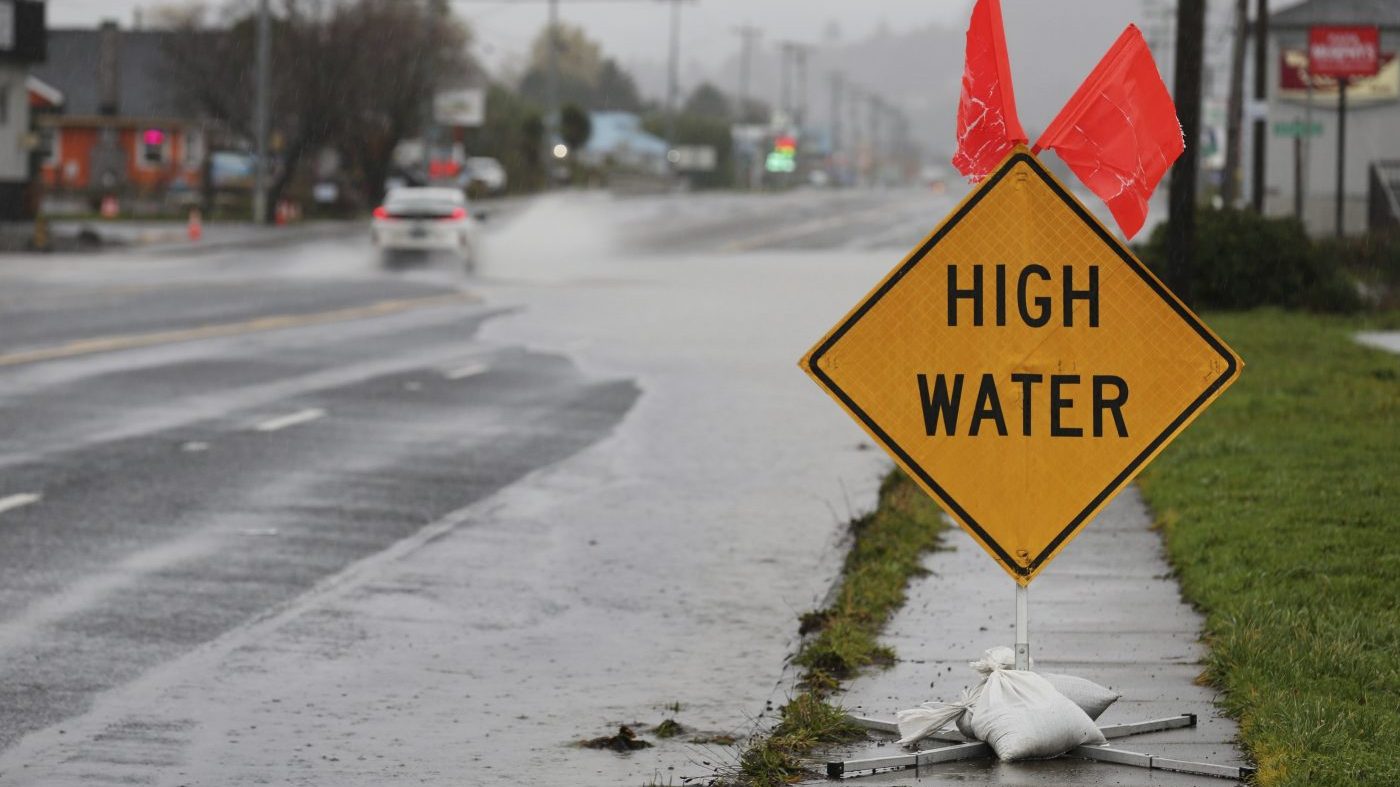
Google has quietly rolled out an artificial intelligence tool called Flood Hub that promises to predict flash flood risks up to 24 hours ahead, a development that could reshape early warning systems but still faces skepticism from federal forecasters.
The tool, launched last month, is designed to help meteorologists and emergency managers pinpoint where rapid flooding is most likely within the next day. Unlike traditional river-based forecasts, Flood Hub zeroes in on flash floods driven by intense rainfall, which can strike far from waterways and catch communities off guard.

“Flash floods can occur anywhere. They are not confined to the river,” said Gila Loike of Google Research, emphasizing the challenge the AI model aims to address. The system was trained on millions of real-world flood reports, including two decades of local news coverage, to fill gaps where sensor data is sparse. This reliance on news data makes the tool particularly effective in urban areas, where flash flooding often occurs away from rivers and monitoring infrastructure is limited. Loike acknowledged that rural regions, with fewer news reports, see reduced accuracy.
Researchers at the University of Texas at Austin are also advancing AI-driven flood models that go beyond predicting rainfall totals. “The community needs to know where the water may accumulate or may flood at the street or neighborhood,” said Wonhyun Lee, a flood modeler at the Bureau of Economic Geology. His team focuses on translating rainfall forecasts into concrete impacts, such as water depth and duration on roads. “Meteorologists already provide real-time rainfall forecasting. Our approach can help to translate those kinds of forecasts into the possible flooding impact on the ground,” Lee added.
But the National Oceanic and Atmospheric Administration (NOAA) urges caution. Isidora Jankov, a NOAA researcher, warned that AI models like Flood Hub rely on historical patterns and may struggle with long-term forecasts compared to physics-based models. “It’s trying to emulate something that it has seen before. It’s not necessarily going to connect the full picture,” Jankov said. She noted that interpreting results from machine learning models can be more difficult, making them an added layer rather than a replacement for traditional forecasting.
Google emphasizes that Flood Hub is intended to strengthen, not supplant, existing early warning systems. “A lot of what we’re trying to do here is provide this information to be an additional tool for National Meteorological and Hydrological Services, NOAA, local authorities, et cetera, to strengthen their existing early warning systems,” Loike said.
The rollout comes amid broader debates about AI’s role in public safety and national security. Google has faced internal backlash over its classified AI deal with the Pentagon, with over 600 staff urging the CEO to halt the project. Meanwhile, the company’s expansion into weather prediction reflects a growing trend of tech firms entering government-adjacent domains, raising questions about accountability and data privacy.
For cities, Flood Hub could be a game-changer. Flash floods remain notoriously difficult to predict, and the tool’s ability to leverage local news reports offers a unique edge in areas where traditional gauges are scarce. But experts stress that no AI model can replace the judgment of trained meteorologists. As Lee put it, “Our approach can help to translate forecasts into possible flooding impact on the ground,” but the final call still rests with human forecasters.