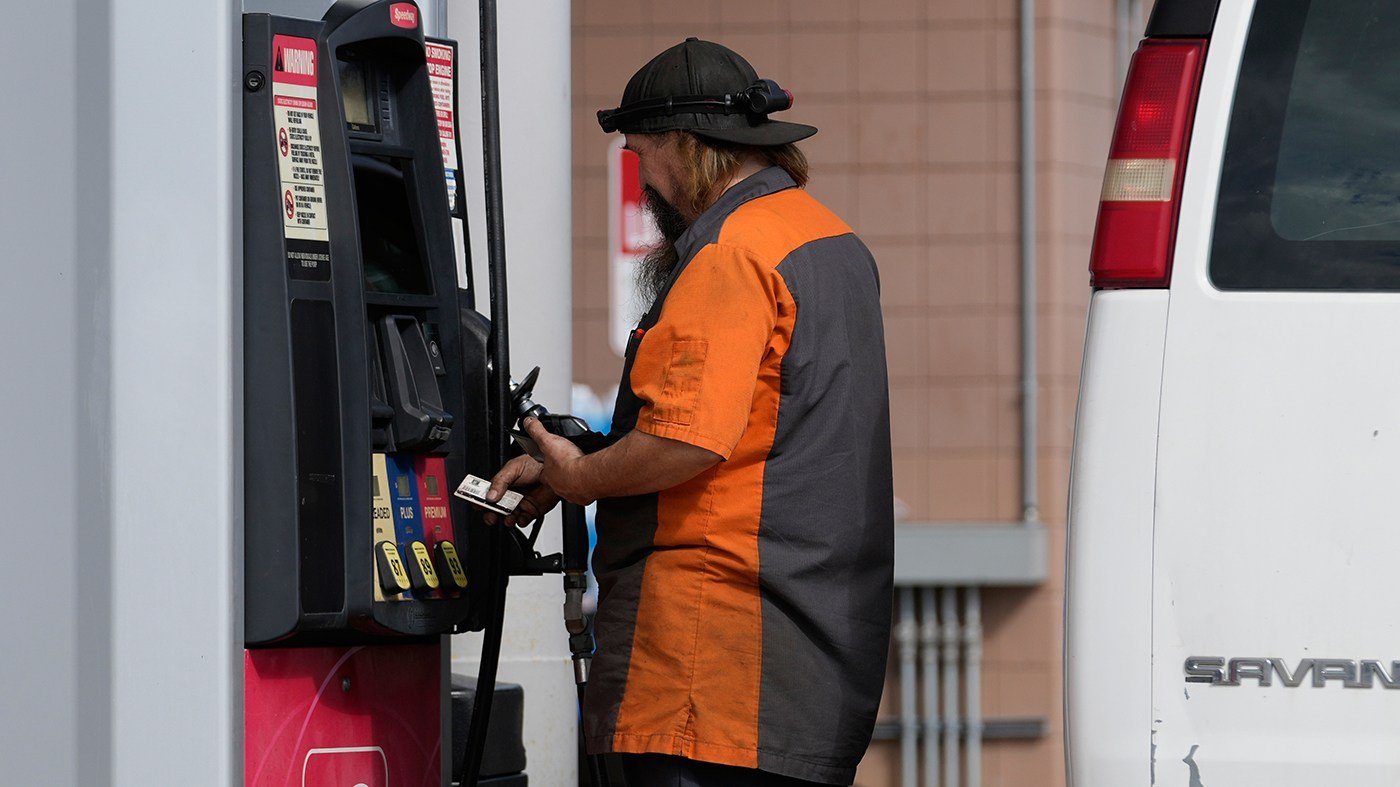
With the national average for a gallon of gasoline hovering near $4.43, the political pressure to suspend fuel taxes is mounting. The Iran war has kept energy prices elevated for seven months, prompting a wave of state and federal proposals aimed at easing the burden on drivers.
Indiana and Georgia are among the latest states to act. Georgia Governor Brian Kemp signed a 30-day suspension of the state's 33.3-cent gas tax and 37.3-cent diesel tax, calling it a measure to provide "relief" to residents. Similar moves are being debated elsewhere.
On the federal level, several lawmakers and candidates have thrown their support behind pausing the 18-cent federal gas tax and 24.4-cent diesel tax. In Michigan, both Senate nominees—Democrat Abdul El-Sayed and Republican Mike Rogers—have endorsed a suspension. In Texas, Democrat James Talarico has called for pausing federal fuel taxes, while Republican Ken Paxton wants to repeal the gas tax entirely.
This week, Senators Mark Kelly (D-Ariz.) and Chris Pappas (D-N.H.), who is running for Senate, introduced a bill to suspend federal gas, diesel, and aviation fuel taxes. Earlier this year, they proposed a similar measure that would have suspended the gas tax through October 1. Meanwhile, Representative Andy Harris (R-Md.) pushed for a suspension but failed to gain traction. His office blamed "the swamp," saying, "They never met a tax they didn't like, no matter how painful for Americans at this time."
House Speaker Mike Johnson acknowledged the lack of consensus, telling Politico, "I don't know that we have consensus around what that would look like." He noted there were "five or six different ideas" and promised "a number of measures in the days ahead" to address gas prices.
However, the push for a gas tax holiday faces significant hurdles. The federal gas tax funds the Highway Trust Fund, which is already running deficits, according to Adam Hoffer, director of excise tax policy at the Tax Foundation. He warned that suspending the tax would "create a real fiscal problem" and likely force the government to borrow more to cover infrastructure costs.
Yonah Freemark, a principal research associate at the Urban Institute, argued that a federal suspension would have a "pretty minimal" impact on pump prices. He noted that gas stations are not required to pass the full savings to consumers, and market competition would determine how much of the tax cut actually reaches drivers. "There's absolutely no requirement" for stations to reduce prices by the full amount, he said, adding that they "could take off 10 cents."
Even if consumers did see savings, Hoffer estimated they would receive at least 80 percent of the tax cut, but that would still amount to only "cents, not dollars" per gallon.
High fuel prices are driven by the Iran war, which has disrupted energy infrastructure and shipping, and by Ukraine's attacks on Russian refineries, reducing global supplies of refined fuels. These factors have kept prices unusually high for this time of year, when they typically decline after the summer driving season.
The political stakes are clear. High gas prices are a liability for incumbents, particularly Republicans, as President Trump launched the Iran war. Calls for a gas tax holiday are not new—Hillary Clinton backed one in 2008, and similar proposals emerged in 2022 when Russia invaded Ukraine.
But analysts caution that a quick fix could backfire. Freemark noted, "We have a highway trust fund that's absolutely broke, and what folks are proposing will, crazily enough, make that situation even worse."
As the debate continues, some lawmakers are also linking fuel prices to broader concerns about diesel costs and the war's legality. The coming weeks will test whether Congress can agree on any measure to ease the pain at the pump without undermining long-term infrastructure funding.