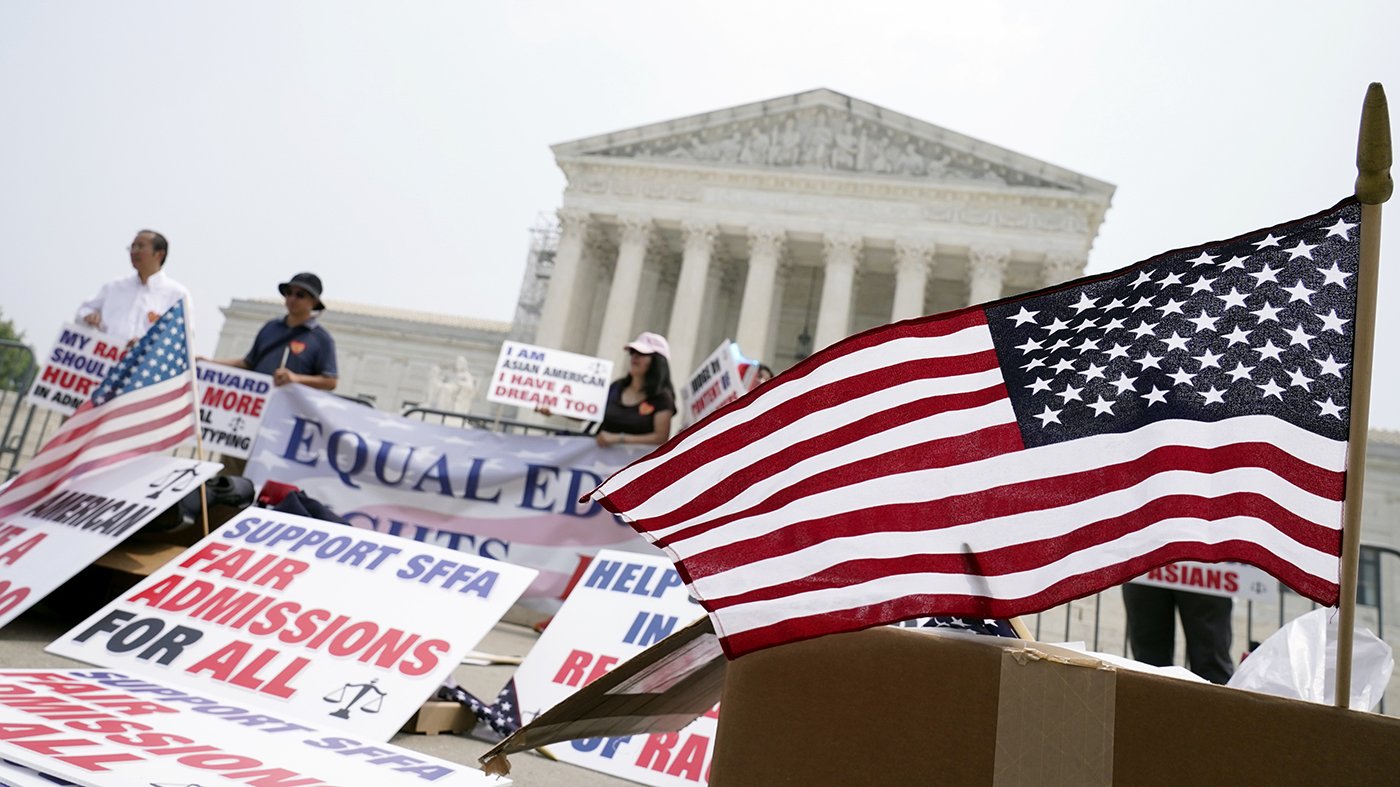
A federal court has become the primary obstacle to the Trump administration's push to obtain detailed race-based admissions data from colleges and universities nationwide. The administration seeks this information to identify institutions it believes may be violating the Supreme Court's 2023 decision that banned affirmative action in higher education admissions.
Legal Battle Over Data Collection
District Judge F. Dennis Saylor this week granted an extension until April 6 for colleges in 17 Democratic-led states that filed suit against the data demand. These institutions, which include major systems like the University of California, now have additional time to complete the "Admissions and Consumer Transparency Supplement" (ACTS) survey. The judge is considering the legality of the administration's request for seven years of admissions statistics broken down by race and other demographic factors.

While schools outside the lawsuit remain subject to the original Wednesday deadline, the legal challenge highlights significant opposition. The coalition of states argues the administration is overstepping its authority, that the data could be weaponized against universities, and that many institutions lack the capacity to produce the requested historical information in the specified format.
Administration's Rationale and Opposition's Concerns
President Trump has framed the data collection as essential for transparency and enforcement. In a memorandum directing the Education Department to gather more admissions data last year, he wrote, "Although the Supreme Court of the United States has definitively held that consideration of race in higher education admissions violates students' civil rights, the persistent lack of available data — paired with the rampant use of 'diversity statements' and other overt and hidden racial proxies — continues to raise concerns about whether race is actually used in practice." He added that greater transparency is needed to "expose unlawful practices and ultimately rid society of shameful, dangerous racial hierarchies."
Opponents counter that the demand creates an undue burden and could yield misleading information. "The challenge is not a lack of willingness — it's that institutions are being asked to reconstruct datasets that, in many cases, were never collected in this format to begin with or no longer exist," said Sean Robins, director of advocacy at the National Association for College Admission Counseling. He warned that small schools face staffing constraints, while large universities must reconcile massive, incompatible data systems.
Robins expressed deeper concerns about how the data might be interpreted. "ACTS requires highly disaggregated data without providing the full context behind admissions decisions. That creates a real risk of misinterpretation," he stated. "This approach could be misleading and potentially harmful. There is concern that the data could be used to justify policies that resemble de facto quotas or penalize institutions for enrolling diverse classes — despite long-standing legal precedent prohibiting those practices."
Broader Context of Higher Education Policy
This data push is part of a broader administration effort to reform higher education, which has included leveraging federal funding to pressure universities to alter admissions and disciplinary policies. The action follows the landmark Students for Fair Admissions rulings that struck down race-conscious admissions at Harvard and the University of North Carolina.
Legal challenges are already testing the boundaries of the new landscape. The Pacific Legal Foundation is contesting admissions policies at public schools in Boston and New York, alleging they use proxies like ZIP code quotas to achieve racial balancing. "There's a real fear after Students for Fair Admissions that colleges would start doing that as well," said Erin Wilcox, a senior attorney at the foundation. While acknowledging the data "doesn't tell the whole admission story," she argued it provides a critical piece of evidence for identifying potential violations.
The plaintiffs in the current lawsuit say the operational burden is real, with some colleges reporting delays in financial aid processing as staff were redirected to comply with the survey. They seek a more collaborative approach. "There is broad agreement that transparency in admissions data is important — but it needs to be implemented in a way that aligns with how institutions actually collect data and allows time to build systems that support accurate reporting," Robins concluded.
The outcome of this case will significantly impact the administration's ability to monitor and enforce the Supreme Court's affirmative action ban, setting a precedent for federal oversight of university admissions practices. This legal maneuver occurs alongside other contentious administration actions, such as when California sued over the use of the Defense Production Act to mandate offshore drilling, highlighting ongoing federal-state conflicts over executive authority.