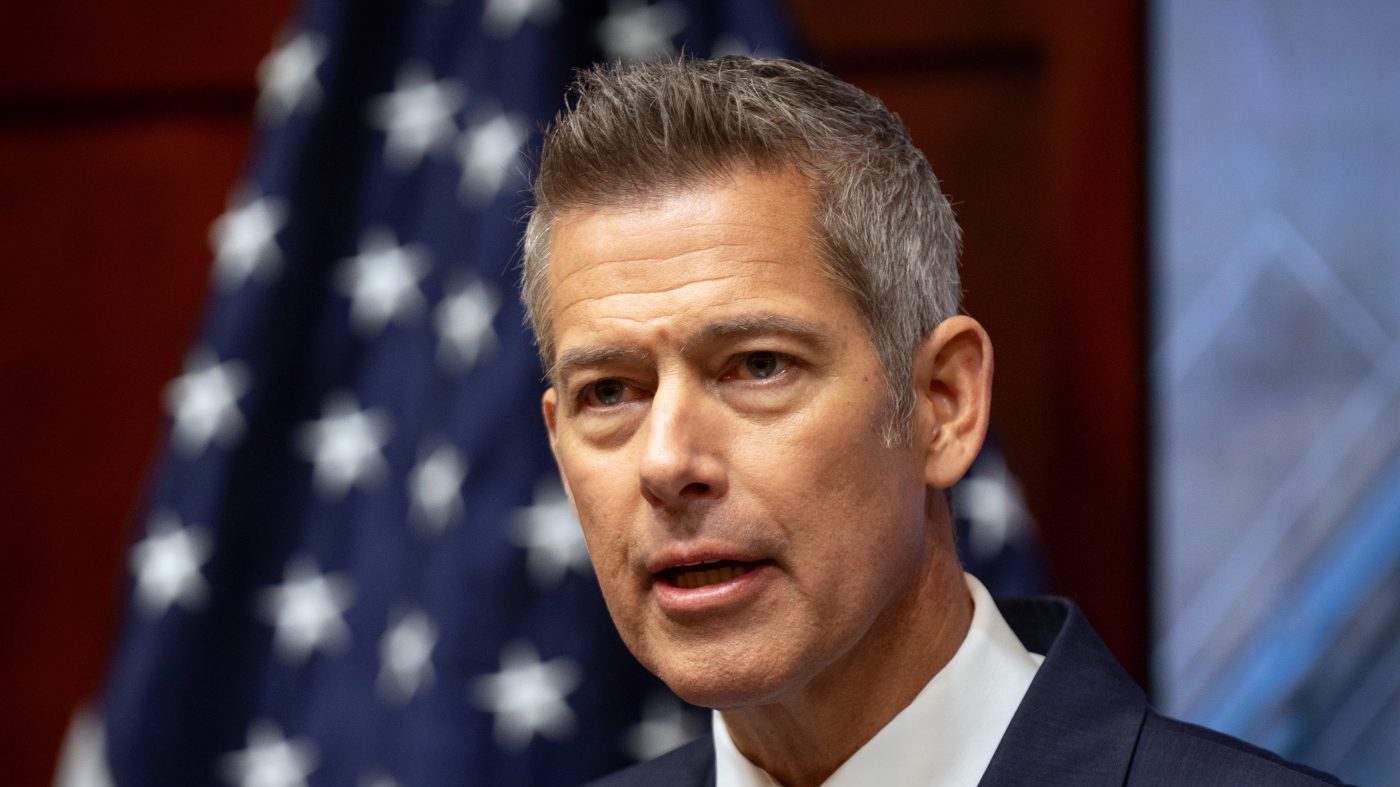
Transportation Secretary Sean Duffy has delivered an unequivocal rejection of proposals to replace human air traffic controllers with artificial intelligence systems, framing the technology strictly as a supportive tool rather than a replacement for human judgment.
In a Tuesday interview with CBS News, Duffy addressed growing concerns that the Department of Transportation's ongoing modernization efforts could automate critical aviation safety roles. "AI is a tool, but we do not replace humans in how we manage the airspace," Duffy stated. "The final say, in anything we do, is going to be an air traffic controller."

When pressed directly about whether AI would eventually manage airspace autonomously, Duffy responded bluntly: "Am I going to replace a controller and have AI manage the airspace? The answer to that is hell no. That's not going to happen."
Modernization Context and New Proposal
The comments come as the Department of Transportation advances a $12.5 billion infrastructure modernization program that includes replacing copper wiring with fiber optics, upgrading radar and communication systems, and constructing new control facilities. This foundational upgrade represents the first phase of what Duffy now envisions as a two-stage transformation.
Duffy is advocating for a second phase: a $10 billion artificial intelligence system designed to predict air traffic bottlenecks weeks in advance. The proposed software would analyze scheduling data to identify potential congestion, allowing controllers to adjust flight times by minutes to prevent cascading delays. "This software will say, 'Well, listen, we can see this 45 days out. Let's move some of those flights a little bit later, or five, seven, 10 minutes earlier, and we can resolve the issue,'" Duffy explained. "And so then you are not delayed."
Safety and Human Factors
The Transportation Secretary emphasized that the primary motivation behind the AI proposal is enhancing safety by reducing controller workload and minimizing human error. "We have human beings navigating, managing the airspace, and as human beings, we can make mistakes," Duffy acknowledged. "That's why I want to give additional tools to support the air traffic controllers."
Duffy specifically cited the potential to reduce near-miss incidents by providing controllers with more bandwidth to prioritize emergencies. The predictive system would theoretically decrease the cognitive burden on controllers who currently juggle multiple complex tasks simultaneously. This approach aligns with broader administration efforts to modernize critical infrastructure while maintaining human oversight.
"I'm just thinking, can we make their job a little easier?" Duffy asked rhetorically. "It's one of the most stressful jobs in the country. Let's reduce some of their stress, give them more tools to manage the airspace, deconflict before we have airplanes that are getting too close, and let them have a little bit of room to breathe."
Political and Fiscal Hurdles
The $10 billion request faces significant congressional scrutiny, particularly amid competing budget priorities. Duffy will need to convince lawmakers that the substantial investment will yield measurable improvements in aviation safety and efficiency. The proposal arrives as other cabinet officials navigate their own challenges, including Energy Secretary Wright's warnings about sustained high fuel prices and Commerce Secretary Lutnick's trade disputes with Canada.
Duffy's firm stance against AI replacement of controllers reflects a broader administration philosophy regarding automation in critical national systems. While embracing technological advancement, the approach maintains that ultimate authority must remain with trained human professionals, especially in sectors where public safety is paramount. This position may influence similar debates in other transportation sectors and critical infrastructure domains.