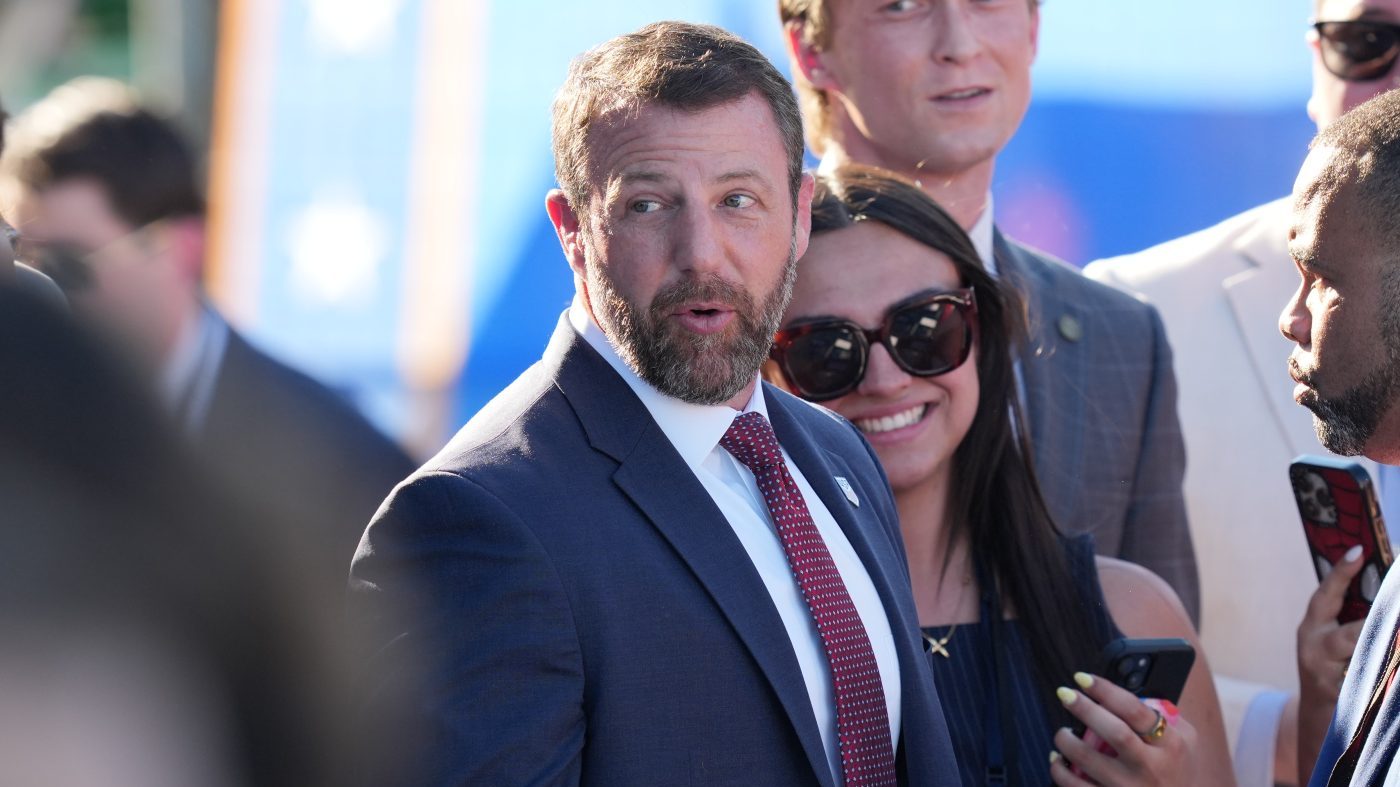
Department of Homeland Security Secretary Markwayne Mullin appeared before a House Appropriations subcommittee on Wednesday for a hearing focused on oversight of the agency, with tensions high over immigration enforcement and the expiration of key surveillance authorities.
The hearing comes after months of friction between federal immigration officers and state officials over the implementation of President Trump’s aggressive deportation agenda. The administration’s push to accelerate removals has drawn legal challenges, including a federal judge’s ruling on Tuesday that blocked immigration arrests at courthouses nationwide—the first such nationwide injunction.
Mullin has also weighed in on the lapse of Section 702 of the Foreign Intelligence Surveillance Act, a critical tool for monitoring foreign threats. He told lawmakers that homeland security threats are at their “highest” level ever, warning that the loss of these powers undermines the department’s ability to detect and prevent attacks.
The hearing underscores the broader oversight challenges facing a divided government. As divided government threatens to paralyze congressional oversight, the DHS secretary’s testimony is expected to draw sharp questions from both parties on the balance between enforcement and civil liberties.
Democrats on the panel pressed Mullin on the impact of the courthouse arrest ban, arguing that such tactics deter victims and witnesses from cooperating with law enforcement. Republicans, meanwhile, focused on the need for stronger border security and the restoration of Section 702, which expired last week amid a standoff over privacy reforms.
The administration’s immigration stance has also faced scrutiny from state governors and attorneys general, who have filed lawsuits over the use of federal resources for mass deportations. Mullin defended the agency’s approach, emphasizing that DHS is following the law and prioritizing the removal of criminals and national security threats.
In a related development, the TSA recently confiscated over 300 drones at World Cup venues, highlighting the department’s expanding role in securing large public events. Mullin cited such incidents as evidence of the need for robust surveillance tools.
The hearing began at 10 a.m. EDT and was streamed live. The full exchange is expected to inform upcoming appropriations debates, as Congress weighs funding for DHS programs amid competing priorities.