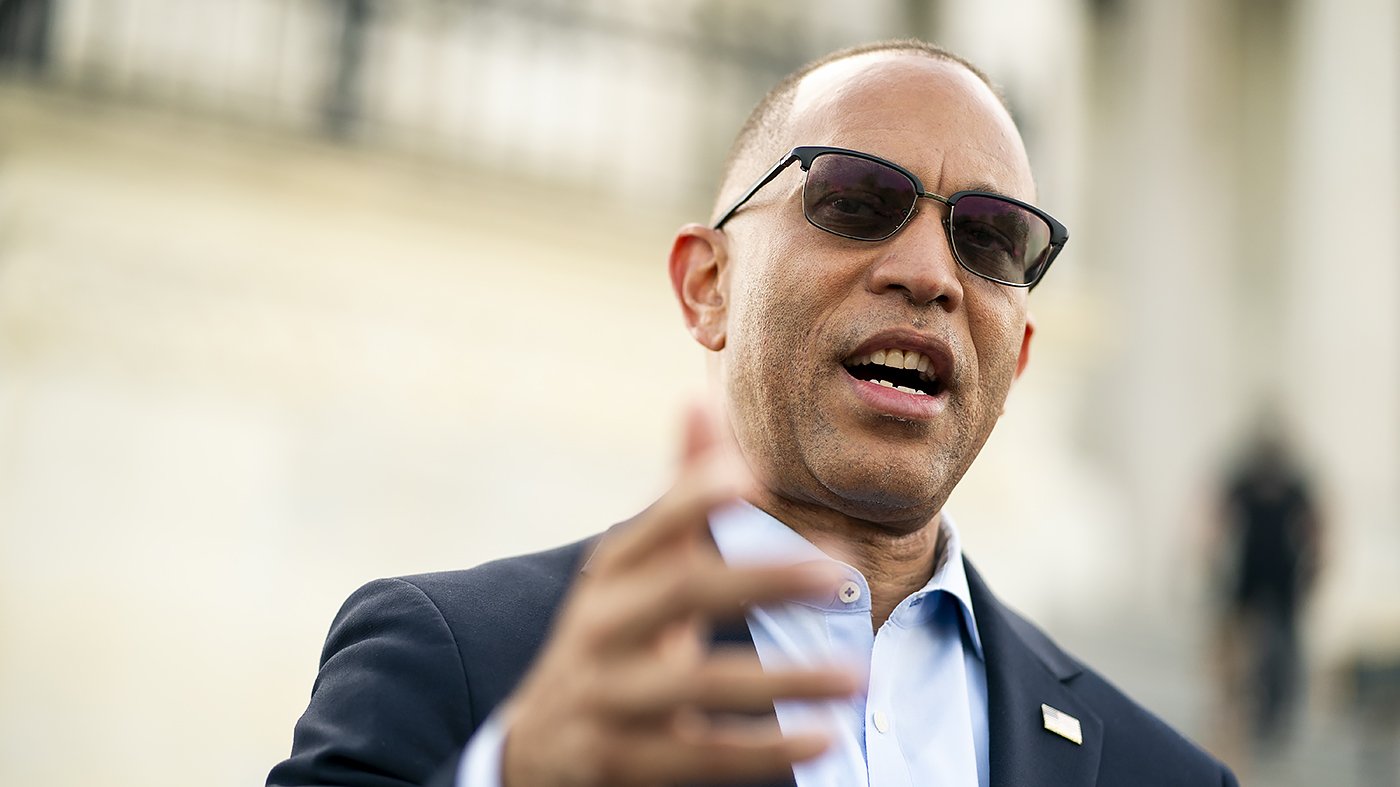
The string of primary victories by democratic socialists is reshaping the Democratic landscape and setting up a potential leadership clash for House Minority Leader Hakeem Jeffries (D-N.Y.) if his party reclaims the majority in the midterms. Jeffries, who is widely expected to run for Speaker, would face an increasingly energized and demanding left wing that could test his ability to hold a diverse caucus together.
This week’s win by Melat Kiros, a 29-year-old democratic socialist who ousted 15-term incumbent Rep. Diana DeGette (D-Colo.) in a deep-blue Denver district, underscored the movement’s national reach. It followed a pair of victories by democratic socialists in New York City primaries the previous week, where they defeated two incumbents. The Mamdani machine routed New York’s Democratic establishment, signaling that anti-establishment energy is not confined to coastal enclaves.
The influx of far-left members could force Jeffries to grapple with dynamics familiar to House GOP leaders: holding together a broad ideological coalition with scant margin for error. The scale of the challenge hinges on the size of a potential Democratic majority. If Democrats eke out a slim majority, even a small bloc of democratic socialists could wield outsized influence over the Speaker’s election and legislative priorities. Beyond that, Jeffries may have to navigate the broader voter frustration that has surfaced in primaries this year.
When asked if the democratic socialist wins benefit the party, Jeffries told reporters Monday, “The party’s going to continue to focus on winning seats currently held by Republicans and flipping them blue.” Pressed on whether he could meet their demands if elected, he replied, “Well, let’s cross that bridge when we get to it, because I think before we can even get to governing, we have to win.”
Jeffries faces no serious rival for the Speakership if Democrats take the House, but the path may not be smooth. Darializa Avila Chevalier, who defeated Rep. Adriano Espaillat (D-N.Y.), and New York state Assemblymember Claire Valdez, who won the primary for retiring Rep. Nydia Velázquez’s seat, have not committed to backing Jeffries, according to Politico. Kiros told HillTV she would not “support anybody for leadership that takes corporate PAC money,” adding, “I look forward to having conversations with Minority Leader Hakeem Jeffries about what the direction of our party should be.”
The party’s divide over Israel has already forced Jeffries to walk a tightrope. Progressive Democrats have increasingly labeled Israel’s military campaign in Gaza a genocide and called for conditioning or halting U.S. aid, while moderates back Israel’s right to self-defense. Reps. Alexandria Ocasio-Cortez (D-N.Y.) and Greg Casar (D-Texas) said this week they would support an amendment by Rep. Thomas Massie (R-Ky.) cutting funding for Israel, while other colleagues oppose it. Jeffries said his caucus is still discussing the amendment. That divide played out in primaries: Espaillat, DeGette, and Rep. Dan Goldman (D-N.Y.)—defeated by Brad Lander—had been pro-Israel, while Lander and the three democratic socialist victors were outspoken critics.
Moderate Democrats have occasionally crossed the aisle to back GOP funding bills, despite most of the conference opposing them, putting Jeffries in a tough spot as progressives demand a tougher line on the Trump administration. Some lawmakers hint that the democratic socialist wins are just the beginning. Ocasio-Cortez told The Hill she thinks “every election is a referendum by the voters of that election,” and that voters across the country “seem ready to turn the page to a future where we are fighting assertively for working-class Americans.” Rep. Rashida Tlaib (D-Mich.) said voters “want people that will actually move with urgency,” adding that many winning candidates “are speaking to them, and people see that they’re as angry as they are.”
The DSA’s urban primary wins challenge Democrats’ national strategy, raising questions about how Jeffries will balance competing demands. A poll showing 29% of US voters open to democratic socialist candidates suggests the movement’s appeal may persist, complicating Jeffries’s efforts to unify the party.